

Retail automation isn't some far-off idea anymore—it's happening right now, completely changing how stores run and connect with shoppers. It’s all about using technology to handle tasks that used to be done by hand, from keeping track of inventory to creating a personalized shopping trip. This whole shift is being pushed by a need for better efficiency, spot-on accuracy, and a way to meet the modern customer's demand for speed and convenience.
The New Era of Smart Retail Automation
Picture this: you walk into a grocery store where the prices on the shelves change in an instant to match an online sale. The inventory is tracked in real-time, so you never have to deal with the frustration of an "out of stock" sign. And checkout? It's smooth and line-free. This isn't a scene from a sci-fi movie; it's what smart retail looks like, and it's all powered by a network of automated systems. The move toward automation in the retail industry is picking up speed, becoming less of a nice-to-have and more of a must-have to stay in the game.
Several big forces are fueling this change. Today's customers have come to expect a seamless experience, a lot like the one-click simplicity of online shopping. They're looking for personalized deals, correct pricing, and for the products they want to be right there on the shelf. At the same time, retailers are wrestling with higher labor costs, the expensive reality of human error, and the sheer complexity of managing inventory across both physical and online stores. Automation is the direct answer to these pain points.
Why Automation Is No Longer Optional
The reasons pushing retailers to embrace automation are crystal clear. To compete today, you have to work smarter, not just harder. The main drivers include:
- Evolving Consumer Expectations: Modern shoppers want everything fast, personalized, and consistent. Automation makes this happen by speeding up checkouts and delivering tailored marketing.
- Rising Operational Costs: From wages to supply chain expenses, the cost of running a business is climbing. Automated systems cut down on repetitive manual work and slash costly mistakes in everything from inventory counts to pricing.
- The Need for Data-Driven Decisions: Running a store based on a hunch just doesn't cut it anymore. Automation serves up the real-time data needed to forecast demand accurately, optimize staffing, and launch marketing campaigns that actually work.
At its core, retail automation is about building a business that's more resilient, responsive, and focused on the customer. It frees up your team from tedious, repetitive work so they can focus on what people do best: providing fantastic customer service and thinking strategically.
In this guide, we’ll dig into the key technologies making this all possible, from AI and robotics to practical tools like electronic shelf tags. We'll break down the real business benefits, map out how to implement these systems, and take a look at what's next for the future of shopping. To get a solid handle on the ideas and advanced strategies defining this shift, a great place to start is understanding how to transform your business with Intelligent Process Automation. Let’s jump into this new retail landscape.
Understanding The Core Technologies Driving Retail Automation

To really get what's happening in retail today, you have to look under the hood at the technologies making it all possible. These aren’t just a bunch of standalone gadgets. They're interconnected systems that work together to create a smarter, more efficient store.
The real engine behind automation in the retail industry is a powerful trio: Artificial Intelligence (AI), the Internet of Things (IoT), and Robotics. Each one tackles a different piece of the puzzle, from predicting what customers will buy next to making sure the shelves are never empty.
Artificial Intelligence: The Predictive Brain
Think of AI as the strategic mind of the whole operation. It’s not just about complicated code; it’s about making sense of enormous amounts of data to forecast what’s coming and make smart decisions. Essentially, AI acts like a seasoned store manager who can analyze years of sales data in a matter of seconds.
For instance, AI-powered systems can predict product demand with incredible accuracy by looking at past sales, weather forecasts, and even social media chatter. For customers, this means fewer out-of-stock frustrations. For retailers, it means less money tied up in inventory that isn't selling.
The Internet of Things: The Connected Nervous System
If AI is the brain, then the Internet of Things (IoT) is the store’s central nervous system. IoT is simply a network of physical devices—sensors, cameras, beacons, and electronic shelf tags—all connected to the internet and constantly sharing data. These devices give retailers a live, real-time look at what's happening in their physical stores.
Here’s how it works on the ground:
- Smart Shelves: Weight sensors can tell when a product is getting low and automatically send an alert to staff to restock.
- Temperature Monitors: In grocery stores, sensors make sure freezers and refrigerators stay at the perfect temperature, cutting down on spoilage.
- Foot Traffic Analytics: In-store beacons track how shoppers move through the aisles, offering clues about popular displays and product placement.
Together, these connected devices create a living, digital map of the physical retail space. This constant stream of information lets managers shift from just reacting to problems to proactively managing their stores.
Robotics: The Hands of Automation
Robotics brings the muscle, handling physical tasks with speed and precision. While you might picture humanoid robots helping shoppers, the biggest impact is often happening behind the scenes. In warehouses, autonomous mobile robots (AMRs) zip around picking and sorting items for online orders far faster than any human could.
Inside the store, robots take on routine jobs like scanning shelves for misplaced products or cleaning the floors overnight. This frees up your human team to focus on what they do best: helping customers and creating a great shopping experience. To see how these physical systems operate, check out our guide on shelf tracking systems. It's not just about tags, either—digital identifiers like QR codes on product packaging are also key for improving how customers interact with products.
To put it all in perspective, the technologies mentioned above are fundamental to the automation movement happening in retail. Let's break down the key players and their roles.
Key Automation Technologies in Retail and Their Functions
| Technology | Primary Function in Retail | Example Benefit |
|---|---|---|
| Artificial Intelligence (AI) | Analyzes data to forecast trends, personalize marketing, and optimize pricing. | Reduces overstock by accurately predicting product demand. |
| Internet of Things (IoT) | Connects physical devices (sensors, tags) to gather real-time store data. | Prevents food spoilage with automated temperature monitoring. |
| Robotics | Automates physical tasks like inventory management and order fulfillment. | Speeds up online order processing in warehouses. |
| Electronic Shelf Labels (ESLs) | Digitally displays and updates product pricing and information instantly. | Eliminates manual price changes and ensures pricing accuracy. |
| RFID & QR Codes | Tracks inventory movement and provides customers with product information. | Improves stock accuracy and offers an interactive customer experience. |
These systems are the reason the retail automation market, valued at over $27 billion in 2024, is projected to hit more than $44 billion by 2029. The growth is all about integrating these tools to build a better, more efficient retail operation from top to bottom.
The Real-World Payoff of Retail Automation
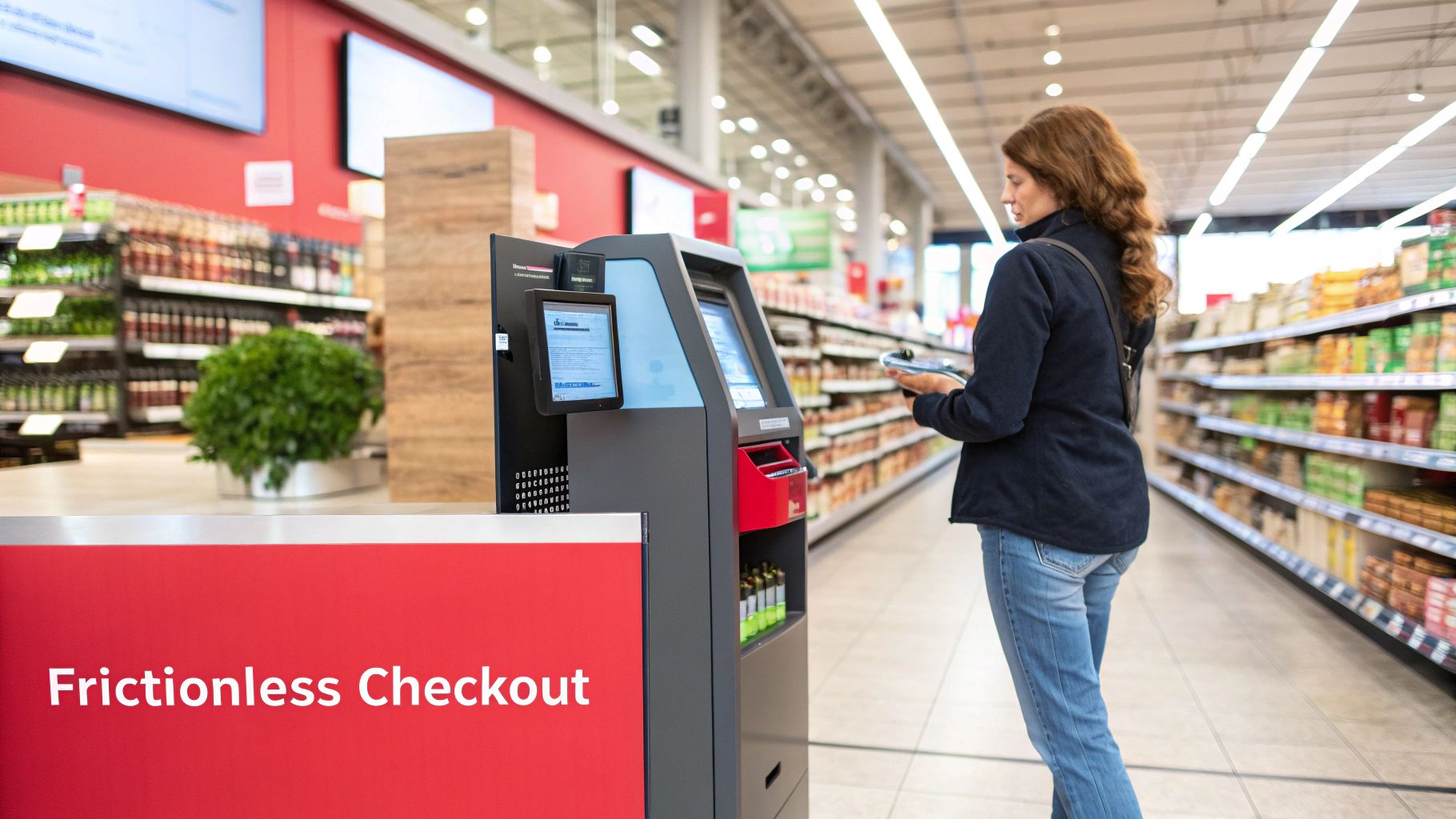
Adopting new tech is one thing, but seeing a genuine return on that investment is what actually matters. For retailers, the move toward automation isn't just about looking modern; it's about unlocking concrete advantages that make the entire business stronger. These benefits really boil down to three core pillars: operational efficiency, a better customer experience, and ultimately, a healthier bottom line.
The global enthusiasm for these results is impossible to ignore. The worldwide retail automation market was pegged at around USD 29.02 billion in 2024 and is projected to skyrocket to nearly USD 71.91 billion by 2034. That's a huge jump, fueled by a compound annual growth rate of roughly 9.5% as more retailers see the tangible results. You can dig into the numbers and what’s driving them in this detailed research from Precedence Research.
Fine-Tuning Operations for Maximum Efficiency
At its heart, automation in the retail industry is about getting more done without all the wasted effort. It takes aim at the repetitive, mind-numbing tasks and handles them with a speed and precision that humans just can't match. This creates a ripple effect of efficiency that you can feel across the entire store.
Take inventory. Automated systems use real-time data to track what’s on the shelves, which means no more tedious manual counts and far less risk of the human error that leads to overstocking or, worse, empty shelves.
Similarly, switching to electronic shelf tags completely does away with the soul-crushing job of printing and swapping out thousands of paper labels. A price update that once tied up an employee for hours can now happen in minutes, freeing that person up to actually help customers.
Key efficiency gains look like this:
- Lower Labor Costs: When machines handle tasks like inventory scans, price changes, and even floor cleaning, your team can be reassigned to roles that make a bigger impact.
- Fewer Human Errors: Automated systems deliver near-perfect accuracy in pricing and stock counts, preventing expensive slip-ups.
- Smarter Supply Chains: AI-powered forecasting helps retailers order the right amount of product at the right time, cutting down on waste and lost sales.
Creating a Better Customer Experience
A smooth-running operation almost always translates to a better shopping trip for the customer. When automation is humming along in the background, the in-store experience becomes faster, more consistent, and more personal.
Think about the classic shopper frustrations: long checkout lines, the price on the shelf not matching the price at the register, or finding out an item is out of stock. Automation tackles every single one of these.
The real goal of retail automation isn’t to get rid of people. It’s to get rid of the friction in the customer's journey, making every interaction smoother and more satisfying.
Self-checkout kiosks slash wait times, and AI-powered recommendation engines can offer up personalized suggestions based on what a shopper likes. Technologies like electronic shelf tags guarantee the price you see is the price you pay, which builds trust and avoids arguments at the checkout. You can learn more about how they transform the store environment by reading about the benefits of electronic shelf labels.
Driving Greater Profitability
When you put it all together, that operational efficiency and superior customer experience lead straight to a healthier bottom line. The connection is direct and powerful. By cutting labor costs and stamping out expensive mistakes in inventory and pricing, automation slashes what you spend just to keep the lights on.
At the same time, a better customer experience builds loyalty and brings people back. Happy customers spend more, and they’re more likely to tell their friends about you. This one-two punch—cutting costs while boosting revenue—is the ultimate business case for investing in automation. It’s not just a tech upgrade; it's a strategic move toward real, sustainable growth.
Spotlight on Electronic Shelf Tags: A Use Case for Smart Automation
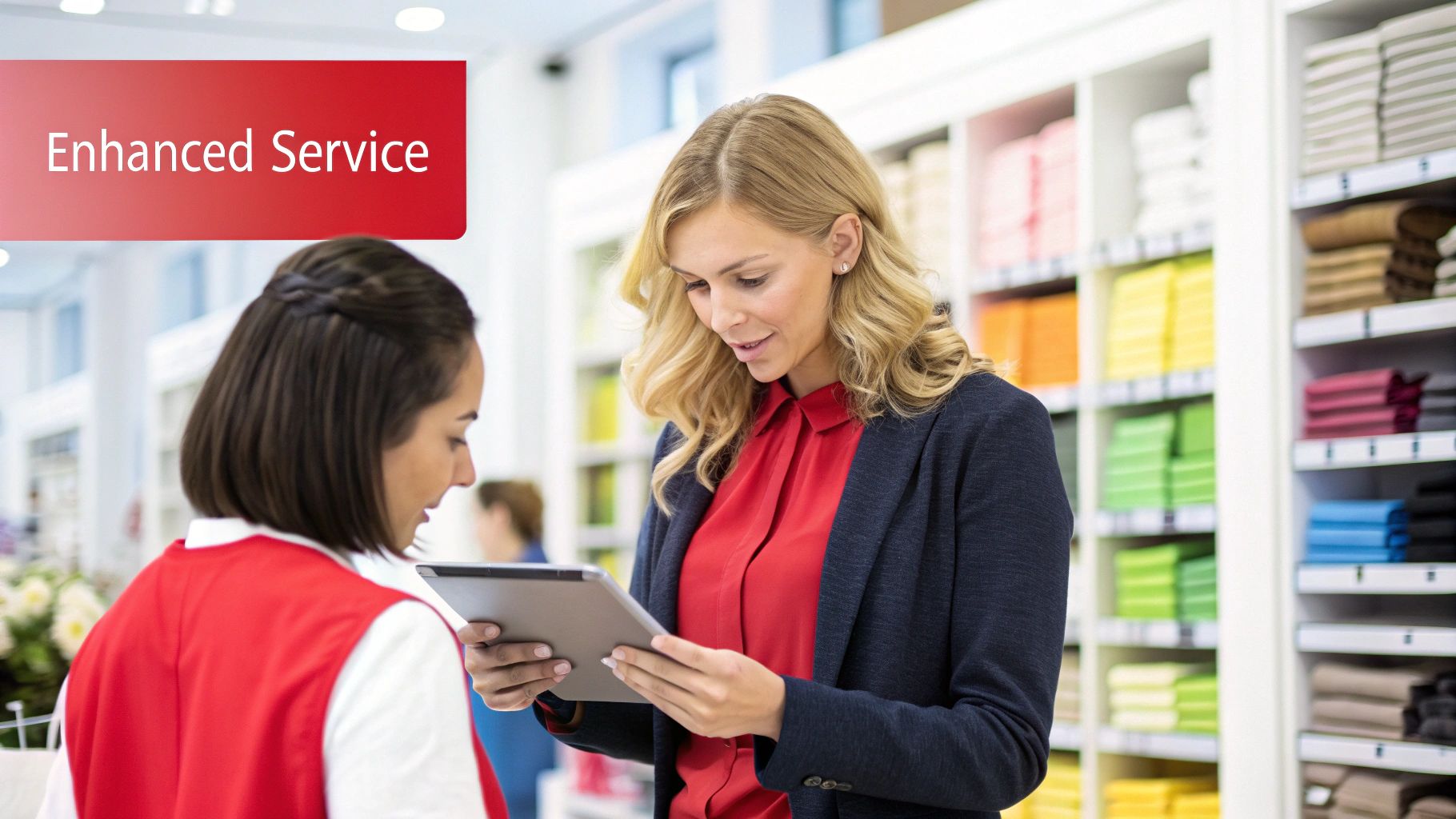
To really grasp what retail automation looks like on the ground, let’s zoom in on a piece of tech that’s quietly revolutionizing store aisles everywhere: Electronic Shelf Tags (ESLs). These small, battery-powered digital screens are the perfect case study, showing how smart automation replaces old-school paper labels with dynamic, centrally-controlled information hubs.
Think about the traditional way of changing prices. An employee has to print hundreds of paper labels, then walk the entire store to physically swap out every single tag for a sale. It’s slow, tedious, and a breeding ground for human error. We've all been there—the price on the shelf doesn't match the price at the scanner, causing frustration and delays.
ESLs completely flip that model on its head. They operate as a connected network, so instead of a manual slog, a manager can update an item's price—or a whole category's—from a single computer. Within seconds, every tag on the sales floor reflects the change. This is automation in the retail industry in its purest form: solving a real, everyday problem with incredible speed and precision.
Beyond Basic Pricing: The Many Hats of an ESL
The true magic of electronic shelf tags is that they do so much more than just show the correct price. They act like tiny digital billboards right on the shelf, displaying all sorts of useful info that makes life easier for both your team and your customers. This versatility is what makes them such a no-brainer for modern retailers.
Their capabilities have evolved far beyond a simple number, turning them into powerful communication tools.
- Dynamic Pricing: Want to run a flash sale or a happy hour special? You can implement agile pricing strategies on the fly, adjusting prices based on demand, competitor moves, or even the time of day.
- Promotional Info: Catch a shopper's eye with graphics, sale announcements like "2 for $5," or key product benefits right where they’re making a decision.
- Inventory Data: Create a little urgency by showing stock levels, like "Only 3 left!" You can also display backend data for staff, like reorder numbers or the next shipment date.
- NFC and QR Codes: Many modern ESLs let shoppers tap their phone or scan a code to pull up detailed product specs, customer reviews, or add an item to a digital shopping list.
Electronic shelf tags are more than a replacement for paper; they're the bridge between your physical shelf and the digital world. They bring the data-rich, responsive feel of e-commerce right into the brick-and-mortar store.
The Clear Business Impact of Electronic Shelf Tags
Putting ESLs to work delivers results you can see and measure almost immediately. The most obvious win is the huge drop in labor costs. When you free up the hours your team used to spend on manual price changes, you can redirect them to what really matters: helping customers. That shift alone often pays for the investment in no time.
Even better, these electronic shelf tags guarantee 100% pricing accuracy. When the price on the shelf always matches the price at checkout, you eliminate a massive source of customer frustration and build incredible trust. This accuracy also means promotions are applied correctly, so you aren't losing money from under-pricing or dealing with disputes from over-pricing.
If you want to get into the nitty-gritty, understanding the components of an e-price tag shows you just how this technology works. As a core piece of the automation in retail industry puzzle, ESLs prove how a single, smart investment can ripple out to benefit your operations, customer happiness, and bottom line.
Implementing Automation in Your Retail Business
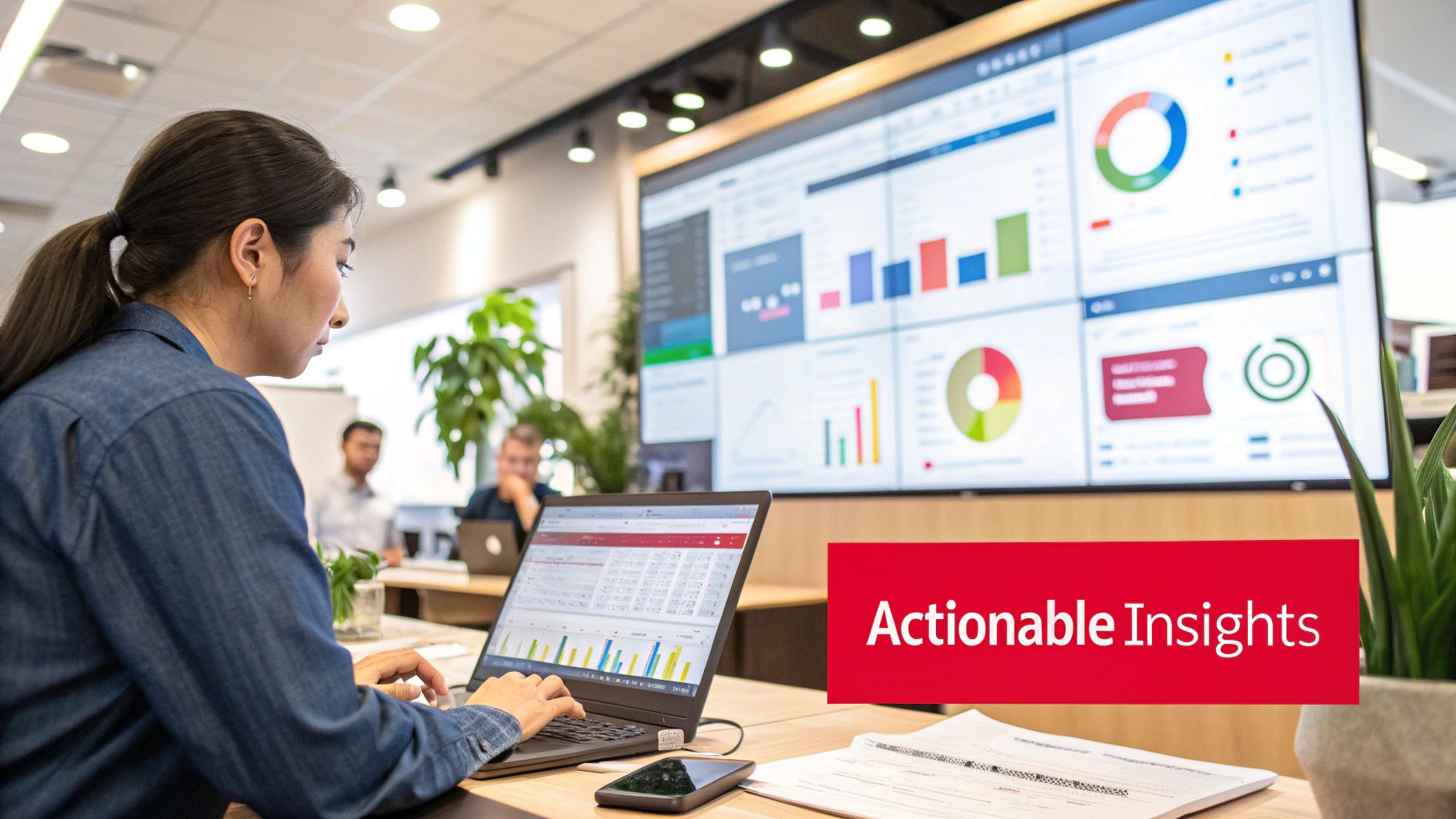
Jumping into retail automation can feel like a massive project, but with the right game plan, it's not just manageable—it's incredibly effective. The trick isn't to flip a switch and change everything overnight. It's about making smart, targeted upgrades that solve your biggest operational headaches first.
So, where do you start? With a simple needs assessment. Take a hard, honest look at where your business is bleeding time and money. Are checkout lines snaking down the aisles? Is your team burning hours on manual inventory counts? Maybe pricing mistakes are causing frustrating moments at the till? Pinpointing these specific pain points gives you a clear target for your first automation project.
Start Small and Prove the Concept
Once you've zeroed in on a problem, the smartest move you can make is to launch a pilot project. Think of it as a test run in a controlled environment. This approach keeps the risk low and lets you gather real, hard data on the return on investment (ROI) before you even think about a store-wide rollout.
A perfect example is putting electronic shelf tags in a single, high-traffic department. This lets you measure a few key metrics in a contained space:
- Labor Savings: How many hours does your team get back when they no longer have to swap out paper price tags?
- Pricing Accuracy: How much have pricing discrepancies at the checkout counter dropped?
- Sales Impact: Are the dynamic promotions you’re running on the tags actually changing how people shop?
This kind of pilot gives you undeniable proof of value, which makes justifying a bigger investment a whole lot easier. To get a better handle on this specific technology, take a look at our complete guide to electronic shelf labelling.
The whole point of a pilot is to replace guesswork with data. It shows the real-world impact of automation in the retail industry on your business, turning a theoretical benefit into a result you can actually measure.
Key Considerations for a Smooth Rollout
After you've run a successful pilot, scaling up requires careful planning. Choosing the right vendor is huge—you need a partner who doesn't just sell you the tech but also offers solid support and training. Your new automation tools also have to play nicely with your existing systems, like your Point of Sale (POS) and Enterprise Resource Planning (ERP) software.
When you're looking at software, platforms like Odoo offer a whole suite of integrated tools designed for this. You can find resources from Odoo learning partners to help guide the process, like this visual guide on Exploring Odoo for Retail Automation.
Let's be honest, recent global events have thrown this push for automation into overdrive. The COVID-19 pandemic forced retailers to quickly bring in technologies like self-checkout and contactless payments to meet new demands for safety and speed. It was a wake-up call that highlighted just how important it is to have an adaptable operation.
The numbers tell the same story. The retail automation market hit USD 21.19 billion by 2023 and is on track to reach a staggering USD 64.09 billion by 2032.
Looking Ahead: The Future of Automation in Retail
What we’re seeing today with automation in the retail industry is just the tip of the iceberg. As technology gets smarter and more integrated, the line between the convenience of online shopping and the hands-on nature of a physical store will blur until it’s virtually gone. The future isn't about choosing one or the other—it's about weaving them together into one seamless, intelligent experience.
You can already see the next chapter taking shape. Fully autonomous stores are no longer science fiction. We’re talking about places where you can walk in, grab what you need, and simply walk out, with the bill automatically handled. This "just walk out" model, first made famous by concepts like Amazon Go, is powered by a dizzying array of cameras, sensors, and AI working in perfect sync to create a completely frictionless trip.
Hyper-Personalization and Predictive Shopping
Beyond just skipping the checkout line, the next real frontier is hyper-personalization. AI is getting frighteningly good at understanding what we want, but soon it will move beyond simple suggestions to anticipating our needs before we even recognize them ourselves.
Imagine your local grocery store knowing you're about to run out of coffee and milk. Just as you pass that aisle, a personalized offer for your favorite brands pops up on your phone. This isn't a shot in the dark; it's the result of advanced data analytics connecting your online browsing, your path through the store, and your past purchases to create an experience that feels like it was designed just for you.
Immersive Experiences with AR and VR
Augmented Reality (AR) and Virtual Reality (VR) are also gearing up to become everyday tools, not just novelties. They're poised to solve real-world shopping problems and make the whole process more engaging.
- Virtual Try-Ons: AR apps will let you see exactly how that new jacket looks on you, no fitting room required.
- In-Store Navigation: Use your phone to get AR-guided directions straight to that obscure brand of hot sauce on aisle nine.
- Product Visualization: Point your camera at your living room and see how that new sofa would fit—before you spend a dime.
These tools do more than just add a "wow" factor. They build shopper confidence, which in turn helps slash return rates.
At the end of the day, the goal of retail automation isn't to replace people but to empower them. By letting technology handle the repetitive, data-driven work, employees are freed up to become true brand ambassadors who can focus on creating meaningful, high-value customer interactions.
As stores become more intelligent and connected, the way they communicate with shoppers has to evolve, too. Dynamic displays are the key. While technologies like electronic shelf tags provide the foundation for this real-time communication, the same principles apply to larger, more immersive formats. Taking a look at the role of digital signage in grocery stores offers a perfect glimpse into this interactive future. The big takeaway is this: automation is giving retailers the tools to build smarter stores and forge stronger customer relationships, kicking off a truly exciting new era in commerce.
FAQ
Diving into retail automation brings up plenty of questions. From the initial costs to the impact on your team, let's clear up some of the most common things retailers ask when they’re thinking about making this shift.
What Is the Biggest Barrier to Implementing Retail Automation?
For most retailers, the biggest hurdle is the initial investment. Let's be honest—technologies like robotics, AI-powered software, and a full system of electronic shelf tags require a significant upfront spend. But it’s crucial to see this for what it is: a long-term investment, not just a cost.
A smart way many businesses tackle this is by starting small. They'll run a pilot project in one or two departments to prove the return on investment (ROI) before committing to a store-wide rollout. This approach keeps the risk low and builds a rock-solid business case for going all in.
Will Automation Replace Retail Workers?
This is probably the most common worry we hear, but the goal of automation isn’t to replace your people—it’s to make their jobs better. Automation is brilliant at handling the repetitive, soul-crushing tasks like manual price changes, endless inventory counts, and mind-numbing data entry.
By taking those tasks off their plate, your employees are free to focus on what humans do best: providing fantastic customer service, sharing their product expertise, and solving complex problems on the floor. In fact, many retailers find that automation actually creates new roles focused on managing and maintaining the technology itself.
Automation shifts the focus of human work from tedious tasks to meaningful customer engagement. It empowers your team to be more strategic and service-oriented, which directly improves the shopping experience and builds loyalty.
How Can Small Retailers Afford Automation Technology?
While the big chains have deep pockets, automation is no longer just for the giants of retail. Many tech providers now offer subscription-based models or "Automation-as-a-Service." This completely changes the game by lowering the financial barrier, letting smaller businesses pay a manageable monthly or annual fee instead of a huge lump sum.
Plus, small retailers can be incredibly strategic by starting with high-impact, lower-cost solutions. For instance, putting in electronic shelf tags can deliver immediate savings on labor and wipe out pricing errors. That gives you a quick, measurable ROI you can use to fund your next automation project. It’s all about starting smart and scaling from there.
Ready to take the first step toward a smarter, more efficient store? At ESLtags, we specialize in electronic shelf label solutions that get rid of manual pricing for good and free up your team to focus on your customers. Discover how our technology can transform your store by visiting https://www.electronicshelftags.com today.


Leave a Reply
Your email is safe with us.