

Ever wonder what those little digital screens on store shelves are? They’re called digital price tags or, more officially, Electronic Shelf Labels (ESLs). Think of them as small, battery-powered e-ink displays that completely replace old-school paper labels.
These tags connect wirelessly to a central hub. This means you can update prices across your entire store instantly, with just a few clicks. The days of manually printing, cutting, and sliding paper tags into shelf rails are over.
Moving Beyond Manual Price Changes
Picture the familiar end-of-day scramble. Your team spreads out across the store, armed with label guns and stacks of new paper tags, prepping for tomorrow’s big sale. It’s a scene played out in retail stores everywhere.
This manual routine isn’t just slow—it’s a massive drain on your resources. It’s also a breeding ground for frustrating and costly pricing errors that tick off both your staff and your customers.
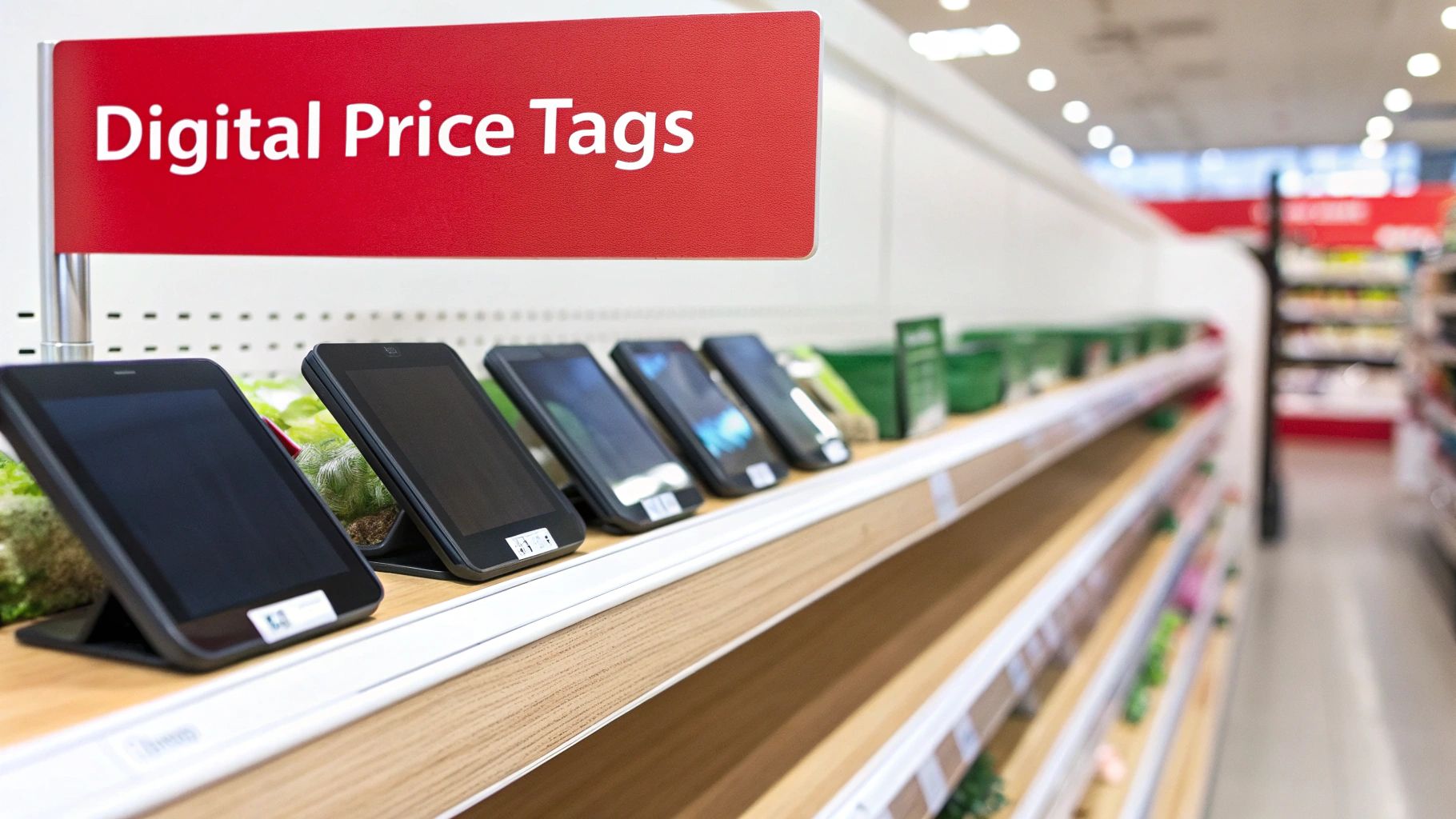
This is the core headache of traditional pricing. Every single price change eats up valuable employee time—time they could be spending helping shoppers, restocking, or making the store look great. And the potential for human error is huge. A single misplaced digit on a popular item can lead to serious profit loss or an argument at the checkout counter.
The Strategic Shift to Automation
Digital price tags are way more than just a cool tech upgrade. They’re a strategic fix for these nagging retail challenges. By automating price updates, you unlock a whole new level of agility and precision in your operations. It’s not just about convenience; it’s about building a smarter, more customer-focused business.
The market is certainly catching on. The electronic price tags market, currently valued at $2.50 billion, is expected to skyrocket to $7.80 billion by 2033. This surge is driven by retailers who want to be more efficient and sustainable. In fact, about 70% of stores that adopt them report a significant reduction in waste and a better carbon footprint.
At its core, adopting digital price tags is about reclaiming your team’s most valuable asset: their time. It transforms store operations from a reactive, manual grind to a proactive, automated workflow.
Paper vs. Digital Price Tags At a Glance
To really see the difference, let’s put the old way and the new way side-by-side. This quick comparison shows just how much changes when you move from paper to digital.
| Feature | Paper Price Tags | Digital Price Tags (ESLs) |
|---|---|---|
| Update Speed | Hours or days | Instant (seconds) |
| Labor Required | High (manual replacement) | Minimal (automated) |
| Accuracy | Prone to human error | 100% accurate sync with POS |
| Promotions | Slow to deploy, rigid | Dynamic and immediate |
| Customer Trust | Often compromised by errors | High, due to consistency |
| Staff Focus | On tedious tasks | On customer service |
| Waste | High (paper, ink, etc.) | Minimal to none |
| Long-Term Cost | Ongoing labor & material costs | One-time investment, low upkeep |
The contrast is pretty stark, isn’t it? Digital tags don’t just solve one problem; they upgrade the entire operational ecosystem of a store.
Redefining In-Store Operations
The benefits of ditching paper go far beyond just saving time. Putting digital price tags on your shelves introduces a whole new dynamic to the sales floor.
- Guaranteed Price Accuracy: The price on the shelf always matches the price at the register. This builds trust and gets rid of those awkward checkout disputes.
- Instant Promotional Execution: Ready to launch a flash sale or start a clearance event? You can push store-wide updates in seconds, not hours or days.
- Enhanced Staff Focus: When your team isn’t stuck changing labels, they can focus on what really matters—helping customers and managing inventory.
By fixing these fundamental issues, ESLs create a more efficient, accurate, and engaging place to shop. If you’re curious about the different kinds of tags out there, you might want to check out our detailed guide on price labels for shelves.
How Digital Price Tag Technology Works
Forget everything you know about changing paper labels. A digital price tag system is more like the central nervous system for your entire sales floor—a smart, interconnected network where every single shelf communicates instantly with a central hub. It’s a setup that replaces the slow, error-prone manual process with one that’s fast, automated, and dead-on accurate.
So, how does it all actually come together?
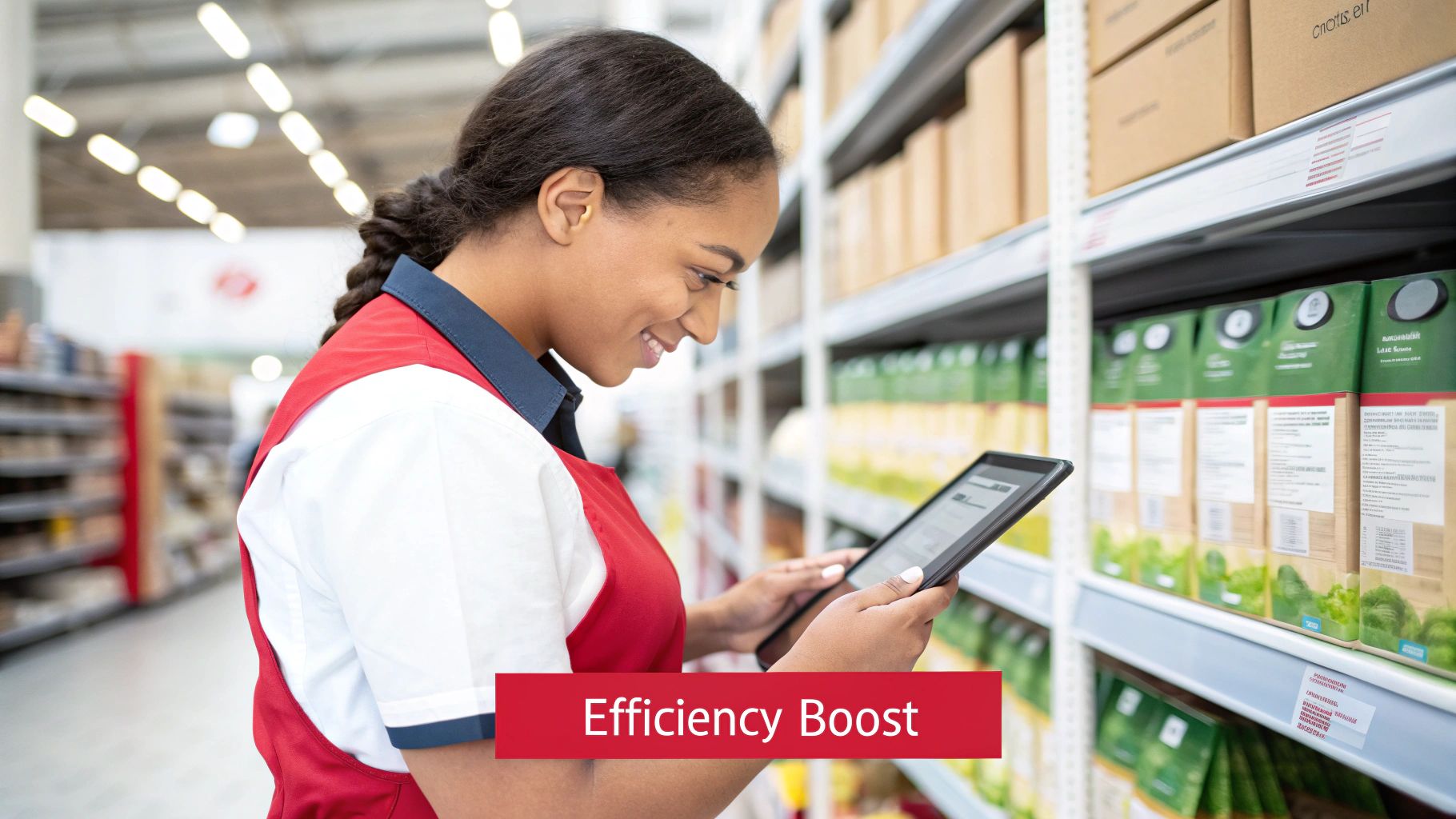
At its core, the technology is surprisingly straightforward, relying on just three components working in perfect harmony. Once you understand these pieces, you’ll see how a single click in a back office can change thousands of prices on the shelf in a matter of seconds.
The Three Pillars of Digital Pricing
The real magic behind digital price tags for retail isn’t found in one single gadget but in the seamless way the hardware and software talk to each other. Each piece of the puzzle plays a distinct and vital role.
- The Digital Tags (The Display): These are the small, e-ink screens you see clipped to the shelf edge. They work just like a Kindle screen, which means they only use power when the display is actively changing. This incredible efficiency allows their batteries to last for 5-10 years, making them virtually maintenance-free.
- The Communication Gateway (The Messenger): Think of these gateways as powerful Wi-Fi routers, but for your prices. Installed strategically throughout the store, they act as the messengers, broadcasting signals from the central software to the tags using secure, low-energy radio frequencies.
- The Central Software (The Command Center): This is the brain of the entire operation. It’s the software platform where you manage all your pricing and product data, and it plugs right into your existing Point of Sale (POS) and inventory systems to keep everything perfectly synchronized.
This whole setup is a real-world application of the broader landscape of the Internet of Things (IoT), connecting physical objects (the tags) to a digital network for instant communication.
A digital price tag system is a closed loop built for accuracy. The command center sends an order, the messengers deliver it, and the displays execute it instantly. This guarantees a 100% match between your shelf price and your checkout price, every single time.
The Journey of a Price Change
So, what does this look like in practice? Let’s say you need to roll out a weekend promotion on milk across all your locations.
A manager simply logs into the central software and changes the price from $3.99 to $3.49. That one action is the only manual step in the entire chain. From here, the system takes over completely.
The software immediately shoots an encrypted data packet with the new price to the gateways in the store. Those gateways then broadcast the update wirelessly across the floor. In seconds, every digital tag assigned to that milk product picks up the signal and flashes its e-ink display to show the new $3.49 price.
For a deeper dive into the technical side, check out our full explanation of how electronic shelf price tags work.
More Than Just Price Updates
This powerful network isn’t just a one-way street. The tags can also send information back to the central system, making them far more than simple displays.
- Low Battery Alerts: Tags report their battery levels, so you know exactly which ones need attention long before they ever go dark.
- Confirmation Signals: The system gets a “message received” confirmation after a price update, giving you a reliable audit trail.
- Location Data: More advanced systems can even help with planogram compliance by confirming that tags are physically in their correct spots on the shelf.
This constant, automated conversation between the tags and the central software is what makes digital price tags for retail such a game-changer. It transforms pricing from a tedious, labor-intensive chore into a strategic, data-driven advantage that boosts accuracy, frees up your staff, and lets your team get back to what they do best: helping customers.
The True Payoff of Electronic Shelf Labels
Switching to digital price tags for retail brings some serious advantages that go way beyond just saving paper. Sure, being eco-friendly is a nice perk, but the real value is how these labels totally reshape your store’s efficiency, pricing speed, and customer happiness. Moving to an electronic system isn’t a minor tweak; it’s a ground-up change in how you run your business.
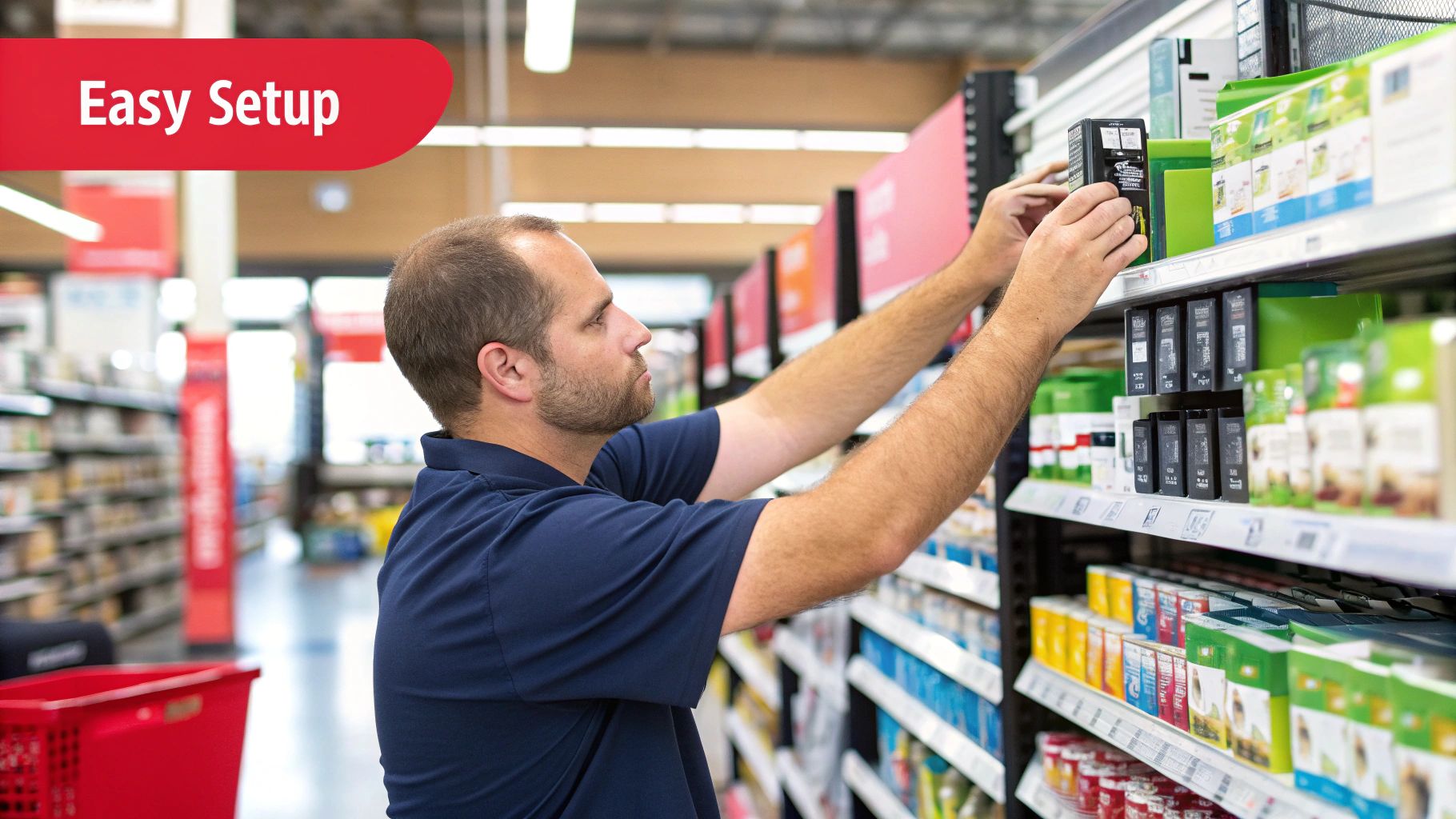
Just think about it: you could completely wipe out the thousands of hours your staff spends printing, cutting, and sliding new paper tags into shelf rails every year. That’s not a small adjustment—it’s a huge operational win. Instead of that mind-numbing work, your team can put their energy where it actually counts: helping customers, managing inventory, and making the store a better place to shop.
Unlock Serious Operational Efficiency
The first thing you’ll notice with electronic shelf labels is the massive jump in efficiency. Manual price changes are slow, tedious, and—let’s be honest—full of human error. Those little mistakes can lead to awkward moments at the checkout, frustrated customers, and lost sales.
Digital systems cut the problem off at the source. They connect directly to your central pricing database, guaranteeing 100% price accuracy from the shelf to the scanner. That alone builds a ton of customer trust and gets rid of a major headache.
And the benefits just keep rolling from there:
- Slash Labor Costs: When price updates are automatic, you can move your team from monotonous labeling tasks to roles that actively help customers and boost sales.
- Zero Material Waste: Kiss the recurring costs of paper, ink cartridges, and printer maintenance goodbye. It’s a win for your budget and a step toward your sustainability goals.
- Perfect Promo Execution: Ready to launch a flash sale? It’s now a one-click job. Every tag in the store updates at the same time, without a single mistake.
This is more than just shaving a few minutes off a task. You’re fundamentally rewiring your store’s workflow, turning a high-effort, manual process into something that just works, silently and perfectly, in the background.
Gain Real Pricing Agility
In retail today, you have to be quick on your feet. Digital price tags for retail give you the power to run dynamic pricing strategies that were just a fantasy with paper tags. This agility means you can react to what’s happening in the market, right now.
For instance, you could instantly match a competitor’s price drop. Or you could mark down perishable items as they get close to their sell-by date to cut down on waste. You could even run “happy hour” style promos to get people in the door during typically slow hours. Pricing stops being a static chore and becomes a powerful tool for protecting your margins.
This is exactly why the global market for retail digital price tags is booming, on track to hit about $2,091 million by 2025. More and more retailers are realizing they need this edge to improve how they operate.
Elevate the Customer Experience
At the end of the day, every upgrade should make things better for the shopper. Electronic shelf labels play a huge role in creating a smoother, more modern shopping experience, and guaranteed price accuracy is just the start.
Modern digital tags are more than just a price display. They act as a bridge between your physical shelf and your online world.
- Richer Product Info: Slap a QR code on the tag and shoppers can instantly pull up detailed product pages, read reviews, or watch how-to videos on their phones.
- Deeper Engagement: You can show real-time stock levels, highlight promo details, or even display special pricing for your loyalty members, right on the shelf.
- A Modern Vibe: Let’s face it, a store with sleek digital displays just feels more professional, organized, and up-to-date. That clean look has a real impact on how people see your brand.
By giving customers accurate, transparent, and genuinely useful information at the exact moment they’re making a decision, you empower them. For more great ideas, check out our guide to retail store shelf labels. A great experience builds loyalty and keeps people coming back, turning a simple price tag into a cornerstone of customer satisfaction.
Choosing the Right Digital Price Tag System
Let’s be honest, not all digital price tag systems are created equal. Jumping into this technology is a lot like buying a car—sure, they all get you from A to B, but the features, performance, and long-term reliability can be worlds apart. If you want to get it right, you have to look past the tag itself and really dig into the hardware, the software, and how it all connects.
Picking a solution that doesn’t fit your store is a recipe for disaster. You’ll end up with maintenance headaches, frustrated staff, and a return on investment that never quite materializes. To avoid that, you need to think like a savvy buyer and focus on what actually matters for your day-to-day operations.
Evaluating the Hardware Essentials
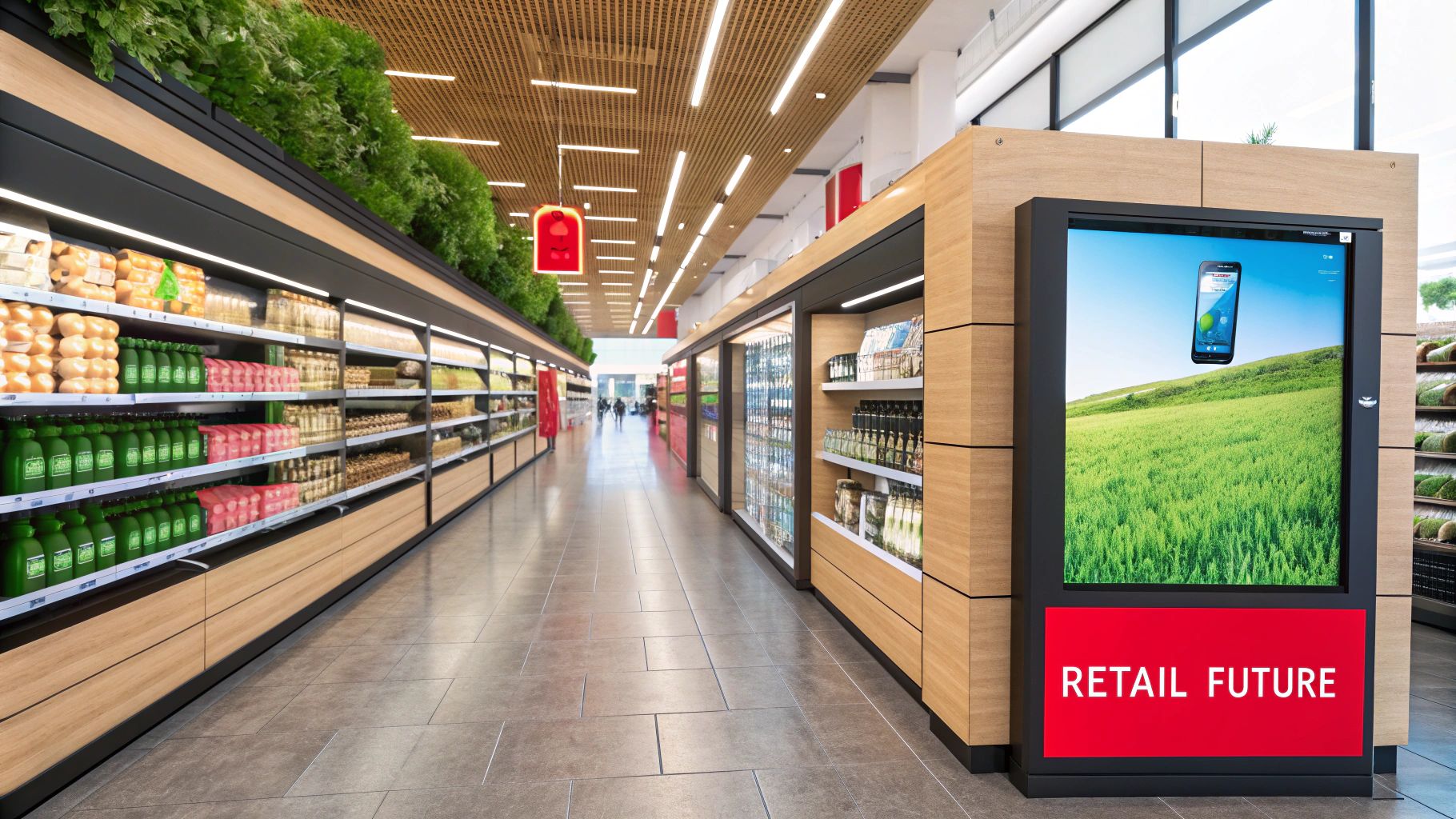
The physical tags are what your customers and employees will see and interact with every single day. They’re the public face of your pricing strategy, so their quality is non-negotiable. When you’re looking at the hardware, prioritize clarity, durability, and a bit of flexibility.
Start with the display. The e-ink screen needs to be crisp and easy to read from different angles, even under the harsh glare of store lighting. A fuzzy or low-contrast display is just going to annoy shoppers, completely defeating the purpose.
Next, think about color. The standard black-and-white tags get the job done, but systems that offer a third color—like a punchy red or yellow—are a game-changer for promotions. That simple splash of color makes sale items pop right off the shelf, grabbing a customer’s eye without you having to print a single extra sign.
Key Takeaway: The best hardware is the kind you forget is even there—it just works. A guaranteed battery life of at least 5-7 years is critical. Anything less and your team will be constantly swapping out dead tags instead of helping customers.
Finally, don’t overlook the physical design. A one-size-fits-all approach is a myth in retail. Your provider should offer a whole range of tag sizes for everything from tiny cosmetic tubes to big-screen TVs, along with sturdy fixtures for shelves, pegboards, and even the freezer aisle.
Unpacking the Software and Integration
If the hardware is the face, the software is the central nervous system. It’s the brain behind the entire operation, connecting every single tag back to your core business systems. This is where you’ll either unlock massive efficiency gains or create a new set of problems.
The absolute must-have feature is seamless integration. Your new system has to talk flawlessly with your existing Point of Sale (POS) and inventory management software. If it doesn’t, you’ll be stuck managing two different databases, which creates the exact kind of manual work and human error you were trying to eliminate in the first place.
A user-friendly management platform is just as important. Your store managers shouldn’t need a degree in IT to update prices, schedule a weekend promotion, or check the system’s health. The interface needs to be intuitive, letting them make changes quickly and with confidence.
And think about the future. Does the system support things like QR codes or NFC (Near Field Communication)? These features can turn a simple price display into an interactive tool, letting shoppers pull up reviews, watch a product video, or add an item to a digital cart right from the shelf.
A Checklist for Your Decision
Choosing the right digital price tag system really comes down to asking the right questions. When you’re comparing different providers, it’s easy to get lost in the sales pitch. This checklist will help you cut through the noise and focus on the features that truly deliver value in a retail environment.
Essential Digital Price Tag System Features
| Feature Category | Key Considerations | Why It Matters |
|---|---|---|
| Display Quality | Is the e-ink screen high-contrast and easily readable from a distance? | Poor visibility frustrates customers and diminishes the value of the investment. |
| Battery Life | What is the guaranteed lifespan of the tag batteries under normal use? | Long battery life (5+ years) reduces maintenance costs and operational disruptions. |
| Color Options | Does the system offer a third color (red/yellow) for promotions? | Color makes promotions stand out, increasing their effectiveness and driving sales. |
| System Integration | Can the software seamlessly connect with your current POS and ERP systems? | Flawless integration is essential for ensuring 100% price accuracy and automating workflows. |
| User Interface | Is the management software intuitive and easy for your team to learn? | A complex platform will slow down your team and lead to underutilization of features. |
| Advanced Features | Does it support QR codes, NFC, or other interactive capabilities? | These features enhance the customer experience and provide future-proofing for your system. |
By carefully weighing these hardware and software components, you’ll be in a much better position to choose a system that doesn’t just fix today’s pricing headaches but also becomes a powerful tool for whatever comes next in retail.
Calculating Your Return on Investment
Justifying the upfront cost of a digital price tag system can feel like a tough sell, but the financial picture gets a lot clearer once you look past the initial price tag. The real return on investment (ROI) isn’t just about the hardware; it’s about fundamentally changing your store’s financial health by slashing hidden costs and opening up new ways to make money.
Think of it less as an expense and more as an investment in operational excellence.
To really get a handle on the value, we need to look at the ROI from two angles. First, you have the hard savings—these are the direct, easy-to-measure cost reductions you’ll see right on your balance sheet. Then you have the soft gains, which are the powerful revenue drivers that come from having a much more agile and accurate pricing strategy.
Identifying Your Hard Savings
Hard savings are the most immediate and tangible wins you get from switching to digital price tags. These are the recurring expenses you can pretty much cross off your budget list from day one.
- Drastic Labor Cost Reduction: The biggest and most obvious saving is labor. Think about all the hours your team spends printing, cutting, and manually swapping out paper tags. With digital tags, that time can be redirected to things that actually make you money, like helping customers on the sales floor.
- Elimination of Material Costs: Say goodbye to that endless cycle of buying paper, ink cartridges, and toner. These little costs add up to a surprisingly big number over the course of a year, and with electronic shelf labels, they vanish completely.
- Reduced Printer Maintenance: The constant wear and tear on your printers from pumping out labels also disappears. That means no more paying for repairs or replacing overworked equipment.
These savings alone often build a powerful case for making the switch. To see how these numbers can really add up for your business, you can check out our detailed breakdown of electronic shelf tags cost and what goes into it.
Unlocking Soft Gains and Revenue Growth
While hard savings stop you from losing money, soft gains are all about actively making more of it. These benefits are tied directly to your newfound operational agility and have a real impact on your top-line revenue. This is where you shift from just saving money to strategically earning more.
The true financial power of digital price tags lies in their ability to turn pricing into a dynamic tool. You move from a static, labor-intensive process to an agile system that can respond instantly to market conditions, driving both sales and customer loyalty.
Just think about the potential revenue you could capture in these key areas:
- Increased Profit Margins from Agile Pricing: You can finally run dynamic pricing strategies that were just impossible with paper. This could mean automatically marking down perishables to cut down on waste, instantly matching a competitor’s price drop to stay in the game, or even running flash sales to bring in traffic during slow hours.
- Elimination of Losses from Pricing Errors: We’ve all been there—a price on the shelf doesn’t match the price at the register. Those little mistakes eat into profits and frustrate customers. Digital tags guarantee 100% accuracy, making sure you never undercharge for an item or create a bad experience at checkout.
- Improved Sales Conversion: A modern, transparent, and consistently accurate pricing system builds trust. When shoppers feel confident in your prices and can even scan a QR code on the tag for more info, they’re much more likely to make a purchase. This directly lifts your overall conversion rates.
How Top Retailers Are Winning with Digital Tags
The best arguments for digital price tags aren’t hiding in some feature list; they’re playing out in the real world, in the aisles of retail giants. When you look at how the big players use this tech, you see its true power to fix huge operational headaches, push sustainability forward, and build a much smarter shopping experience. These stories are the blueprint for what’s possible.
Major retailers haven’t just adopted electronic shelf labels for a minor efficiency boost. For them, it’s a core piece of their competitive strategy. By automating pricing, they’re freeing up their people, slashing waste, and reacting to market shifts with incredible speed.
Walmart’s Leap into Efficiency
For a company the size of Walmart, tiny inefficiencies snowball into massive operational drag. Before digital tags, just updating prices across a single store was a colossal task. It took a whole team about two full days to manually swap out the labels on roughly 120,000 items. That process wasn’t just slow and expensive; it was a recipe for human error.
Now, with the rollout of digital price tags, that multi-day, labor-heavy chore is over in a few minutes. A single click from a central hub does what used to take an entire team’s focused effort. This guarantees store-wide accuracy and, more importantly, frees up thousands of hours so employees can actually help customers.
Albert Heijn’s War on Food Waste
Beyond just saving time and money, digital price tags for retail are becoming a serious weapon for sustainability. The European supermarket chain Albert Heijn is a brilliant example, using the tech to tackle one of the industry’s biggest demons: food waste. They rolled out AI-powered digital tags to create an intelligent markdown system for products getting close to their expiration date.
The system automatically drops prices in 15-minute increments, making those items more and more attractive as the clock ticks. This dynamic pricing approach has been a massive success, cutting their food waste by over 250 tons a year. You can dig into more data on how digital grocery price tags are being studied to see the full impact.
These examples prove that digital price tags are so much more than a price-changing gadget. They’re a platform for smarter retail—letting stores react dynamically to inventory, customer demand, and sustainability goals.
The success of these industry leaders points to an undeniable trend. Whether it’s getting thousands of work hours back like Walmart or pioneering green practices like Albert Heijn, digital shelf labels are at the heart of building a more resilient and profitable retail business. The value of this technology clearly extends far beyond the shelf edge, touching everything from labor management to corporate responsibility.
Common Questions About Digital Price Tags
When retailers start thinking about making the switch to digital price tags, a few key questions always pop up. It’s a big operational shift, so getting clear, straightforward answers is crucial before you dive in.
Let’s tackle the most common concerns head-on. From battery life to security, these are the practical details that really matter for your day-to-day operations and help you make an informed decision.
How Long Do the Batteries in Digital Price Tags Last?
This is usually the first thing people ask, and for good reason—no one wants to add “change a thousand tiny batteries” to their weekly to-do list. The good news is that modern digital price tags for retail are incredibly efficient. They run on e-ink displays, the same kind of tech you see in e-readers, which only uses power when the on-screen information actually changes.
Because of this low-energy design, the batteries inside these tags last a surprisingly long time. You can expect a lifespan of anywhere from 5 to 10 years, depending on the brand and how often you’re pushing updates. This long life keeps maintenance minimal and really helps lower the total cost of ownership over the long haul.
Can Digital Price Tags Integrate with My Current POS System?
Absolutely. In fact, seamless integration is a core part of what makes these systems so effective. A good ESL platform is built from the ground up to talk to your existing retail software, whether it’s your Point of Sale (POS), inventory management, or ERP system.
This connection is the secret sauce to achieving 100% price accuracy between the shelf and the checkout. The tags sync directly with your central database, which completely gets rid of those awkward and costly price mismatches that frustrate customers.
The whole point is to create a single source of truth for all your pricing, automating the updates so you don’t have to juggle a bunch of disconnected systems.
Are Digital Price Tags Secure from Hacking or Interference?
Security is a massive priority for ESL providers. These systems don’t just piggyback on your store’s Wi-Fi network, which can be a common target for attacks. Instead, they communicate using proprietary, encrypted radio frequency (RF) protocols. This makes the signal incredibly difficult for an outsider to intercept or mess with.
On top of that, the software itself has multiple layers of security to block unauthorized access or malicious price changes. It’s a robust setup designed to protect your data, your business, and your customers. If you want to dig deeper into the technical side, this digital label FAQ covers even more ground.
Ready to eliminate pricing errors and free up your staff for what truly matters? At ESLtags, we provide state-of-the-art digital price tag solutions that integrate seamlessly with your existing systems. Discover how our electronic shelf labels can transform your retail operations.


Leave a Reply
Your email is safe with us.