

You've probably seen them popping up in your local grocery or electronics store: small, digital screens on the shelf edge where paper price tags used to be. These are e price tags, or more formally, Electronic Shelf Labels (ESLs).
So, what are they? An e price tag is a compact, battery-powered digital display that completely replaces the old-school paper label. This isn't just a fancy screen; it's part of a smart system that lets retailers change thousands of prices instantly and wirelessly from a single computer.
Think of it like swapping a paper road map for a live GPS. The map is static and quickly becomes outdated, while the GPS is dynamic, connected, and always accurate. That’s the leap retailers make with this technology.
What Is an E Price Tag and How Does It Work
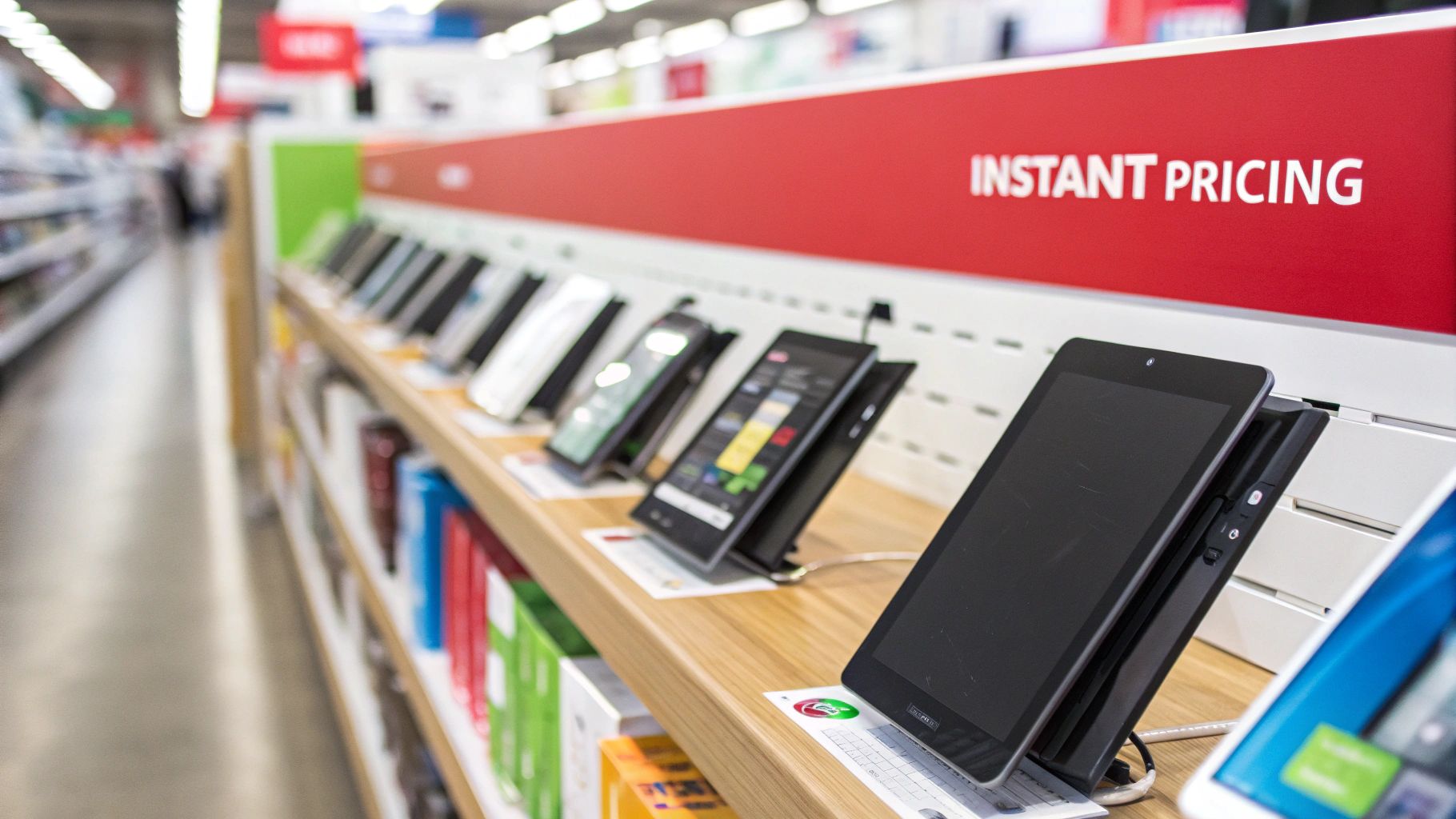
Picture a huge supermarket preparing for a weekend sale. In the past, this meant an employee pushing a cart down every aisle, painstakingly swapping out hundreds, if not thousands, of tiny paper tags. It’s a slow, tedious job, and it’s easy to make mistakes.
We’ve all been there—an item scans at a different price than what the shelf said. It’s frustrating for the customer and a headache for the store. The e price tag was invented to kill that problem for good.
At its heart, an e price tag system is a communication network built for speed and absolute accuracy. It swaps out hours of manual labor for a few clicks of a mouse, allowing store managers to launch flash sales, respond to a competitor's price drop, or fix an error in seconds.
The Three Core Components
To really get how these systems operate, you just need to understand three key parts that work together to create a seamless pricing setup.
- The Digital Tag: This is what you see on the shelf. Most use E Ink (or e-paper) technology, just like you’d find in a Kindle. This is a brilliant choice because E Ink displays only draw power when the image is changing. Once the price is set, it uses zero energy, which is why the batteries can last an incredible 5-10 years.
- The Communication Hub: You can think of this as a specialized Wi-Fi router for the tags. Sometimes called a gateway or an access point, this device gets pricing instructions from the central software and beams them out wirelessly to the right tags on the sales floor.
- The Central Software: This is the command center for the whole operation. It’s a software platform where a manager can see and control every single tag in the building. Crucially, this software talks directly to the retailer's other systems, like their Point of Sale (POS) or inventory database, to pull pricing information automatically.
The real magic of an e price tag system is in that integration. When a price is updated in the retailer's central database, the software instantly pushes that new price to the correct tag on the shelf. This guarantees 100% price accuracy between the shelf edge and the checkout scanner.
This interconnected system turns static, dumb shelves into a dynamic, intelligent part of the business. Want a deeper dive? You can check out our full guide on how electronic shelf price tags work.
The process is refreshingly simple: A manager updates a price, the software sends a signal to the communication hub, and the hub tells the specific tag on the shelf to refresh its E Ink display. It's an elegant, powerful fix for one of retail's oldest and most persistent challenges.
The Technology Powering Your Smart Shelves
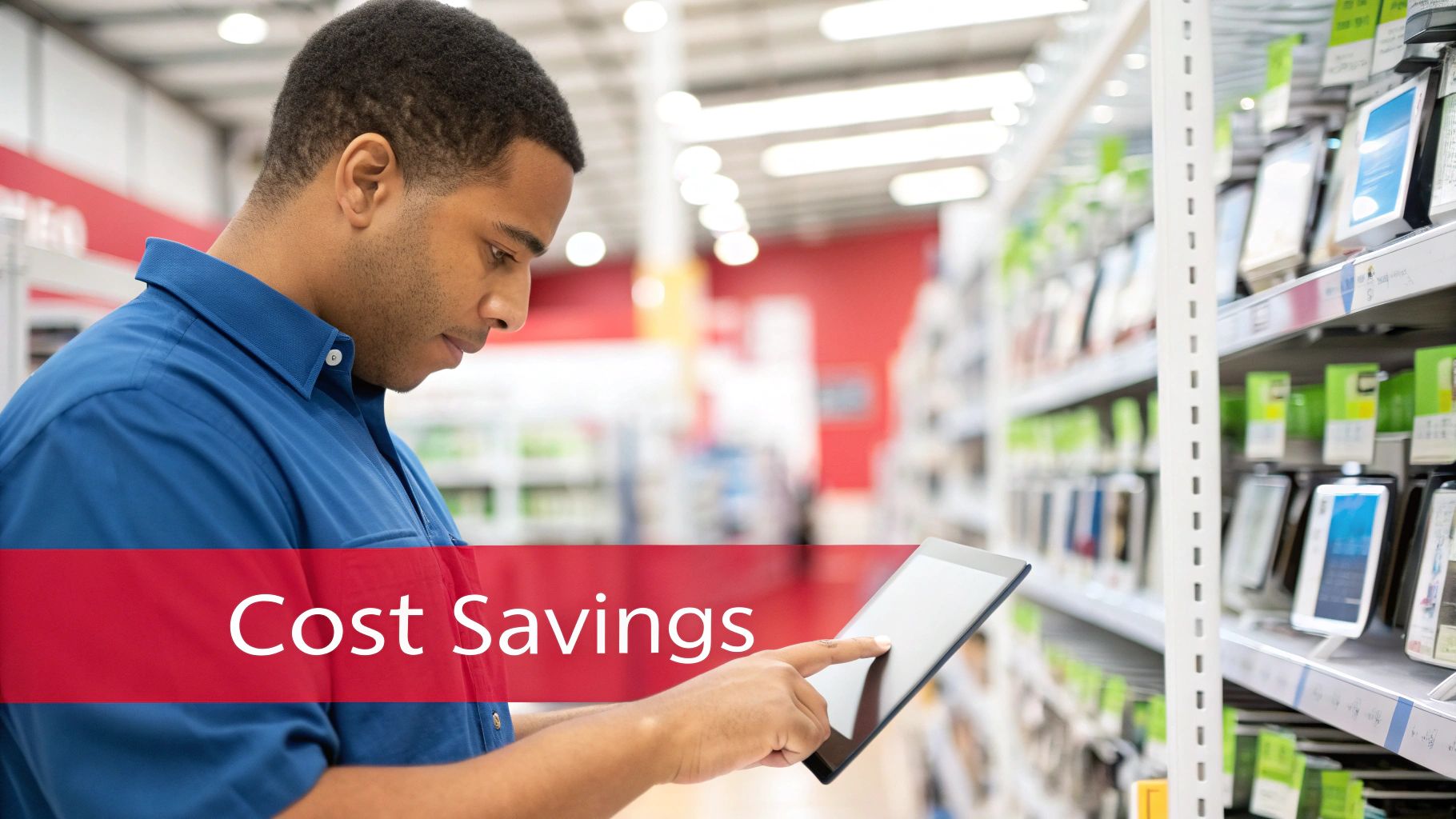
An e price tag system might seem like magic, but it’s really just three core components working together perfectly. Once you understand how each part plays its role, you can really appreciate how this technology brings your store shelves to life.
It all boils down to the digital displays, a wireless network to talk to them, and the central software that runs the show. Each piece is vital for the seamless, instant updates that are changing the game in retail.
The E Ink Display: The Digital Face of Your Shelf
The most obvious part of any e price tag is the screen itself. The vast majority of these use E Ink, the exact same technology you’d find in an Amazon Kindle. This isn't a random choice—it’s a brilliant one for a retail setting.
Unlike your phone's LCD screen that constantly burns power to stay lit, an E Ink display is different. It only draws power when the image on the screen is actively changing. The moment a new price is set, the screen holds that image perfectly with zero energy drain.
This incredible efficiency is why the tiny battery inside an e price tag can last for 5 to 10 years before needing a change. That kind of "set it and forget it" lifespan is absolutely essential when you're managing thousands of them. On top of that, its paper-like look gives you great contrast and wide viewing angles, so customers can easily read prices in any kind of store lighting.
The Wireless Network: A Wi-Fi for Your Prices
To update thousands of tags at once, the system needs a rock-solid communication line. That's where a dedicated wireless network comes in, usually powered by low-energy Radio Frequency (RF) signals.
Think of it as a private Wi-Fi network built just for your shelves. A few transmitters, often called gateways or access points, are placed around the store. These little hubs get the pricing instructions from the main server and broadcast them out to the right tags.
This network isn't designed for streaming video; it's built for efficiency and reliability. It uses specific low-frequency bands that are great at cutting through obstacles like metal shelving and stacks of products, making sure every single e price tag gets its update without a hitch.
The real power of this network is its ability to handle a huge number of devices all at once. A single system can reliably manage tens of thousands of individual tags, from the front door to the back of the stockroom, with total accuracy.
Beyond just the display technology of e-price tags, smart shelves leverage various innovations. For a deeper dive into another key technology that can power smart retail, explore RFID technology.
The Central Software: The Brains of the Operation
The last piece of the puzzle is the central management software. This is the command center where all the data is processed, turning simple database entries into real-time price changes on your sales floor.
This software is the bridge connecting your core business systems—like your Point of Sale (POS) and inventory database—directly to the shelf edge. When someone in marketing changes a price for a weekend sale, the software sees it immediately.
It then translates that change into a command, shoots it through the wireless network, and tells the specific e price tag to update. This seamless connection means the price on the shelf will always match the price at the checkout, killing human error and creating one source of truth for all your pricing.
Why Smart Retailers Are Switching to E Price Tags
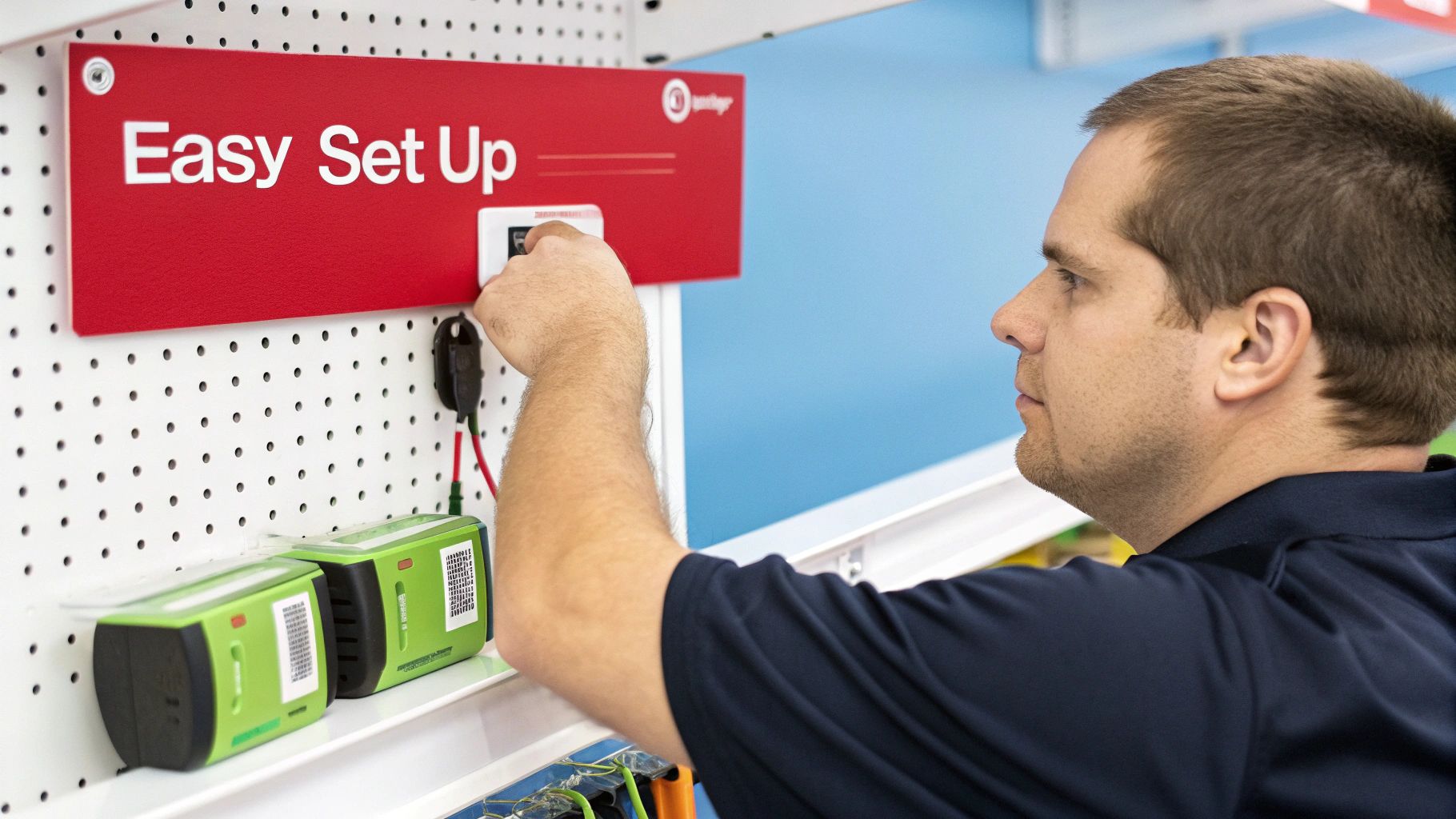
Understanding the tech behind an e price tag is one thing. But seeing why it’s become a cornerstone for modern retailers is another entirely. The jump from paper to digital isn't just a minor upgrade; it's a fundamental shift in how stores operate, compete, and connect with their customers.
This move really comes down to three pillars of success, each one tackling some of the oldest and most stubborn challenges in retail. These aren't just about convenience—they hit the bottom line and directly shape how a customer feels about your brand.
Boosting Operational Efficiency
The most immediate, no-fluff benefit of adopting an e price tag system is the massive boost to your store's efficiency. Think about it: manually changing paper tags is a huge labor sink. We're talking thousands of hours a year, even for a medium-sized store.
Imagine your team scrambling to print, cut, and swap out hundreds of paper labels for a weekend sale. With Electronic Shelf Labels (ESLs), that whole ordeal shrinks down to a few clicks in a central system. It's automation that actually frees up your people.
Instead of being bogged down with pricing guns and paper scraps, your team can focus on what really matters: helping customers, managing inventory, and making the store a better place to shop. That's a direct and powerful return on your investment.
A store with 10,000 products could easily burn over 500 hours a year on manual price changes alone. An ESL system erases that time sink, letting you reinvest those hours into work that actually drives sales. For a wider look at operational gains, it's worth exploring broader retail and point of sale solutions.
Ensuring Pricing Integrity and Profitability
Pricing mistakes are silent profit killers. A single missed update or a misplaced paper tag can lead to lost revenue or, just as bad, a frustrated customer at checkout.
An e price tag system creates a single source of truth. Since the tags are wirelessly linked to your central database, the price on the shelf is guaranteed to match the price at the scanner 100% of the time. This total accuracy delivers two huge financial wins:
- Prevents Under-pricing Losses: You'll never accidentally sell products for less than you intend to, protecting your margins on every single item.
- Avoids Over-pricing Issues: This gets rid of those awkward checkout moments that kill customer trust and can even lead to legal trouble over pricing laws.
This level of integrity means shoppers can trust what they see. It builds confidence, smooths out the checkout process, and guards your profits against costly human error. To learn more, check out the key benefits of electronic shelf labels in our comprehensive guide.
Creating an Enhanced In-Store Experience
Today's shoppers expect more from a physical store. With the convenience of online shopping, brick-and-mortar locations have to deliver a better, more interactive experience to compete. After all, the global e-commerce market is projected to hit around $6.88 trillion, and it’s expected to make up 21% of all retail sales worldwide in 2025.
This is where an e price tag really shines. It’s so much more than a digital price display; it’s a dynamic tool that turns the shelf edge into an interactive part of the shopping trip.
Here are a few ways they transform the experience:
- Show Rich Product Info: Beyond the price, tags can display stock levels ("Only 3 left!"), customer ratings, or where a product came from.
- Run Instant Promotions: A manager can launch a flash sale or a "happy hour" deal on a whim, and the tags instantly update to show both the original and discounted prices.
- Integrate QR Codes: Shoppers can scan a QR code to get detailed specs, watch a "how-to" video, or add the item to a digital wish list on their phone.
- Improve Staff Workflow: Tags can be set to flash, guiding an employee to the exact spot for restocking or pulling an online order—a feature often called "pick-to-light."
By putting relevant, real-time information right at the point of decision, an e price tag system empowers customers and makes the whole trip more engaging. It bridges the physical and digital worlds, giving smart retailers a powerful way to win.
Ready to ditch the paper and go digital? Making the switch to an e price tag system is a huge step forward, but a smooth transition all comes down to careful planning and a solid game plan.
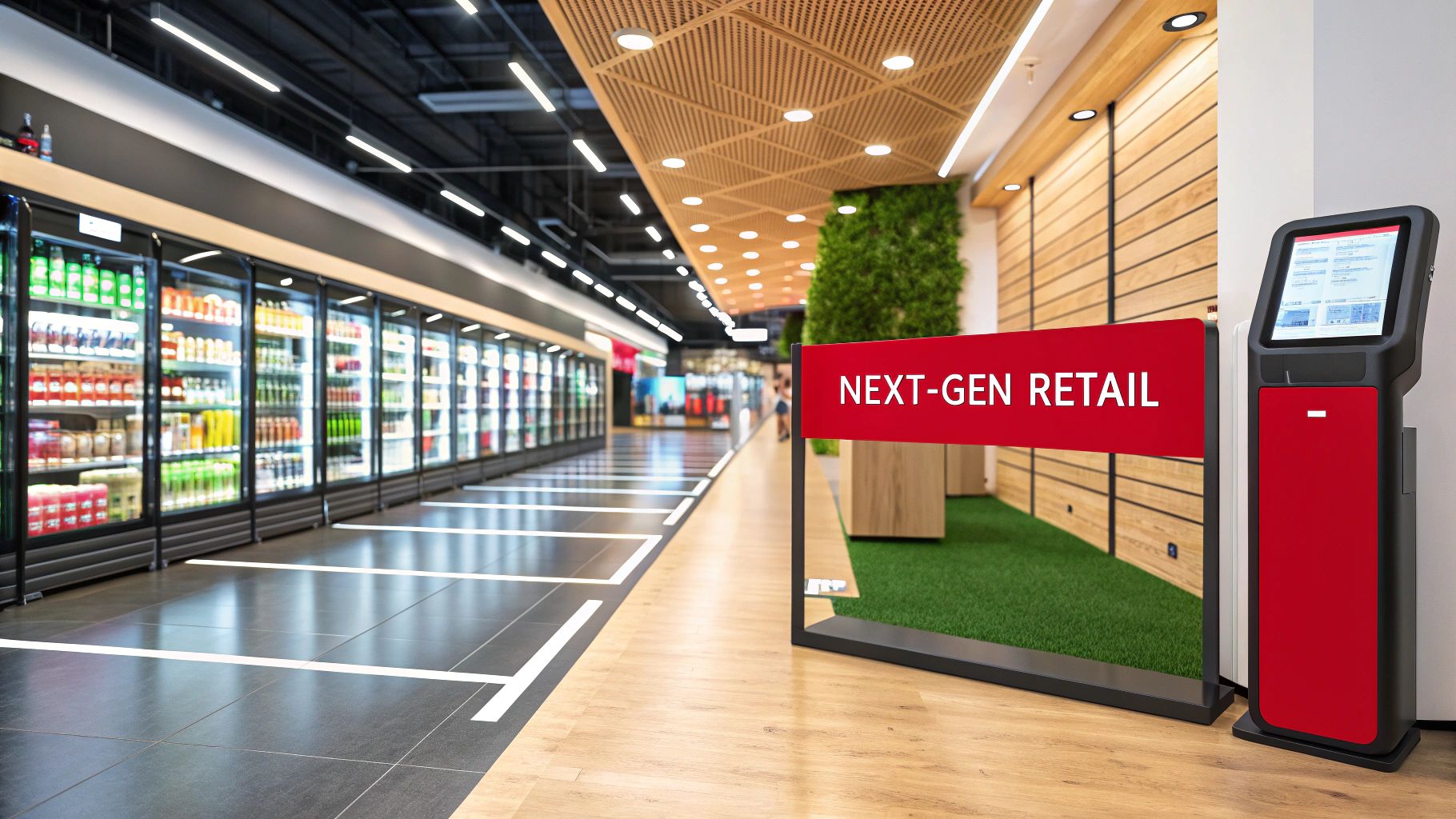
If you break the process down into manageable chunks, what seems like a massive project becomes a straightforward upgrade. The whole journey starts with a deep look at your own store, then moves on to picking the right tech partner, and finally, wraps up with a smart rollout that gets your whole team excited.
This step-by-step approach is the best way to dodge common headaches and make sure you’re getting the most bang for your buck from day one.
Phase 1: Planning and Assessment
Before you even think about calling a vendor, you need to look inward. This first phase is all about doing your homework and gathering the intel you’ll need to make smart decisions down the line. Think of it as drawing up the blueprint for your entire project.
First things first: walk the floor. You need a hard count of every single spot that will need a digital tag. This isn't just about how many products you carry; it's about the number of physical labels you’ll need for shelves, peg hooks, end caps, and any other promotional displays.
Next, take a hard look at your store’s infrastructure. An e price tag system runs on wireless signals, so you need to know your store’s layout inside and out. Are there potential dead zones caused by metal shelving or thick concrete walls? It’s critical to map these out.
Finally, figure out how this new system will talk to your existing software. You need a clear picture of how it will integrate with your Point of Sale (POS), inventory management, and any other crucial retail platforms you rely on daily.
Phase 2: Vendor Selection
Once you have your blueprint, you’re ready to start the hunt for the right partner. Not all e price tag providers are built the same, so asking the right questions is the key to finding a solution that fits your store like a glove.
Put together a simple checklist to compare vendors side-by-side. Your goal is to find that sweet spot between durable hardware, easy-to-use software, and rock-solid support for the long haul. A great system is only as good as the company standing behind it.
Here are a few non-negotiable questions to ask:
- Hardware Reliability: What’s the real-world battery life of the tags? How tough are they, and what kind of warranty do you offer?
- Software Usability: Can you walk us through a live demo? How simple is it to change a price, build a new template, or connect to our POS system?
- Ongoing Support: What does staff training look like? What kind of tech support is available after the installation is done and you’ve already been paid?
- Scalability: If we open a new location or expand our product lines, can this system grow with us without a major overhaul?
A vendor should feel more like a partner than just a supplier. You want to team up with a company that’s genuinely invested in your success and can give you straight answers on how their electronic shelf labelling will solve your specific challenges.
Phase 3: Rollout Strategy
This is it—the final phase where the tech gets installed and your team gets trained. How you introduce the new system can make or break its long-term success. You’ve really got two main options here, each with its own pros and cons.
A popular route is to kick things off with a pilot program. Pick one high-traffic department, like produce or electronics, and deploy the e price tag system there first. This lets you test everything in a controlled space, iron out any wrinkles, and get valuable feedback before you go all-in.
The other option is to go for a full-store launch right out of the gate. This "rip the band-aid off" approach can be faster and gets the benefits of the new system working for you across the entire store at once.
But no matter which path you choose, staff training is absolutely non-negotiable. Your team needs to understand not just how the system works, but why you’re making the change. When your employees become advocates for the technology, the entire transition feels less like a mandate and more like an upgrade for everyone.
Unlocking Advanced E Price Tag Strategies
An electronic price tag system is so much more than a digital stand-in for paper. Think of it as the command center for your entire sales floor. Once you get past the simple price updates, you can start using these smart labels to actually guide customer behavior, tighten up store operations, and build a real competitive advantage.
Moving to these advanced strategies is the difference between having a static signpost and an interactive digital assistant at every single product. Your shelves become a dynamic, responsive part of your business.
Executing Dynamic Pricing with Precision
Dynamic pricing is all about changing prices in real-time based on what’s happening in the market. An e-price tag finally makes this powerful strategy possible inside a physical store, giving you the same agility as an online retailer.
This isn't about pulling prices out of a hat. It’s about making strategic tweaks based on clear data, helping you maximize revenue and move inventory when you need to. For retailers wanting to get really sophisticated, pairing e-price tags with systems that support concepts like algorithmic pricing can be a total game-changer.
Here are a few popular models you can put to work right away:
- Time-Based Promotions: Instantly launch a "happy hour" on slow-moving items during quiet periods. You could even run a flash sale on a specific category for just a single afternoon.
- Demand-Based Adjustments: Is an item flying off the shelves? The system can automatically raise the price slightly as stock gets low. Got products nearing their expiration date? Drop the price to make sure they sell through.
- Competitor Matching: You can link your pricing software to competitor data feeds. This allows your system to automatically match or even beat a rival’s price just moments after they change theirs.
By embracing these models, retailers align their physical store pricing with the fast-paced digital world. This is crucial as online retail continues to grow, with projections showing global e-commerce revenues hitting approximately $8.3 trillion by 2025.
Streamlining Store Operations
Beyond pricing, an e-price tag is an incredible tool for making your store run like a well-oiled machine. These operational perks can save countless staff hours and slash human error, freeing up your team to focus on helping customers.
One of the most powerful features is "pick-to-light." Imagine an employee needs to restock a shelf or fulfill an online order for in-store pickup. The system can make the tag for that specific product flash a bright LED light. This literally guides the staff member to the exact spot, cutting down search time and making sure they grab the right item.
This same tech can be integrated with powerful inventory management tools. For a deeper dive into how this all connects, you can learn more about the technology behind shelf tracking systems.
Preparing for the Future of Retail
Investing in a solid e-price tag system today is really about future-proofing your business. These labels are quickly evolving into interactive touchpoints that completely blur the line between the physical and digital shopping experience.
Here are some of the trends already taking shape:
- NFC Integration: Shoppers will be able to just tap their smartphone on a tag to get a digital coupon, pull up product reviews, or add an item to a mobile shopping list.
- Full-Color Displays: Instead of just black and white, vibrant color displays can make promotions pop, highlight key product features with images, and showcase brand logos.
- Customer Engagement: Tags can show personalized offers to loyalty members or display QR codes that link to detailed product origin stories, building transparency and trust.
Common Pitfalls to Avoid During Implementation
Making the leap to electronic price tags is a big move, and a successful rollout hinges on sidestepping a few common mistakes that can cause headaches and delays. The best way to guarantee a smooth transition is to learn from the folks who’ve gone before you, so you can maximize your return on investment from day one.
By getting ahead of these potential issues, you can make sure your implementation is a success story, not a cautionary tale. Let's walk through four of the most common hurdles and, more importantly, how to clear them without breaking a sweat.
Underestimating Your Infrastructure
A lot of retailers assume their existing in-store Wi-Fi network is good enough to run a full-scale ESL system. This is a critical misstep. The communication hubs for an e price tag network run on specific, low-power radio frequencies—a completely different beast than standard Wi-Fi.
Bottom line: you absolutely need a dedicated network survey to map out your store. Metal shelving, concrete pillars, and even large coolers can create "dead zones" where tags can't get updates. A proper site assessment before you install anything will pinpoint these spots, ensuring you have the right number of gateways in the right locations for 100% signal reliability.
Choosing a Closed System
In the rush to get started, it's tempting to pick a vendor whose system looks amazing on its own but doesn't play well with others. A closed or proprietary system can box you in and seriously limit your future growth. If your ESL software can't easily talk to your Point of Sale (POS), inventory system, or future marketing platforms, you're just creating another data silo.
The whole point is seamless automation. Your e price tag system should be a connected part of your retail tech stack, not a standalone island. Make sure you prioritize solutions with open APIs and a proven track record of integration. It’ll keep your options open as your business evolves.
Neglecting Staff Training
You can have the most advanced technology in the world, but it's useless if your team doesn't know how to use it—or worse, sees it as a threat. Failing to properly train and involve your staff is one of the quickest ways to torpedo your investment. Your employees need to see the system as a tool that helps them, not something that’s trying to replace them.
Good training needs to cover two key areas:
- How to Use It: Teach them the nuts and bolts of managing the system, what tag alerts mean (like a low battery warning), and how to use cool features like pick-to-light for restocking.
- Why It Matters: Explain how this tech frees them from mind-numbing manual price changes, giving them more time to actually help customers on the floor.
Ignoring Scalability
Finally, don't just plan for the store you have today; plan for the business you want tomorrow. Some ESL solutions are a nightmare to expand. What happens if you add a new wing to your store, open a second location, or bring in a ton of new products?
You need a system that's built to grow with you. Ask potential vendors straight up about the process and costs of scaling. A scalable solution ensures your e price tag system remains a valuable asset, not a bottleneck, as your business continues to succeed.
Of course. Here is the rewritten section, crafted to sound completely human-written and natural, following your specific guidelines.
Your Top Questions About E-Price Tags, Answered
Jumping into any new tech brings up questions, and it’s smart to get them answered before you commit. Even with all the benefits laid out, you’re probably wondering about the practical side of things. Let's tackle the most common questions retailers have when they're considering a switch to e-price tags.
How Much Does an E-Price Tag System Actually Cost?
This is always the first question, and the answer isn't just about the tags themselves. Think of it as a complete system. Your total investment for an e-price tag solution really breaks down into three key parts:
- The Hardware: This is the obvious one—the digital tags for your shelves and the communication gateways that talk to them. The price for tags varies quite a bit depending on their size and what they can do.
- The Software: You’ll need a license for the central management software. This is the brain of the operation, letting you control everything and connecting it all to your existing POS.
- Setup and Support: This bucket covers the initial installation, getting the network configured just right, and any ongoing support contracts or team training.
It’s true there’s an upfront cost, but most retailers find they hit their return on investment within 18-24 months. That ROI comes directly from saving countless hours of labor and eliminating costly pricing mistakes.
Seriously, How Long Do the Batteries Last?
It’s a fair question. Nobody wants to trade the hassle of changing paper tags for the hassle of changing thousands of batteries. The good news is, you won't have to.
The magic is in the E Ink technology—the same stuff used in e-readers. It’s incredibly low-power. The battery in an e-price tag only uses a tiny bit of energy when the price is actively changing. Once the new info is on the screen, it holds that image using zero power. This gives them a crazy-long lifespan, typically somewhere between 5 and 10 years.
The long battery life is a cornerstone of the system's design. It ensures that the operational efficiency gained by automating price changes isn't lost to the manual labor of constant battery replacement, making it a truly "set it and forget it" solution for the long term.
Can These Tags Handle Any Retail Environment?
Absolutely. You’d be surprised how tough and adaptable these electronic shelf labels are. They aren't just for pristine, climate-controlled grocery aisles.
Many models are built specifically for challenging spots. You can get tags that are water-resistant for the produce section or even ones rated to work perfectly in the freezing temperatures of a commercial freezer. This kind of durability makes the e-price tag a solid choice for just about anyone—from grocery and hardware stores to busy electronics retailers.
This flexibility is crucial. As brick-and-mortar stores work to keep up with online shopping—where 2.77 billion people are expected to shop by 2025—having smarter, more resilient tech in-store is no longer a luxury. It's becoming a necessity. You can get a deeper look at this digital shift and what it means for retail in this great breakdown of e-commerce platform statistics from sqmagazine.co.uk.
Article created using Outrank


Leave a Reply
Your email is safe with us.