

You’ve seen them a million times: the small paper price tags lining every retail shelf. Now, imagine if every single one of those was a tiny, digital screen. That’s electronic shelf labelling, or ESL for short.
This isn’t just about fancy new gadgets; it’s a system that lets retailers change prices, flag promotions, and update product info instantly across an entire store from one central computer. No more printing, no more manual price changes, no more errors.
What Is Electronic Shelf Labelling
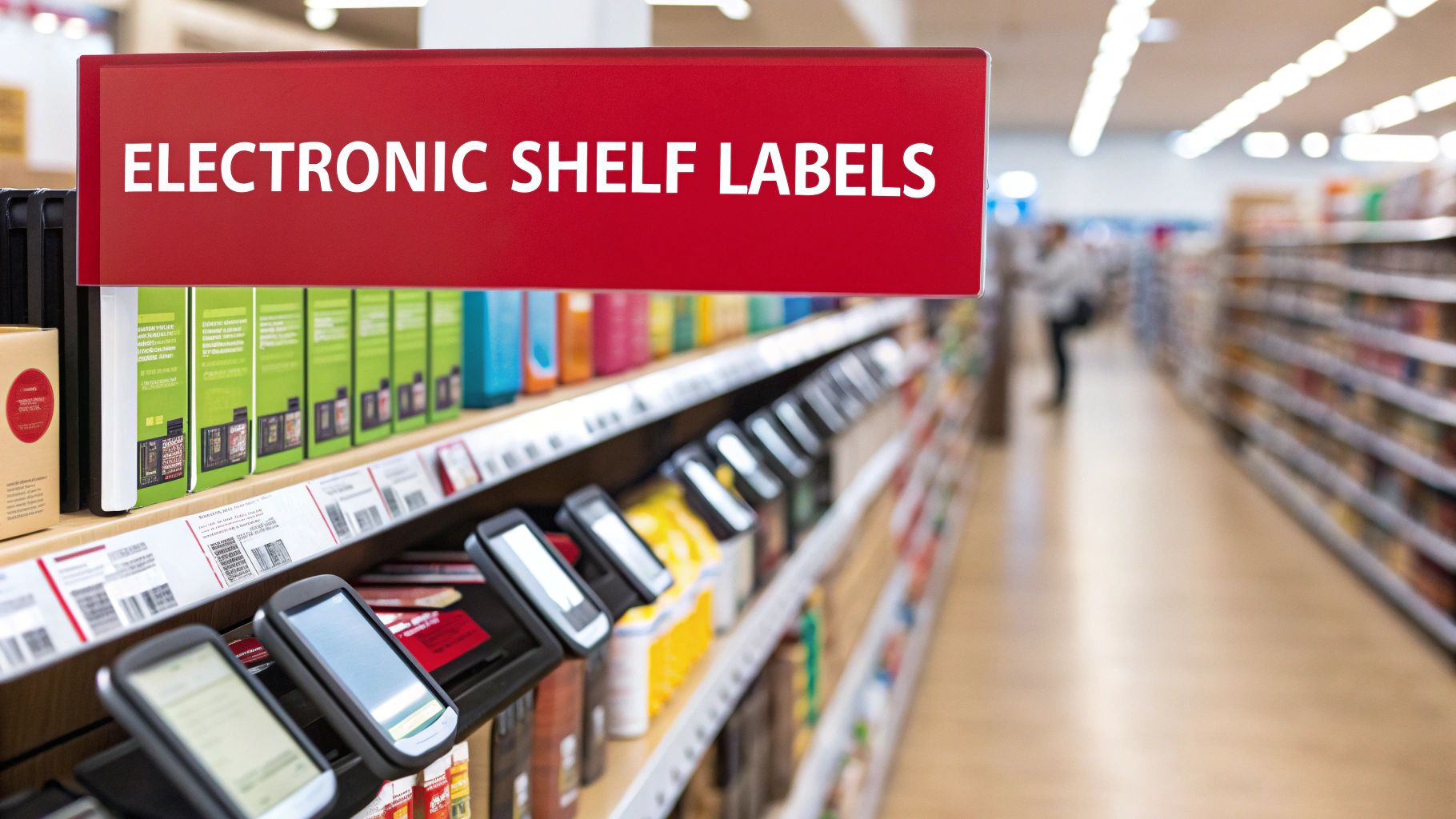
Picture a store where every price tag updates itself. Instead of staff spending hours swapping out little slips of paper, every change happens wirelessly and simultaneously with a single click. This is the new reality that electronic shelf labelling is bringing to modern retail.
At its core, ESL solves one of retail’s oldest headaches: the slow, expensive, and mistake-ridden process of updating prices by hand. We’ve all been there—the price on the shelf doesn’t match the price at the register. It’s frustrating for shoppers and can lead to lost sales or even compliance issues for the store.
Think of an ESL system like a Wi-Fi network, but for your shelves. A central software platform is the command centre, holding all the product and pricing data. When it’s time for an update, the software pings wireless transmitters (like routers), which then beam the new information to the specific digital tags. The displays change almost instantly.
Moving Beyond the Price Tag
But here’s where it gets really interesting. These aren’t just digital price tags. They are dynamic tools that connect the physical shelf to the store’s entire digital operation, creating a smarter experience for everyone.
Modern ESLs can do a whole lot more than just show a number:
- Highlight Promotions: Forget extra signage. Sales, discounts, and loyalty rewards can be displayed right on the tag.
- Show Stock Levels: The tag can alert both customers and staff when a product is running low, helping to prevent empty shelves.
- Share Product Details: QR codes can link shoppers directly to online reviews, ingredient lists, or how-to videos, bridging the gap between the in-store and online worlds.
- Guide Your Team: Some systems even have flashing LED lights to help employees find products faster for restocking or fulfilling online orders.
The Growing Demand for Retail Automation
The move to ESL isn’t just a fleeting trend; it’s part of a much bigger shift toward automation in retail. The global electronic shelf label market was valued at around USD 1.95 billion in 2024 and is expected to grow dramatically. This explosion is fueled by the need for real-time pricing, accurate inventory, and just plain better efficiency. You can dig deeper into the ESL market projections and growth on polarismarketresearch.com.
By digitizing the shelf edge, retailers unlock a new level of agility. They can respond to competitor price changes in minutes, not days, and ensure 100% price accuracy across all stores.
Ultimately, this system turns a passive shelf into an active, intelligent asset. It lays the groundwork for a smarter store where data flows from the back office right to the customer’s point of decision. As we’ll see, this technology is fast becoming a cornerstone for any retailer who wants to compete and win.
How an Electronic Shelf Labelling System Works
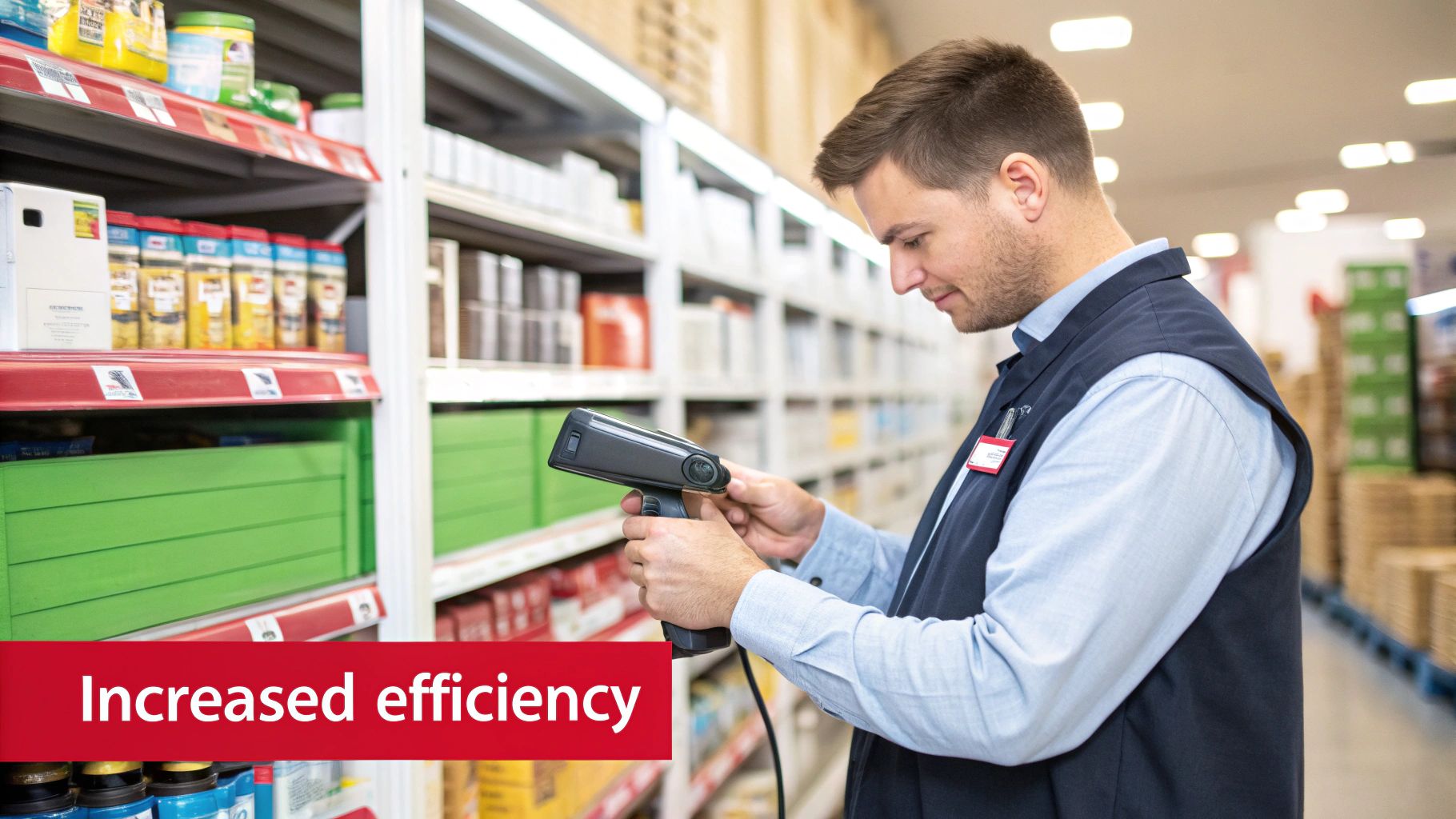
Ever wondered how thousands of prices across a supermarket can change in a flash? It’s not magic, but it’s close. Think of an electronic shelf labelling system as a well-oiled machine with three critical parts working in perfect sync to get the right price on the right shelf, every single time.
This whole operation boils down to a tag team of technology: the digital labels you see on the shelf, a dedicated wireless network, and the central software that runs the show. Let’s pull back the curtain and see how these pieces come together to automate a process that used to take hours of manual labour.
The Digital Tags: The Face of the System
First up are the most visible players: the electronic shelf labels (ESLs) themselves. These small, battery-powered screens are the face of the operation, replacing the old paper tags clipped to the shelf edge. They’re built tough for the retail floor, with a laser focus on durability and energy efficiency.
But not all tags are the same. They generally come in two main flavours, each with its own advantages:
- E-Ink (Electronic Paper) Displays: This is the go-to technology for most ESLs, and for good reason. It’s the same tech you find in an e-reader. An e-ink display only sips power when the on-screen image is actively changing. Once a price is updated, it holds that image without using any battery at all. This incredible efficiency allows some models to last 5-7 years on a single battery.
- LCD (Liquid Crystal Display) Displays: While they use more power, LCD tags offer a full spectrum of vibrant colour and can even play short videos. You won’t see them on every shelf, but they’re perfect for high-impact promotions on end caps or for premium products where you really need to grab a shopper’s attention.
These tags do a lot more than just show a price. They can display stock levels, promotional flags, scannable QR codes, and unit pricing, all in a crisp, easy-to-read format.
Monthly Sale Offer

The Communication Backbone: The Wireless Network
So, how do the tags get their marching orders? That’s where the wireless network comes in. It’s essentially a private, dedicated communication highway built just for the labels. This network is powered by devices called gateways or access points.
These gateways are strategically placed around the store to blanket the entire sales floor with a consistent signal, just like Wi-Fi routers. They use low-energy radio frequencies to beam data from the central software out to every single tag. This method is incredibly efficient and designed to operate without interfering with other wireless signals, like your store’s public Wi-Fi or payment systems.
Using a low-power radio frequency is the secret sauce here. It creates a stable, secure connection that can cut through shelving and reach every corner of the store, all while making the batteries in each tag last for years.
This reliable communication is the invisible engine that makes instant, store-wide updates a reality.
The Central Software: The Command Center
The final piece of the puzzle is the central software platform. This is the command center where all the action is managed. From here, store managers or corporate staff can orchestrate every single update. The software plugs directly into a retailer’s existing backbone, like their Point of Sale (POS) or Enterprise Resource Planning (ERP) systems.
This integration is non-negotiable. It guarantees that the price in the master database is the exact price a customer sees on the shelf, killing price discrepancies for good. When someone changes a price in the main system, the ESL software instantly picks it up and shoots the update out to the correct label through the gateways. We dive even deeper into this process in our article on how these electronic shelf price tags work.
This level of centralized control gives retailers incredible agility. A manager can schedule price changes for an upcoming sale, update an entire product category with a single click, or even roll out dynamic pricing strategies based on inventory levels—all from one simple dashboard.
The Business Case for Adopting ESL Technology
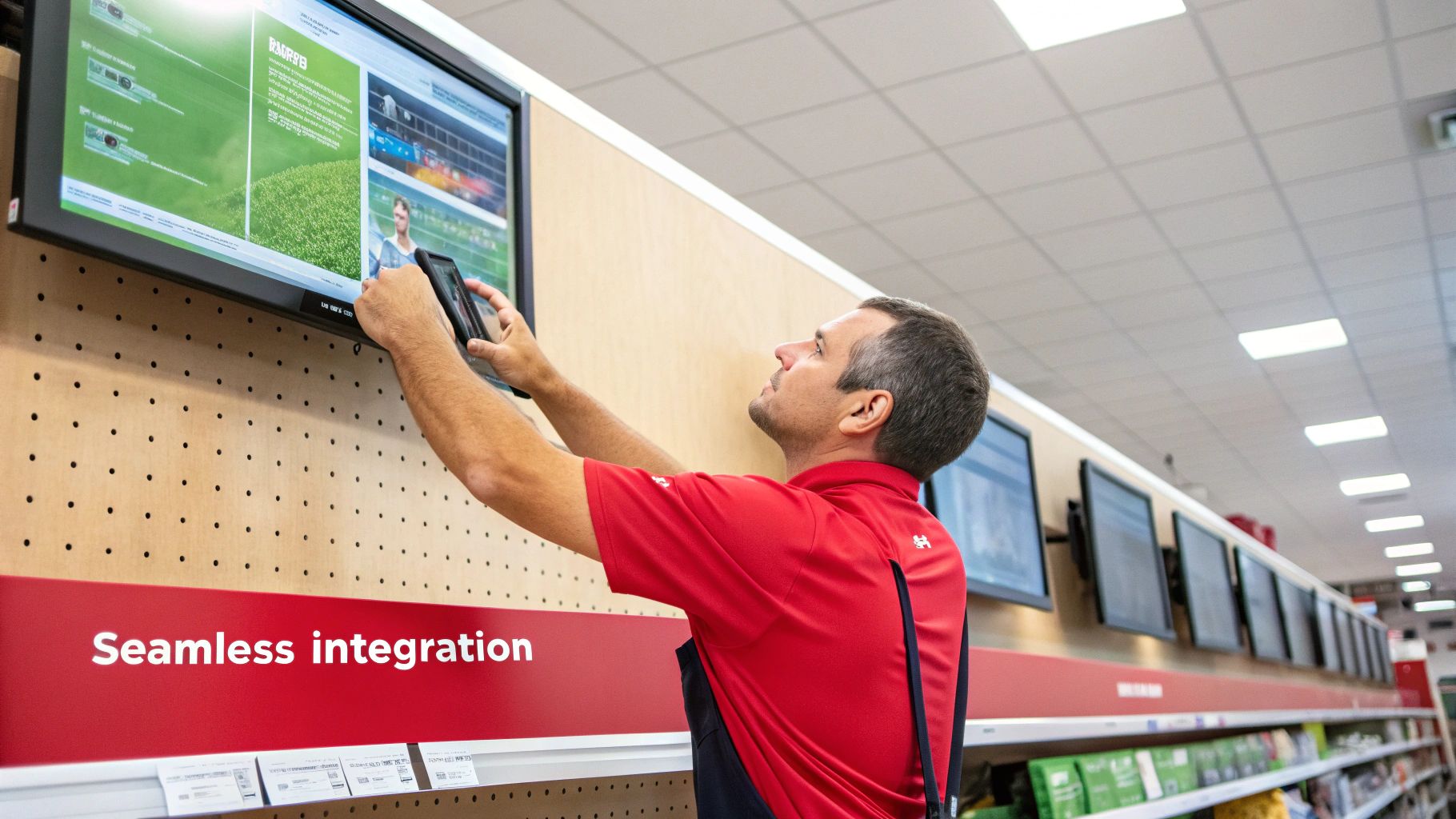
It’s one thing to understand how an electronic shelf labelling system works, but it’s another thing entirely to grasp why it’s a game-changing investment. The real magic isn’t in the tech itself; it’s in the ripple effect it has across your entire operation and, ultimately, your bottom line. Moving to ESLs is about shifting from a reactive, manual grind to a proactive, data-smart business.
The business case for making this leap is built on four powerful pillars that deliver a clear and compelling return. From slashing hidden labor costs to creating a far better shopping journey, these benefits tackle some of the oldest and most stubborn challenges in retail. Let’s break down the strategic advantages that make electronic shelf labelling such a smart move.
Radically Improved Operational Efficiency
The first and most obvious win is the massive boost to operational efficiency. Just think about the old way of doing things: staff members print long lists of price changes, then spend hours hunting for products on the shelves to painstakingly swap out tiny paper tags. This isn’t just slow—it’s a colossal drain on your team’s time and energy.
With an electronic shelf labelling system, that whole process disappears. Price updates that used to eat up an entire shift now happen with a single click. Improving store performance is a huge part of the ESL business case, and many strategies for improving operational efficiency in retail point directly to this kind of automation.
This frees up your team to focus on things that actually drive sales and make customers happy, like:
- Helping shoppers find what they need on the floor.
- Keeping shelves stocked so you don’t lose sales to empty spots.
- Focusing on store presentation and making displays look great.
By automating the tedious work, you empower your people to be genuine brand ambassadors.
Unlocking True Pricing Agility
In a market this competitive, speed is everything. Paper labels lock you into a sluggish, clumsy pricing model that leaves you trailing behind. An electronic shelf labelling system shatters those chains, giving you a level of pricing agility that was simply unthinkable before.
This newfound flexibility lets you execute smart pricing strategies on the fly. You can match a competitor’s price drop in minutes, not days. You can schedule a weekend promotion to go live automatically on a Friday afternoon and switch back first thing Monday morning. This dynamic power also wipes out costly human errors—because we all know a wrong price tag leads to frustrated customers and lost revenue.
With ESLs, price accuracy isn’t just a goal; it’s a guarantee. The price on the shelf always matches the price at the checkout, building customer trust and protecting your profit margins.
Elevating the Customer Experience
Today’s shoppers want more than just a price on a tag. They want information, and they want a smooth experience that blends the convenience of online shopping with the immediacy of being in-store. ESLs transform a boring, static price tag into an interactive digital touchpoint. For a deeper dive, check out our guide on the core benefits of electronic shelf labels for retailers.
These little digital screens can do so much more than display a number. Imagine showing:
- Bright promotional flags to call out sales and special deals.
- Real-time stock levels to create a sense of urgency.
- QR codes that link directly to product reviews, how-to videos, or allergy info.
- Competitor price comparisons to build confidence and seal the deal.
This rich, on-the-spot information empowers customers to make buying decisions right there at the shelf, which naturally leads to bigger baskets and happier, more loyal shoppers.
Streamlining Inventory and Fulfillment
Beyond the sales floor, ESLs are an incredible tool for your back-of-house operations, especially when it comes to managing inventory and fulfilling online orders. Many systems come with a simple but brilliant feature: a small, flashing LED light on each label that can be triggered remotely.
This feature completely changes how your team interacts with the shelves. For restocking, an employee can be guided by the flashing lights directly to the exact product location, cutting out all that wasted search time. And for “click and collect” orders, those same lights act as a visual map, making the picking process dramatically faster and more accurate.
Comparing Manual vs Electronic Shelf Labelling
To really see the difference, it helps to put the old and new methods side-by-side. The contrast highlights just how much manual processes can hold a business back.
| Metric | Manual Paper Labels | Electronic Shelf Labels |
|---|---|---|
| Update Speed | Hours or days | Seconds or minutes |
| Labor Cost | High and recurring | Low, minimal ongoing labor |
| Error Rate | Prone to human error | < 0.1% (virtually zero) |
| Pricing Agility | Very low | High (instant, dynamic pricing) |
| Customer Info | Price only | Price, promos, stock, QR codes |
| Omnichannel | Poor support | Seamlessly integrated |
As the table shows, the switch to ESLs isn’t just an incremental improvement; it’s a fundamental upgrade across every key metric, from cost and accuracy to customer engagement.
How to Choose and Implement an ESL System
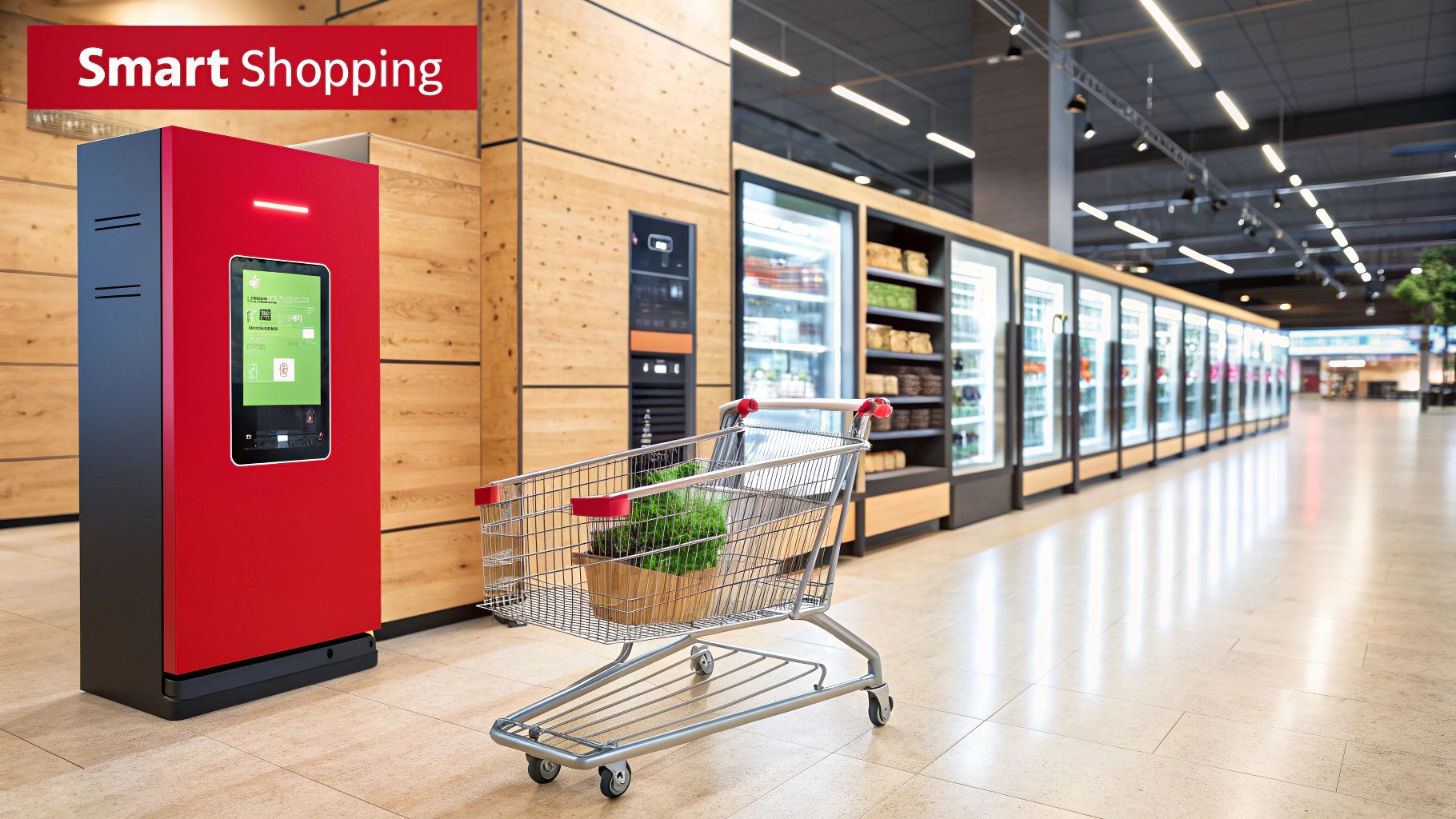
Deciding to bring electronic shelf labelling into your store is a big move. Now comes the hard part: picking the right system and getting it running without a hitch. This isn’t just about buying new gadgets; it’s about weaving a new digital fabric into your operations.
A well-planned rollout is the difference between a seamless upgrade and a series of technical headaches. You want to make sure your investment pays off from day one. Let’s walk through the essential steps to make that happen.
Evaluating the Right Hardware
First things first, you need to choose the physical tags and the infrastructure that makes them work. The labels on your shelves are what customers see, but what works for a boutique won’t work for a big-box store. One size definitely does not fit all.
When you’re looking at hardware, here’s what really matters:
- Display Technology: Most retailers go for e-ink displays. They’re incredibly energy-efficient, with batteries that can last 5-7 years. But if you want to run flashy, colorful promotions on a premium end-cap, you might want to look at full-color LCD tags.
- Label Sizes and Durability: A hardware store selling drills needs a different kind of tag than a pharmacy with tiny medicine boxes. Think about your products and shelf space. You might also have special needs, like freezer-proof labels for a grocery store that have to survive sub-zero temperatures.
- Battery Longevity: Better battery life means less maintenance down the road. It’s a simple equation. Always ask vendors for real-world data on battery performance, especially based on how often you plan to push updates.
Ensuring Seamless Integration
An ESL system that can’t talk to your other software is just a fancy, expensive price tag. The whole point is to create a single source of truth for your pricing, flowing automatically from your central database right to the shelf edge.
The absolute key to a successful ESL rollout is making sure it connects perfectly with your Point of Sale (POS) and inventory management systems. This is what kills manual data entry and guarantees 100% price accuracy from the aisle to the checkout.
Before you sign any contracts, make sure the provider has solid APIs that play nice with your current platforms. A smooth deployment also hinges on your IT infrastructure being up to the task. Everything relies on a strong network for all that data to move around. If you want to dig deeper into building that digital foundation, there are great guides on modern enterprise network solutions.
Planning a Phased Rollout
Trying to overhaul your entire store at once is a recipe for chaos. A much smarter move is a phased rollout. This gives you a chance to test everything, train your staff, and iron out the wrinkles in a controlled setting.
A typical implementation roadmap looks something like this:
- Conduct a Site Survey: Before a single tag goes up, your vendor should map out the entire store. This is to figure out the best spots for wireless gateways to guarantee 100% signal coverage. No dead zones.
- Start with a Pilot Program: Pick one department or even a single aisle and go live there first. This is your real-world test. You’ll see how the hardware performs, check the software integration, and get crucial feedback from your team.
- Train Your Team: Get your staff comfortable with the new system. They need to know how to link products to tags, understand system alerts, and handle basic troubleshooting.
- Scale to a Full Rollout: Once the pilot is a proven success and your team feels confident, it’s time to go big. You’ll already have a solid process to follow, making the full-store implementation much smoother.
Picking the right partner is just as critical as picking the right tech. You want a vendor with a solid track record, great support, and a system that can grow with you. For more on what to look for, our article on why you should choose ESL technology has some great pointers.
ESL Use Cases Across Different Retail Industries
When most people think of electronic shelf labelling, they picture a supermarket aisle. But that’s just scratching the surface. The real power of this technology is how it adapts to the unique headaches and hurdles of different retail worlds.
Every sector has its own challenges, whether it’s the fast-paced turnover of fresh produce or the dizzying specs of consumer electronics. Digital tags aren’t just for changing prices; they’re dynamic tools built to solve specific, industry-deep problems. Let’s look at how a few different retail environments put electronic shelf labels to work.
Supermarkets and Grocery Stores
The biggest battle in any grocery store is managing constant price changes, especially for fresh food. The price of produce, meat, and dairy can swing daily based on seasonality, supply chains, or the simple risk of spoilage. Trying to keep up with paper tags is a never-ending, error-prone chore.
This is exactly where electronic shelf labelling shines. A store manager can use a central system to:
- Run Dynamic Pricing: Think about items nearing their expiration date. Instead of tossing them, you can automatically drop the price to minimize waste and get some of that cost back.
- Stay Compliant: Need to show the country of origin or an organic certification? That info can be displayed right on the tag, keeping everything transparent for the customer.
- Launch Promotions Instantly: Want to run a store-wide sale on cereal? You can activate it across the entire category in seconds, without ever touching a paper label.
By automating these tedious tasks, supermarkets free up their staff to do what people do best: helping customers and keeping the shelves stocked. To see more on this, check out our guide to digital labels for supermarkets.
Electronics and Tech Retail
Walk into an electronics store, and you’ll see that product information is just as critical as price. Shoppers are comparing complex technical details—screen resolution, processor speed, memory—and they need that info to make a good choice. ESLs turn the shelf edge into a goldmine of data.
Instead of just a price, an electronic shelf label can show key features, pull in competitor pricing, or even display a QR code that links to in-depth online reviews or video tutorials. It’s the perfect way to bridge the gap between a customer’s online research and their in-store experience.
This gives customers the confidence to buy right then and there. Plus, a flashing LED on a label can guide an employee straight to a specific model, which is a huge time-saver for both inventory checks and customer support.
Pharmacies and Healthcare
In a pharmacy, there’s zero room for error. A mistake in pricing or product information isn’t just a small problem; it can be a major compliance nightmare. Electronic shelf labelling delivers the kind of precision and control this highly regulated environment demands.
Pharmacies rely on ESLs to display:
- Regulated Information: Dosage instructions, prescription status, and other critical data can be shown clearly and updated in a flash.
- Flawless Pricing: The price on the shelf will always match the price in the pharmacy’s core system, so there are never any disputes at the counter.
- Low-Stock Alerts: The system can notify pharmacists when essential medications are running low, helping to avoid dangerous stockouts.
Hardware and DIY Stores
Hardware stores are a world of overwhelming choice, with a massive number of SKUs ranging from tiny screws to massive power tools. It’s easy for both customers and staff to get lost. ESLs bring a sense of order to the chaos.
These tags can act as mini-information hubs, displaying product dimensions, material compatibility, or even bin location numbers. The flashing LED feature is a lifesaver here, guiding someone directly to the exact bolt they need in an aisle full of nearly identical ones. It turns a frustrating hunt into a quick, easy find.
The adoption of this technology is picking up speed globally, especially in tech-forward retail markets. Europe, for instance, is a major player, with its market size projected to hit around USD 729.29 million by 2025. This growth is being led by countries like Germany and a rapidly expanding UK market. Discover more insights about the electronic shelf label market report on cognitivemarketresearch.com.
That humble paper price tag on the shelf? It’s getting a major upgrade. As the line between physical stores and online shopping continues to blur, electronic shelf labelling is stepping in to connect the two worlds. These little digital screens are quickly becoming more than just a tool for easy price updates—they’re evolving into the interactive heart of the modern smart store.
The next big leap for this technology is tying it directly into artificial intelligence. Think about an ESL system that works with in-store cameras and smart algorithms. The moment a shelf goes empty, the system knows. It can instantly update the label to ping a staff member for a restock or even suggest a similar product to a shopper who’s standing right there.
The Interactive Shelf Edge is Here
We’re officially moving beyond static displays. The shelf edge is becoming a place for real-time, personalized interaction, and the hardware is getting better every day, opening up some incredible possibilities for the in-store experience.
Here’s a glimpse of what’s coming:
- Predictive Pricing Models: Imagine AI crunching competitor data, demand forecasts, and even local weather patterns to find the perfect price for a product. The ESL system could then push that new price live in an instant.
- Full-Color Video Displays: High-resolution, full-color labels are basically turning into tiny ad screens at the point of decision. They can play short, eye-catching videos to highlight a promotion and grab a customer’s attention.
- NFC-Powered Interactions: Labels equipped with Near Field Communication (NFC) will let shoppers just tap their phone to get a special offer, add an item to their digital cart, or pull up detailed product specs. It makes the whole journey feel completely seamless.
The electronic shelf label of the future isn’t just a display. It’s a sensor, a communicator, and a sales assistant all rolled into one. It will read its environment, deliver personalized content back to the shopper, and create a powerful feedback loop that constantly improves the retail experience.
Building a Truly Connected Store
This evolution firmly places electronic shelf labelling at the core of next-generation retail. These labels are the key to creating a fully connected store where every shelf is intelligent and every customer interaction is driven by data. It’s the foundation for everything from automated stock alerts and personalized marketing in the aisle to “tap-and-go” checkout.
When you get right down to it, the future of ESLs is about changing the physical shelf from a passive holder of products into an active player in the sales process. By linking real-time data directly to the customer’s point of decision, these digital tags are set to unlock a whole new level of efficiency, personalization, and profit for any retailer ready to make the shift. The price tag is finally catching up to the digital age.
Frequently Asked Questions
Getting into the weeds of electronic shelf labels always brings up a few practical questions. What’s this really going to cost? How long will they last? Will they even work with our current setup? Let’s tackle the most common questions retailers have when they’re thinking about making the switch.
What Is the Cost of an ESL System?
The total investment in an electronic shelf labelling system really depends on your specific needs—the size of your store, how many labels you need, and which features are must-haves. The upfront cost covers the digital tags themselves, the wireless gateways that talk to them, and the central software that runs the whole show.
While there’s certainly an initial outlay, the return on investment is often surprisingly fast. Most retailers find the system pays for itself within 18 to 24 months. That’s because you’re not just buying tags; you’re cutting major labor costs, eliminating paper and printing expenses, and stamping out pricing errors for good.
How Long Do ESL Batteries Last?
Modern electronic shelf labels are built for one thing: extreme power efficiency. This is especially true for the ones using e-ink technology, which is the same stuff you see in e-readers. The display only sips power when the price or information is actively changing, which means the batteries can last a seriously long time.
On average, you can expect the batteries in e-ink labels to last anywhere from 5 to 7 years. Some of the newer models can even push that to 10 years, depending on how often you’re sending updates.
That long lifespan translates to minimal maintenance and a much lower total cost of ownership over the years.
Can ESLs Integrate with My Existing Software?
Yes, and this is a non-negotiable feature for any worthwhile system. A good ESL solution isn’t designed to be a standalone island; it’s built to plug right into the software you already rely on to run your business.
Providers do this using robust Application Programming Interfaces (APIs), which are just a fancy way of saying they create a seamless communication channel between their platform and your:
- Point of Sale (POS) system
- Enterprise Resource Planning (ERP) software
- Inventory management platforms
This connection ensures all your data syncs up automatically. It creates a single source of truth that flows from your central database right to the shelf edge, making price discrepancies a thing of the past.


Leave a Reply
Your email is safe with us.