

If you've ever managed a retail store, you know the drill. Hours spent printing, cutting, and painstakingly swapping out thousands of tiny paper price tags, aisle by aisle. Then, just when you're done, it's time to do it all over again for the next sale. It’s a tedious, error-prone cycle that ties up your team and can easily frustrate customers.
This is where electronic shelf price tags (ESLs) come in, turning that manual grind into an instant, store-wide update you can manage from a single computer.
Moving Beyond Manual Price Changes
The old way of handling pricing is a constant race against the clock, with human error lurking around every corner. It's a painstaking process: print new price lists, send staff out to the floor, and have them physically replace every single paper label.
Not only is this method incredibly slow, but it's a recipe for operational headaches. An employee might misplace a tag, hang it on the wrong hook, or miss a section entirely. We've all seen it happen.
These small mistakes create big problems at the checkout. When a customer sees one price on the shelf but gets charged a higher one at the register, it instantly erodes trust and can even kill the sale. All that time your staff spends on manual updates is a direct labor cost that could be poured back into helping customers or managing inventory.
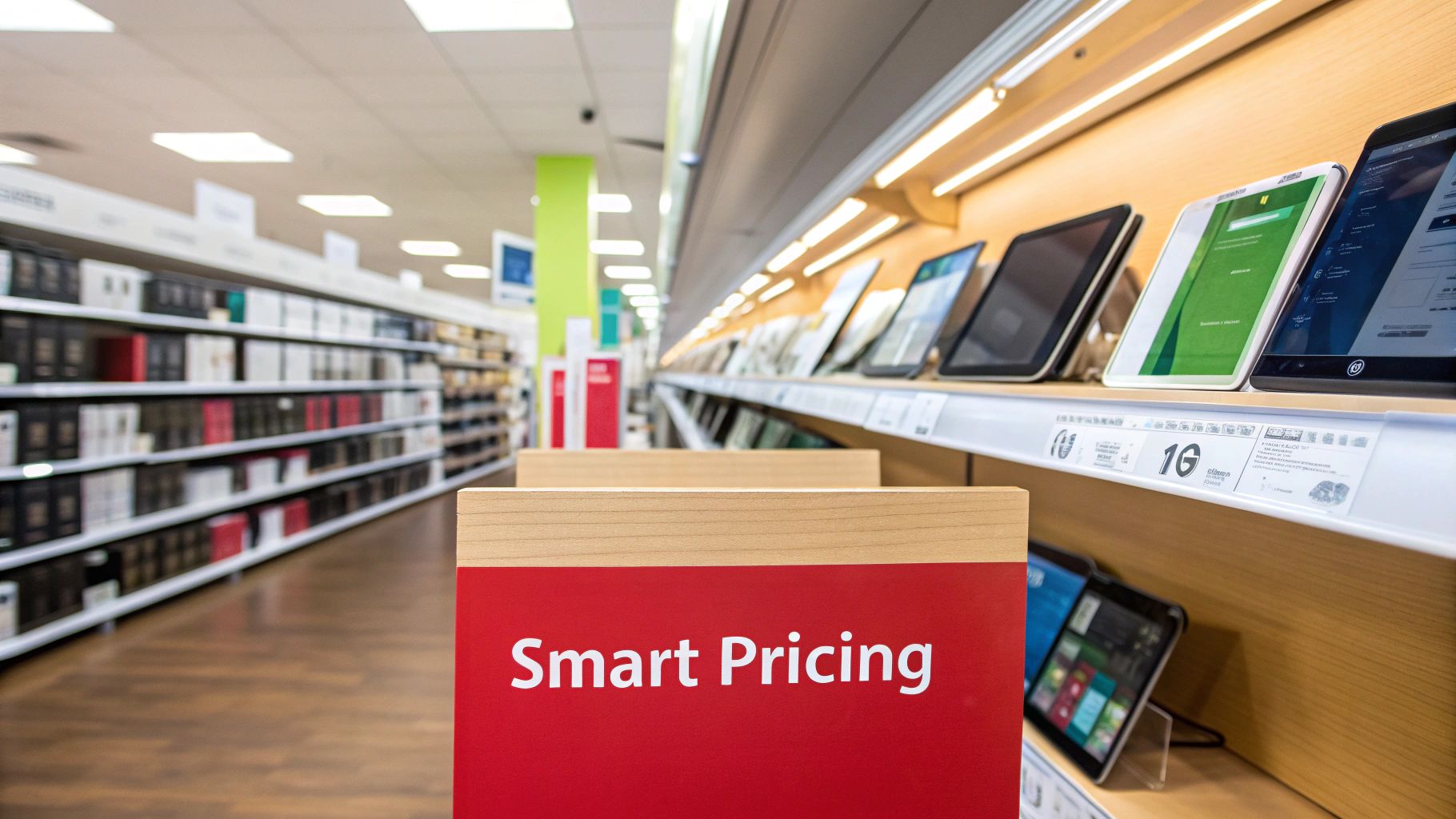
The Shift to Centralized Control
This is where electronic shelf price tags completely change the game.
Think of it like this: it's the difference between manually adjusting an old thermostat and using a smart home system you control from your phone. Instead of deploying employees to every corner of the store, you can change prices on hundreds—or thousands—of products in a flash, all from one central hub.
This leap from manual labor to automation brings some immediate, powerful advantages:
- Instantaneous Updates: Launch promotions, react to a competitor's price drop, or fix an error across the entire store in seconds.
- Guaranteed Accuracy: The price on the shelf will always match the price in your system. No more checkout discrepancies.
- Reduced Labor Costs: Free up your team from the mind-numbing task of changing tags so they can focus on what really matters—your customers.
A huge driver for this shift is the simple desire for retailers to figure out how to automate manual processes and boost productivity. It’s all part of a larger move toward smarter, more efficient retail operations.
The market is catching on fast as more retailers see just how valuable digital pricing is. The global Electronic Shelf Label (ESL) market is set to explode from roughly $2.17 billion in 2025 to $10.8 billion by 2035, growing at a powerful compound annual growth rate of 17.4%.
Ultimately, adopting ESLs means ditching a reactive, labor-heavy model for a proactive and efficient one. You can explore the different kinds of price labels for shelves in our other guides, but this foundational change is what sets the stage for a truly agile and competitive retail business.
How Electronic Shelf Price Tag Systems Work
Ever wondered how thousands of digital price tags can update at the exact same moment? It might look like magic, but it’s actually a straightforward and incredibly reliable system. It all boils down to three core components working in perfect harmony.
Once you understand how they talk to each other, you'll see just how robust and manageable this technology is for any retail store. Think of it like a dedicated Wi-Fi network for your pricing. You have a central command center, signal boosters to ensure full coverage, and the smart devices on the shelves. An ESL system is built on that same solid principle.

The Three Core Components of an ESL System
To really get how a price change goes from your computer to the shelf edge, let's follow the journey. It's a quick, coordinated dance between software, communication hardware, and the digital displays your customers actually see.
Here's a breakdown of the key players:
Central Management Software: This is mission control. It’s the software platform where you manage every price, promotion, and product detail that shows up on the tags. No more fiddling with spreadsheets—all your changes happen right here.
Communication Gateways: Think of these as signal boosters. They are small devices placed around the store that take instructions from the software and broadcast them wirelessly to the tags. They make sure every single tag gets the message, loud and clear.
The Digital Tags: These are the smart displays on your shelves. Each electronic shelf price tag is a tiny, low-power screen showing the price and other key info. They are always listening for signals from the gateways and update instantly when a new command comes through.
Tracing the Path of a Price Update
So, what happens when you decide to run a flash sale on soda? The whole process is shockingly fast.
First, a manager logs into the central software and changes the soda's price from $1.99 to $1.50. This change is often tied directly into the store’s Point of Sale (POS) or inventory system, so everything stays in sync. The software then zips this new information into a tiny data packet, addressed specifically to the soda tags.
Next, that data packet is sent to the communication gateways. The gateways act like translators, converting the software’s command into a low-frequency radio signal. They then broadcast this signal across their area of the store, just like a Wi-Fi router.
Finally, the electronic shelf price tags for the soda are constantly "listening" for their unique ID. When a tag hears its code, it grabs the new data and immediately refreshes its e-paper screen to show the new $1.50 price. The entire trip—from click to update—takes just a few seconds.
The real power here is that the system can do this for one tag or ten thousand tags at the same time. It guarantees the price on the shelf is always 100% accurate and perfectly matched with your checkout system. No more price discrepancies, no more frustrated customers.
The software is the true brain of the operation. Exploring different types of digital label software reveals even more powerful features, like scheduling price changes for next week or showing inventory counts right on the tag. This is the kind of control and automation that turns a tedious manual task into a real strategic advantage.
Key Benefits of Upgrading to Digital Tags
Okay, so we know how electronic shelf price tags work. But the real magic happens when you see what they can actually do for your business. It's not just about swapping paper for screens; it's about fundamentally changing your store's operations, your bottom line, and how your customers feel when they walk the aisles.
The first and most obvious win is a massive boost in efficiency. Just think about it: how many hours do your people spend printing, cutting, and running around the store swapping out little bits of paper? It's a slow, tedious process that pulls your team away from what really matters—helping customers and keeping shelves stocked.
With digital tags, that whole song and dance just… disappears.
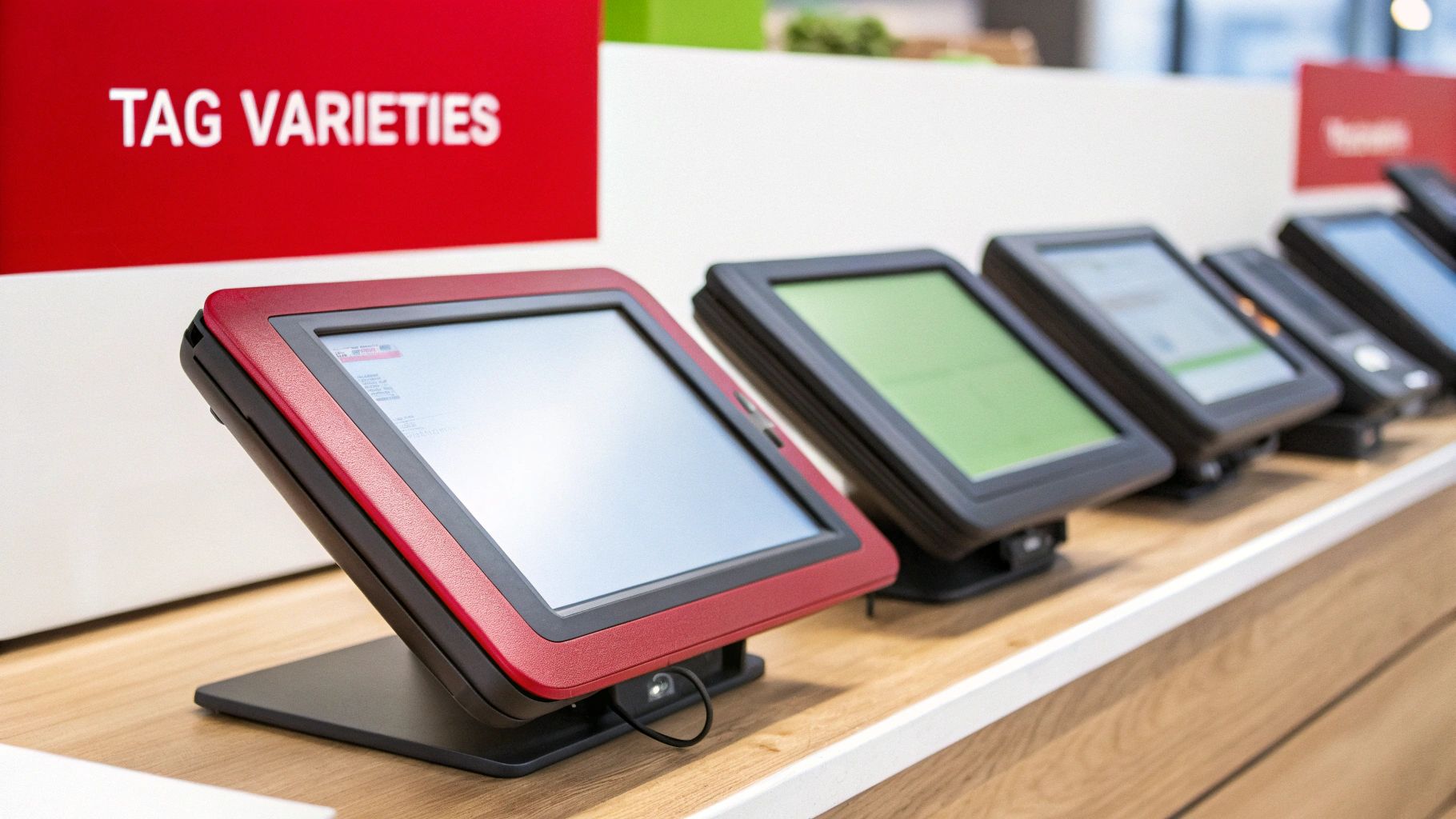
Unlocking Pricing Agility and Accuracy
One of the biggest game-changers with electronic shelf price tags is gaining true pricing agility. Retail moves fast, and you need to be able to react just as quickly.
Imagine your competitor across the street drops the price on a hot-selling item. With a paper system, you're stuck. You might not be able to respond until the next morning. With ESLs? You can match or even beat their price on every single tag in a matter of minutes, right from your office.
This speed opens up a whole new world of pricing strategies that are simply impossible with paper:
- Flash Sales: Run a two-hour special on a specific product to drive traffic on a slow Tuesday afternoon.
- Demand-Based Pricing: Flex prices on popular items to maximize your margins when they’re flying off the shelves.
- Automated Clearance: Systematically drop prices on items nearing their expiration date, cutting down on waste without any extra work.
On top of speed, you get 100% price accuracy. The price on the shelf perfectly matches the price at the checkout, every single time. This kills those frustrating price discrepancies that annoy customers and create friction at the POS. When pricing is always right, you build trust and make checkout a breeze. If you're curious to learn more, our detailed guide explores the many benefits of electronic shelf labels.
To really see the difference, let’s put the old and new methods side-by-side.
Comparing Traditional Paper Tags vs. Electronic Shelf Price Tags
This table breaks down how a modern ESL system stacks up against the manual, labor-intensive process of using paper labels. The contrast in efficiency and capability is pretty stark.
| Feature | Traditional Paper Tags | Electronic Shelf Price Tags |
|---|---|---|
| Updating Prices | Manual, slow, and labor-intensive process | Instant, centralized updates across thousands of tags |
| Price Accuracy | Prone to human error, leading to POS discrepancies | 100% accurate; synchronized with the POS system |
| Labor Costs | High; requires staff to print, sort, and replace tags | Drastically reduced; frees up staff for customer-facing tasks |
| Dynamic Pricing | Impractical and nearly impossible to implement | Fully supported for flash sales, demand pricing, etc. |
| Inventory Info | Limited to price and product name | Can display stock levels, order dates, and other data |
| Customer Engagement | None; purely informational | Enables QR codes for reviews, promos, and detailed info |
| Waste | Generates constant paper, toner, and printer waste | Eco-friendly; significantly reduces paper consumption |
As you can see, the upgrade is about more than just convenience—it’s a strategic shift that impacts nearly every part of store operations.
Enhancing Inventory Management and Shopper Engagement
Modern electronic shelf price tags are so much more than digital price displays. They’re little information hubs that can change how you manage inventory and how shoppers interact with your products.
Their high-resolution e-paper screens can show a ton of useful data right at the shelf edge, turning each tag into a powerful tool for both your staff and your customers.
Think about it: an employee can glance at a tag and instantly see the real-time stock count in the backroom or when the next delivery is due. That simple check saves them a trip to the storeroom and lets them answer a customer's question on the spot.
These tags can also seriously level up the shopping experience. By displaying a simple QR code, you can link customers directly to:
- Product Information Pages: Let them pull up detailed specs, user reviews, or even how-to videos.
- Promotional Offers: Give them access to exclusive digital coupons or special bundle deals.
- Allergen or Origin Information: Provide health-conscious shoppers the exact data they need to make a confident choice.
The move to this technology isn't a niche trend; it's a major shift in how retail operates. The global ESL market reflects this, valued somewhere between USD 1.85 billion and 2.34 billion in 2024. Projections show it growing at a healthy clip, with annual rates between 11.5% and 17.4% into the next decade. This growth isn't just about saving a few bucks on labor—it’s about building a smarter, more responsive, and more engaging store.
Choosing the Right ESL System for Your Store
Picking the right electronic shelf price tag system isn't a one-size-fits-all kind of deal. Think of it like choosing the right engine for a vehicle; what works for a small, cozy boutique is a world away from what a massive superstore needs. Getting this right from the start ensures your investment pays off in efficiency, reliability, and future growth.
The first step is to take a hard look at your specific retail environment. How big is your store? Is the layout complex? What kinds of products are you selling? All these factors will steer you toward the perfect system. The right choice means looking past the price of the tags themselves and seeing the whole picture.
Evaluating Tag Types and Features
Not all digital tags are created equal. They come in all shapes, sizes, and with different capabilities, each designed for a specific job in your store. Your product mix should really be your guide here, making sure you have the right display for every single item on your shelves.
You’ve got a whole menu of options to consider:
- Standard Tags: These are your workhorses, perfect for typical grocery or retail shelving. They come in various sizes to show prices, product names, and simple promotional callouts.
- Multi-Color Displays: Most modern electronic shelf price tags use three-color e-paper (black, white, and red or yellow) to make promotions and sale prices pop. It's a simple, effective way to grab a shopper's eye.
- Freezer-Safe Models: If you have frozen food aisles or refrigerated cases, you absolutely need tags built to handle the cold. These are designed to withstand sub-zero temperatures without killing the battery or damaging the screen.
- Large Format Displays: Got a big end-cap display or a sprawling produce section? These larger screens can show much more detail, including images or even dynamic video content.
Beyond the screen, think about durability. Tags in high-traffic areas or on lower shelves are going to get bumped by shopping carts—it’s inevitable. Investing in tough, robust tags and protective holders is a smart move to prevent damage and protect your investment. A deeper look at the variety of a modern price tag for shelves can really help you see which options make sense for your store.
Comparing Communication Technologies
The backbone of any ESL system is how it communicates—the way your central software "talks" to the thousands of tags on the floor. The two most common methods are Radio Frequency (RF) and Infrared (IR), and they each have their own strengths.
Radio Frequency (RF) is the most common technology out there today. It works a lot like your Wi-Fi, using gateways to send signals that can easily pass through shelving and other obstacles. This makes it a fantastic choice for complex store layouts with tons of aisles, ensuring you get reliable, store-wide coverage.
Infrared (IR), on the other hand, needs a direct line of sight between the transmitter and the tag, just like your TV remote. While this can be a limitation in stores with complicated layouts, it’s also highly secure and less likely to face interference. It’s often a great fit for smaller, more open-plan retail spaces.
The key takeaway is to match the technology to your environment. A sprawling supermarket will almost certainly benefit from an RF system's flexibility, while a smaller, single-room electronics store might find IR perfectly suitable.
Software Integration and Scalability
This might be the most critical piece of the puzzle: how well does the ESL system play with the technology you already have? Your new digital tags have to talk seamlessly with your Point of Sale (POS) and inventory (ERP) systems. If they don't, you'll never achieve that perfect price accuracy and operational harmony. Look for vendors who offer solid APIs (Application Programming Interfaces) that make this data exchange smooth and painless.
Finally, think about tomorrow. Your business is going to grow, and your ESL system needs to be able to grow with you. Ask potential vendors about the maximum number of tags their system can handle and how easy it is to add more gateways or expand to new locations. A scalable solution keeps you from having to rip everything out and start over just a few years down the road. To help with the upfront cost, many businesses explore various equipment financing options for small businesses that are well-suited for these kinds of tech upgrades.
Calculating Your Return on Investment
For any big investment in retail, the numbers have to work. Period. Switching over to electronic shelf price tags is no different. While the day-to-day benefits seem obvious, turning them into a rock-solid financial projection is what gets the green light. Calculating your Return on Investment (ROI) is what shifts the conversation from "this is a cool idea" to "this is a smart, profitable move."
It really just comes down to looking at two sides of the same coin: what you spend upfront versus what you gain over time. It’s a straightforward analysis that stacks the initial investment against the ongoing savings and new revenue opportunities the tech opens up.
Identifying Your Initial Costs
First things first, you need a crystal-clear picture of the total investment. This is about more than just the price of the digital tags themselves. A complete cost breakdown gives you a realistic starting point for your ROI math and helps you avoid any nasty surprises later on.
You can get a much deeper look into the full breakdown of electronic shelf tags cost in our detailed guide.
Your main costs will generally fall into three buckets:
- Hardware: This is usually the biggest chunk of the upfront expense. It covers the electronic shelf price tags, the communication gateways that talk to them, and any rails or mounting gear you need.
- Software: You’ll need the brains of the operation—the central management software. This could be a one-time license fee or an ongoing subscription, depending on the provider.
- Installation and Training: This covers the labor for getting the gateways and tags set up, plus the time it takes to get your team comfortable and efficient with the new system.
Pinpointing Your Financial Returns
This is where things get exciting. The real value of electronic shelf price tags isn't just about cutting costs; it's about unlocking efficiencies and creating new ways to make money that were simply impossible with paper labels.
The heart of a strong ROI is found in slashing direct operational expenses while simultaneously boosting profit margins through smarter pricing. It's a dual-impact investment.
Here are the key areas where you’ll see some serious financial returns:
- Drastically Reduced Labor Costs: Think about it. Calculate the hours your team currently burns printing, cutting, sorting, and walking the aisles to swap out paper tags every single week. That labor can be completely re-assigned to helping customers or other tasks that actually make you money.
- Elimination of Consumable Expenses: You can say goodbye to the never-ending bills for paper, printer ink, and toner. Not to mention printer maintenance. Over a few years, these "small" costs add up to a huge number.
- Increased Profit from Dynamic Pricing: Imagine running flash sales on a whim, instantly matching a competitor's price drop, or adjusting prices based on demand. This agility lets you squeeze the maximum margin out of every single sale.
- Fewer Losses from Pricing Errors: A price mismatch between the shelf and the checkout is a classic way to lose money and annoy customers. ESLs solve this by ensuring 100% accuracy, protecting your bottom line and keeping shoppers happy.
This global shift towards ESLs is happening for a reason—the financial benefits are tangible. Europe, for example, is the largest market for this tech, holding over 30% of the global market share in 2025 with a market size topping USD 729 million. To see more data on this trend, you can explore the full research on the ESL market. This kind of widespread adoption just proves the strong, repeatable ROI that retailers are already seeing.
Common Questions About Electronic Shelf Price Tags
Anytime you bring new technology into your store, you’re going to have questions. It’s just smart business. When retailers start looking into electronic shelf price tags, a handful of concerns almost always pop up right away. Getting those sorted out is the key to feeling confident in the investment.
Most of the time, the conversation starts with the practical stuff—how this all works day-to-day and whether it’s built to last. Retailers need to know this tech is going to make life easier, not add another layer of complexity.
How Long Do the Tag Batteries Last?
This is usually the first question out of the gate, and for good reason. The idea of changing batteries on thousands of little tags sounds like a nightmare. But modern ESLs are built for some serious efficiency.
Most electronic shelf tags come with a battery that lasts anywhere from 5 to 7 years, and some high-efficiency models go even longer. How? The magic is in the e-paper screens. They only draw power for the split second it takes to change the price. Once the new info is displayed, the screen holds that image using zero energy.
Think of it like a "set it and forget it" system. You can outfit your entire store and not have to think about battery swaps for years. It makes for an incredibly low-maintenance operation.
Will This System Integrate with My Current POS?
Absolutely. Seamless integration isn’t just a nice-to-have; it's a must. Modern ESL systems are specifically designed to plug right into the retail tools you already use.
The connection is made through something called an Application Programming Interface (API), which is basically a bridge between the ESL software and your Point of Sale (POS) or inventory management (ERP) system.
This link guarantees that when you change a price in your main system, it gets pushed to the correct tag on the shelf instantly and automatically. A good ESL provider will partner with you to make sure that connection is rock-solid, creating one single source of truth for your pricing and putting an end to those frustrating price discrepancies for good.
What Does the Implementation Process Look Like?
Getting an ESL system up and running is a very methodical process, all designed to cause as little disruption to your store as possible. While every project is a bit different, the rollout usually follows a few key steps.
Here’s what a typical implementation looks like:
- Site Survey: First, a technician will walk your store to map out the best spots for the communication gateways, making sure you have 100% signal coverage in every aisle.
- Hardware Installation: Next, the gateways are installed (usually discreetly on ceilings or walls), and the digital tags are clipped onto the shelves. This is almost always done during off-hours so it doesn't get in the way of shoppers.
- Software Configuration: The management software is set up and linked to your POS system. Then, your product database is synced up with all the new tags.
- Team Training: Finally, your staff gets hands-on training so they know exactly how to manage the system, update prices, and use all the features.
The goal for most providers is to make the whole thing feel less like a massive tech overhaul and more like a simple, straightforward upgrade for your store.
Ready to modernize your pricing strategy and boost store efficiency? The team at ESLtags specializes in providing robust, reliable electronic shelf price tag solutions that integrate seamlessly with your operations. Discover how our technology can save you time and money by visiting us at https://www.electronicshelftags.com.


Leave a Reply
Your email is safe with us.