

Innovation in retail isn’t just about shiny new gadgets anymore. It’s a ground-up rethinking of how stores operate, connect with customers, and handle their products. It’s the fusion of technology, customer experience, and operational efficiency that transforms a simple shop into a smart, responsive environment.
The real goal here? To turn a physical store into an intelligent space that actually anticipates what shoppers need, sometimes before they even know they need it.
What Innovation in Retail Really Means Today
When someone says “retail innovation,” it’s easy to picture aisle-roaming robots and futuristic tech. And while technology is a huge piece of the puzzle, the real meaning goes much deeper. It’s about a strategic shift away from just moving boxes to creating a complete, frictionless, and efficient experience for everyone who walks through the door.
Think of a classic store like an old-school library—you’re on your own to find the book you want. A modern, innovative store is like a library with a smart assistant who knows what you've read, suggests your next favorite author, and has the book waiting for you at the front desk. That’s the difference.
The Three Pillars of Modern Retail Innovation
This whole transformation rests on three core pillars. They don’t stand alone; they prop each other up, creating a powerful synergy that’s reshaping the industry from the inside out. Understanding them gives you a clear map of how retailers are building for the future.
Technology Integration: This is the engine of change. We're talking about practical tools like smart sensors for live inventory counts, AI to personalize promotions on the fly, and digital price tags for instant updates. The point isn't tech for tech's sake—it's about automating tedious tasks and collecting data to make better decisions.
Enhanced Customer Experience: This pillar is all about making the in-store trip memorable. It’s about giving people a reason to come in beyond just a simple purchase. This could be anything from interactive displays and augmented reality mirrors for trying on clothes, to turning part of the store into a community hub with workshops or local events.
Operational Efficiency: This is the magic behind the curtain that makes everything else possible. It’s about fine-tuning every single process, from how products are stocked to how quickly click-and-collect orders are ready for pickup. When operations are smooth, costs go down, out-of-stocks disappear, and your team is freed up to actually help customers.
True retail innovation happens where these three pillars meet. Technology isn’t just added on; it's woven in to directly improve the customer's journey and streamline how the store runs, creating a cycle of constant improvement.
To help visualize how these components work together, here’s a quick breakdown:
The Three Pillars of Modern Retail Innovation
| Pillar of Innovation | Core Focus | Key Technologies & Strategies |
|---|---|---|
| Technology Integration | Automating tasks and gathering data for smarter decision-making. | Smart sensors, AI-powered analytics, Electronic Shelf Labels, IoT devices, and integrated POS systems. |
| Enhanced Customer Experience | Creating memorable, engaging, and personalized in-store journeys. | Interactive displays, AR try-on mirrors, mobile apps, personalized offers, and in-store events. |
| Operational Efficiency | Optimizing back-end processes to reduce costs and improve service. | Automated inventory management, streamlined supply chains, click-and-collect systems, and staff task management tools. |
Breaking it down this way makes it clear that a successful strategy isn't just about picking one area, but about creating a balanced approach where each pillar supports the others.
Ultimately, this all-in approach isn't a passing trend—it's a critical adaptation. With 60% of sales now influenced by a digital touchpoint, the physical store has to do more. It needs to evolve from a place of transaction into a dynamic, data-driven destination that meets the sky-high expectations of today's shopper. By focusing on these core areas, retailers can build a resilient business that’s ready for whatever comes next.
How Smart Technology Is Reinventing Store Operations

It’s easy to focus on the flashy, customer-facing side of retail, but some of the biggest innovation in retail stores is happening behind the scenes. This is where smart technology, especially the Internet of Things (IoT), is completely overhauling the day-to-day grind of running a store. It’s the invisible engine making the entire retail machine run smoother, faster, and with far fewer mistakes.
Think of a traditional store as a ship where the crew has to manually check every crate and constantly repaint the signs. An IoT-powered store is more like a modern vessel with a central dashboard showing real-time data on everything. The captain can make smarter decisions instantly. This operational intelligence is no longer a “nice-to-have”—it’s essential for survival.
From Manual Tasks to Automated Intelligence
At the heart of this operational shift is a network of smart devices that talk to each other to automate tasks and provide critical information. We’re not talking about complex robots roaming the aisles, but simple, powerful tools that eliminate soul-crushing manual labor and cut down on human error.
They handle the tedious work, which frees up your staff to focus on what they do best: helping customers.
Some of the best examples of this in action are Electronic Shelf Labels (ESLs), Radio-Frequency Identification (RFID), and smart shelves. With ESLs, retailers can change prices on thousands of items from a single computer, making the slow, error-prone process of swapping paper tags a thing of the past. RFID tags, meanwhile, are a game-changer for inventory tracking, helping staff find items for online orders in seconds.
These technologies create a connected ecosystem where everything works together. A manager can launch a flash sale in minutes, an associate can pinpoint a missing product instantly, and the supply chain gets an automatic signal to restock an item the moment it runs low.
The Power of Real-Time Data
The true value of these smart devices is the constant stream of data they produce. Before, taking inventory was a once-a-month headache that often led to inaccurate counts. Today, smart shelves and RFID give you a continuous, real-time picture of exactly what’s on hand.
This flow of information creates powerful ripple effects:
- Preventing Stockouts: Smart shelves can automatically alert staff when a product is running low. This prevents the classic "empty shelf" problem that sends frustrated shoppers—and their money—elsewhere.
- Optimizing Promotions: Using ESLs, a retailer can experiment with different price points throughout the day to see what drives sales, all without touching a single paper tag.
- Efficient Order Fulfillment: For "Buy Online, Pick Up In-Store" (BOPIS) orders, RFID tags allow staff to locate items with surgical precision, slashing fulfillment time from many minutes to mere seconds.
By turning physical products into digital data points, IoT technology gives retailers a level of visibility into their operations that was once unimaginable. This clarity allows them to be proactive instead of reactive, fixing problems before they ever affect a customer.
Making Every Square Foot Count
Smart operational tech also helps retailers squeeze more value out of their physical space. By understanding exactly how products move off the shelves, they can optimize store layouts and make sure high-demand items are always easy to find.
For example, detailed shelf tracking systems can reveal which products are frequently picked up but not purchased, offering huge clues about pricing or placement issues. It’s like having a silent observer in every aisle, collecting data that makes the entire store more efficient and profitable.
This is the unseen side of retail innovation—the quiet, intelligent foundation upon which all great customer experiences are built.
Using AI to Craft Personalized Shopping Journeys

Artificial Intelligence (AI) has officially moved out of science fiction and into the aisles of modern retail. It’s no longer just a futuristic concept; it’s a powerful, practical tool that's completely reshaping innovation in retail stores. Think of it as the store's "brain," constantly analyzing massive amounts of information to understand and even predict what shoppers want next.
This isn’t about replacing the human touch. It’s about making every single interaction smarter and more relevant.
Imagine AI as a master tailor. A traditional store just offers clothes off the rack, hoping something fits. But a store powered by AI can measure a customer's preferences, look at their past purchases, and even analyze how they browse the store. Then, it can offer a perfectly fitted outfit. It’s this kind of deep personalization that makes the entire journey feel like it was designed for just one person.
And it’s more important than ever, with digitally influenced sales now accounting for over 60% of all retail transactions. AI is the engine driving this shift, with everything from AI shopping assistants simplifying decisions to automated replenishments keeping shelves full.
Turning Data into Delightful Experiences
The real magic of AI in retail is its ability to connect the dots. It sifts through huge datasets that used to be just noise—loyalty card histories, online browsing habits, even in-store foot traffic patterns—and pulls out meaningful insights. This is where big data and AI work together to create truly personal shopping experiences. You can dive deeper into this by checking out our guide on how retailers can use big data for retail to their advantage.
By understanding these patterns, retailers can stop reacting and start proactively engaging customers with offers and suggestions that are genuinely helpful.
- Personalized Promotions: Forget generic coupons. AI can send a targeted offer for a customer's favorite coffee brand right when they’re probably about to run out.
- Smarter Recommendations: In-store kiosks or mobile apps can act like digital shopping assistants. Picking up pasta? The system might suggest a specific sauce and cheese that pairs perfectly with it.
- Streamlined Shopping: For the shopper who knows exactly what they want, an AI assistant can guide them straight to the product's location, saving them a ton of time and frustration.
AI transforms the shopping experience from a passive, one-size-fits-all model into an active, intelligent conversation between the retailer and the customer. It's about showing the customer you understand their needs before they even have to ask.
AI Behind the Scenes Optimizing Operations
While personalized recommendations get all the attention, AI's impact on behind-the-scenes operations is just as massive. It’s the invisible force making sure the products customers want are always on the shelf.
One of its most powerful jobs is demand forecasting. Old-school forecasting relied on historical sales data, which was often slow and way off the mark. AI models, on the other hand, can analyze real-time sales, social media trends, local events, and even the weather to predict demand with stunning accuracy.
This leads to some huge operational wins:
- Reduced Stockouts: By seeing a spike in demand coming, retailers can make sure popular items are ordered and stocked ahead of time. No more empty shelves or lost sales.
- Minimized Overstock: AI also stops retailers from ordering too much of a slow-moving product, which just ties up cash and clutters the backroom.
- Efficient Inventory Placement: It can even figure out the best place to put products, whether it's in a specific spot in the store or across a network of locations to meet regional demand.
Ultimately, AI helps build a much more resilient and responsive supply chain. This operational excellence is the foundation for creating those memorable customer journeys. It ensures that when you promise a personalized offer, you actually have the product to back it up.
Building Unforgettable In-Store Experiences
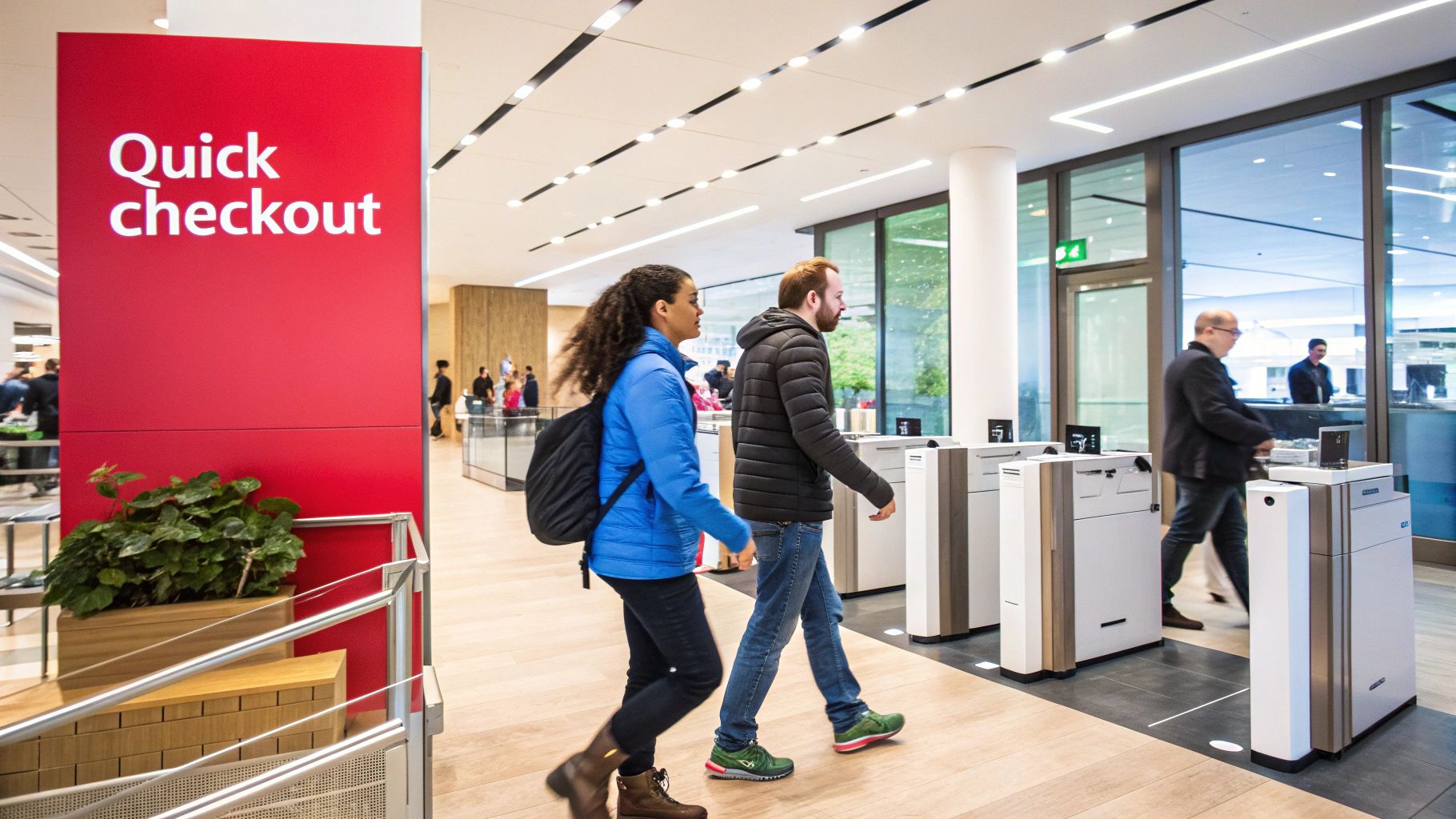
While smart operations and slick personalization are crucial, they’re really just the foundation. The ultimate goal of retail innovation is to create a physical space that people actually want to visit. Technology is only half the story; the real magic happens when a store becomes a destination, offering memorable experiences that a website just can't touch. This is where physical retail still has the upper hand.
In a world where you can buy anything online, the purpose of a brick-and-mortar shop has completely changed. It’s no longer just a place to make a transaction. Now, it's a stage for brand storytelling, a hub for community connection, and a playground for the senses. This shift toward experiential retail is a powerful way to get people in the door, build real loyalty, and create some social media buzz.
Blending the Physical and Digital Worlds
The most successful modern retailers have mastered the art of "phygital"—seamlessly weaving physical and digital elements together for a richer customer journey. These aren't just flashy gimmicks. They're tools that solve real problems or add a layer of fun and discovery to a shopping trip.
This approach brings the best of online shopping—endless information, personalized touches, and convenience—into the tangible, human-centric world of the store.
- Interactive Displays and Smart Mirrors: Picture a makeup store where an augmented reality (AR) mirror lets you try on dozens of lipstick shades without ever touching a tube. Or a furniture showroom where a huge touchscreen helps you visualize a sofa in different fabrics and colors. These tools are both practical and incredibly engaging.
- Endless Aisles: In-store kiosks can give shoppers access to a brand’s entire online catalog. This solves that classic problem of not finding the right size or color on the shelf, turning a potentially lost sale into a successful order.
- Mobile App Integration: Smart retailers encourage shoppers to use their apps in-store to unlock exclusive content, get personalized discounts via geofencing, or scan QR codes on products for detailed reviews and how-to videos.
These phygital elements, supported by clear and dynamic signage for retail, transform a passive browsing session into an active, hands-on experience.
More Than a Store: A Community Hub
Beyond just tech, leading retailers are rethinking the very layout and purpose of their stores. By setting aside space for non-commercial activities, they foster a sense of community that keeps customers coming back. This strategy repositions the store as a “third place”—that vital social spot between home and work.
For example, a sporting goods store might host free weekly yoga classes. A bookstore could run a local author meet-and-greet, while a hardware store offers DIY workshops on weekends. These events provide genuine value to the community, strengthening the brand’s local roots and building authentic relationships. Starbucks, for instance, designed its flagship store in Madrid's Bernabéu Stadium as an "immersive coffee destination" with mixology stations and exclusive events, turning a coffee shop into a cultural landmark.
By transforming a store from a place of commerce into a center for community and learning, retailers build an emotional connection that transcends price. This connection is the ultimate defense against purely digital competitors.
Measuring the Impact of Experience
Creating these unforgettable moments is an investment, and you need to know if it's paying off. To truly gauge the impact of your innovative experiences, it's vital to implement effective customer experience surveys that give you actionable insights. Metrics like foot traffic, dwell time (how long shoppers stick around), and social media mentions suddenly become just as important as the sales figures.
Ultimately, building an unforgettable in-store experience is about recognizing that modern innovation in retail stores is deeply human. It's about using technology not to replace connection but to enhance it, and designing physical spaces that surprise, delight, and serve the community.
Where Smart Retailers Are Investing Next
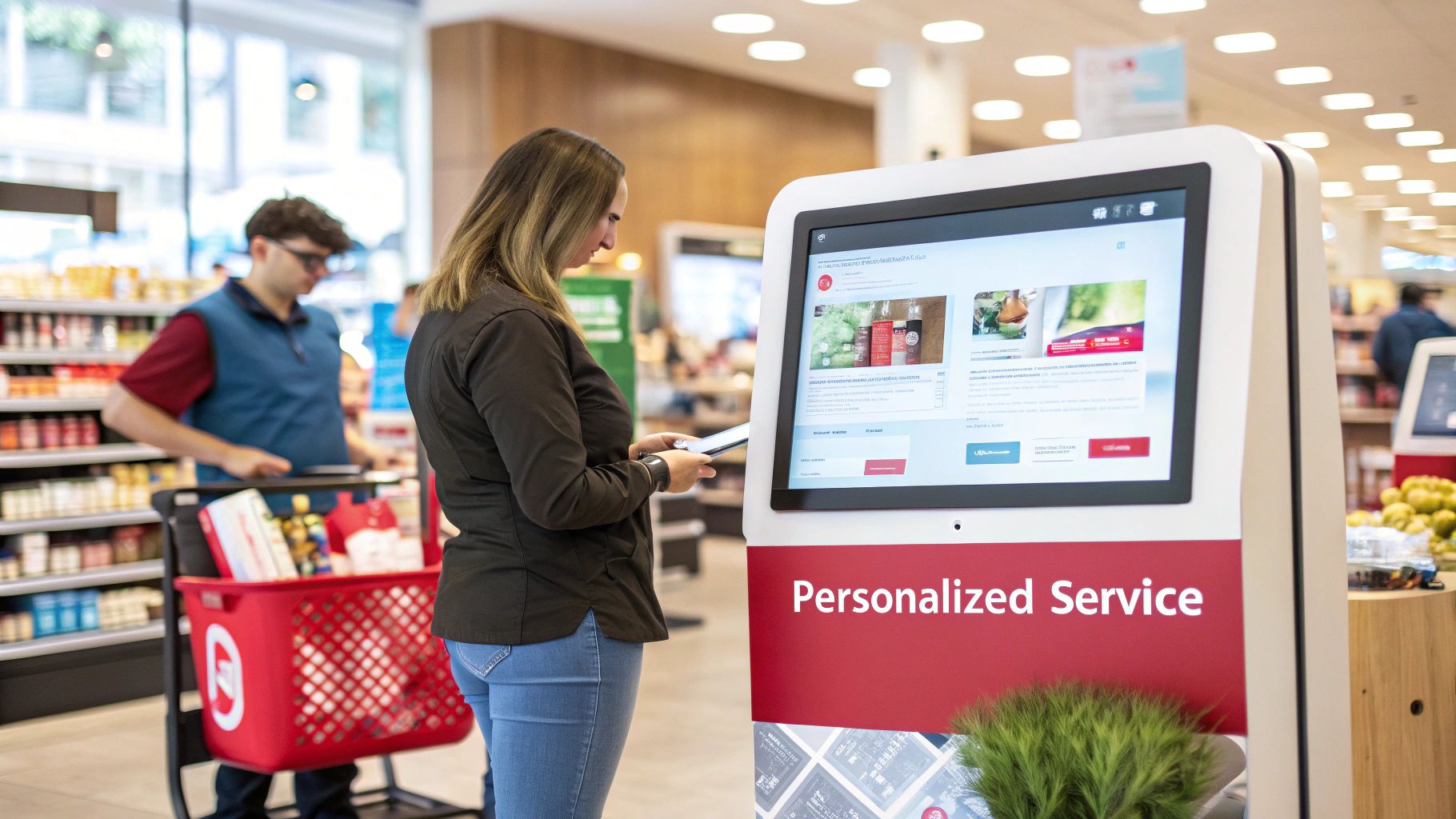
It’s one thing to know what new tech is out there. It’s another to see where the industry leaders are actually putting their money. That’s where you find the real roadmap for the future.
Forward-thinking retailers aren’t just throwing cash at shiny objects. They’re making calculated bets on two fronts that work hand-in-hand: creating a better customer journey while building tougher, more agile operations behind the scenes.
This isn’t a coincidence. It’s a direct response to how much shoppers have changed. The game is no longer just about moving products off shelves. It’s about engineering smart, efficient retail ecosystems that deliver the speed, convenience, and personal touch people now expect.
Remodeling and Rightsizing Physical Spaces
One of the biggest shifts we’re seeing is the move away from giant, one-size-fits-all superstores. Retailers are now pouring money into remodeling their existing locations or launching smaller, more focused store concepts. They get it—the role of the physical store has completely changed.
Recent reports show that around 50% of retail executives are planning serious investments in store remodels and new, smaller-format stores. As detailed in Deloitte's 2024 retail industry outlook, this is all part of a larger pivot toward localized, digital-first models where every square foot has to earn its keep.
These new or refreshed spaces are purpose-built for today’s shopper:
- Destination Stores: These are all about the experience. Think product demos, expert consultations, and community events that give people a reason to visit beyond just making a purchase.
- Micro-Fulfillment Hubs: Many smaller stores are now pulling double duty as mini-warehouses, using their backrooms to pack online orders for quick local delivery or in-store pickup.
- Curated Showrooms: Some brands use smaller footprints to display a handpicked selection of items, letting customers touch and feel products before ordering from a much larger online catalog.
The Unseen Investment in Foundational Tech
Here’s the part that often gets overlooked but might be the most important: modernizing ancient IT systems. For years, too many retailers have been limping along on outdated, cobbled-together software that just can't keep up with modern innovation in retail stores. Frankly, these old systems are the biggest bottleneck holding them back.
Think of it like trying to run a high-speed bullet train on rickety, 100-year-old tracks. It doesn’t matter how slick the train is; that old infrastructure will slow it down and cause problems. Upgrading these core systems is like laying brand new tracks. It's a huge job, but it’s the only way to unlock real speed and flexibility.
Upgrading legacy IT isn't just a tech project; it's a foundational business investment. Without a modern, agile tech stack, you can't properly use AI, manage inventory in real time, or create the seamless omnichannel experiences customers demand.
This modernization is what allows all the different pieces of a modern retail business—the website, the physical stores, the supply chain—to talk to each other smoothly. It’s a critical part of the wider push toward more automation in the retail industry, letting all the systems work together as one smart, cohesive unit.
By investing in both their physical storefronts and their digital backbones, smart retailers are building for the long haul. This balanced approach ensures they can deliver fantastic customer experiences today while having the agility to adapt and win tomorrow.
Here’s a completely rewritten version of the section, crafted to sound like an experienced human expert.
Your Practical Roadmap to Retail Innovation
Bringing innovation from a strategy document into your actual store can feel daunting. But it doesn’t have to be. The secret isn't a massive budget or chasing every new gadget. It’s about a smart, phased approach focused on solving real problems you face every day. A clear strategy always beats brute force spending.
The journey begins not with tech, but with a simple question: What's your biggest headache? Is it constant out-of-stocks? Painfully slow price changes? Maybe it’s getting customers to come back. Pinpointing your most pressing challenge gives you a clear target and ensures your first move into innovation in retail stores delivers a real, measurable impact.
Start Small with a Pilot Program
Once you know the problem you’re trying to solve, it's time to test a solution on a small scale. This is where a pilot program is your best friend. Instead of overhauling your entire operation, just pick one or two locations—or even a single department—to try something new. It’s a low-risk way to gather priceless data without disrupting everything.
For instance, if pricing errors and the labor hours spent fixing them are eating into your margins, a great pilot would be to install electronic shelf labelling in your busiest aisle. This lets you see the tech in action, measure its direct effect on efficiency, and get honest feedback from your team on the ground.
Here’s how to run a pilot that actually works:
- Define Clear Goals: Know exactly what you want to improve. Do you want to slash pricing errors by 90%? Or maybe save 10 hours of labor per week? Get specific.
- Train a Small Team: Find a few enthusiastic employees and train them to be champions for the new system. Their excitement will be contagious.
- Measure Everything: Track your key metrics before, during, and after the pilot. This data will build an undeniable business case for a wider rollout.
Get Your Team on Board
At the end of the day, your employees are the ones who make any innovation work. Their buy-in is everything. Involve them from the start and explain the why behind the change. Frame it as a tool to make their jobs easier, not just another task piled on their plate.
When your team sees that new technology is there to kill off tedious work and free them up to actually help customers, they stop resisting and start advocating. That shift in culture is the final, crucial piece of any successful innovation strategy.
Common Questions About Innovation in Retail Stores
Diving into the world of retail innovation always brings up some practical questions. Many retailers I talk to are curious about what adopting new strategies and technologies actually looks like in the real world.
It's completely normal to have these questions—getting clear answers is how you make smart, confident decisions for your business. Let’s tackle some of the biggest ones head-on.
Where Should a Small Retailer Start?
The best first step for a smaller retailer isn't to chase the most expensive, complex technology out there. It’s about getting brutally honest about your specific challenges.
Start by identifying your single biggest pain point. Is it frustratingly inaccurate inventory counts? Are your checkout lines painfully slow during peak hours? Or are you struggling to get customers to come back a second time?
Once you’ve put your finger on the problem, you can hunt for a solution that directly addresses it. Often, a simple loyalty app or a modern point-of-sale system can create a much bigger impact than a full-scale AI rollout. The key is to focus on solving a real problem that gives you a clear and measurable return.
How Can You Measure ROI for Experiential Retail?
Measuring the return on experience-based innovation in retail stores means looking beyond immediate sales numbers. While revenue is, of course, the end goal, you need to track the leading indicators that build up to it.
Here are the key metrics to watch:
- Foot Traffic: Are more people physically walking into your store?
- Dwell Time: Once they arrive, how long are customers sticking around?
- Engagement Rates: Are shoppers actually interacting with your new displays, events, or tech?
On top of that, you need to keep a close eye on social media mentions and customer satisfaction scores from surveys. When you combine all these data points, you start to build a clear picture of how these changes are boosting customer loyalty and brand perception—both of which are direct drivers of long-term revenue.
Customer acceptance of new technology hinges entirely on perceived value and transparency. If a new tool offers a clear benefit to the shopper, they will embrace it.
Are Customers Resistant to New In-Store Technology?
Shoppers are generally quite open to new technologies like AI or in-store tracking, but their acceptance boils down to one simple thing: a clear benefit for them. If a technology obviously makes their trip better—like personalized discounts popping up on a smart kiosk or faster service via smart carts—they’ll adopt it in a heartbeat.
Resistance only really crops up when a technology feels intrusive or seems to offer no real advantage to the customer. The solution is simple: be transparent. Be open about what data you’re using and explain how it helps create a better, more convenient shopping trip. When customers see the direct benefit and trust that you respect their privacy, they are remarkably receptive to new tech.
Ready to solve your biggest in-store pricing and inventory challenges? Discover how ESLtags can automate your operations and free up your team to focus on what matters most—your customers. Explore our innovative electronic shelf label solutions at https://www.electronicshelftags.com.


Leave a Reply
Your email is safe with us.