

At its core, a pharmacy inventory management system is the digital brain behind a modern pharmacy. It’s the technology that automatically tracks and controls every single medication, from the moment it arrives from a supplier until it’s in a patient’s hands. This system is far more than a fancy spreadsheet; it’s the central command center for the entire facility, making sure drugs are always available, waste is kept to a minimum, and all regulatory rules are followed.
What Is a Pharmacy Inventory Management System?

Imagine trying to direct a fast-flowing river with nothing but a bucket. That’s what managing pharmacy inventory without a proper system feels like. A pharmacy inventory management system is like building a sophisticated network of dams and sensors to control that flow. It doesn’t just count boxes—it intelligently manages the movement of every medication to prevent both shortages (stockouts) and gluts (overstock).
Without that control, a pharmacy is left dealing with chaos. Manual counting is painstakingly slow and riddled with human error, which inevitably leads to misplaced stock, overlooked expiration dates, and inaccurate orders. This isn't just a hit to the bottom line; it's a direct threat to patient safety.
The Operational Core of a Modern Pharmacy
A solid inventory system is the operational heart of any successful pharmacy. It weaves together all the different functions of the pharmacy—ordering, dispensing, reporting—into one seamless operation. Most importantly, it gives you a real-time, completely accurate view of every single item you have in stock. This visibility is what lets you make smart decisions that impact everything from day-to-day workflow to your pharmacy's long-term financial health.
The growing reliance on this technology is easy to see in the market numbers. The global market for this software was valued at USD 6.10 billion in 2023 and is on a steep growth curve. Much of this boom is fueled by automation tools like barcode and RFID scanners, which help pharmacies keep up with the rising tide of prescriptions while cutting down on medication errors. To get a better sense of the unique challenges and opportunities within the pharmacy industry, it’s obvious that getting inventory management right is a top priority.
A pharmacy inventory management system does one crucial thing: it turns your stock from a logistical headache into a strategic asset. It gives you the data you need to buy smarter, waste less, and free up your pharmacists to focus on what they do best—caring for patients.
Key Functions and Purpose
The main job of an inventory system is to keep stock levels just right. It’s a delicate balancing act. You need enough medication on hand to meet patient demand, but you don't want to tie up precious capital in products that just sit on the shelf. The system achieves this balance through a few critical functions:
- Preventing Stockouts: It ensures essential medications are always on hand, protecting patient health and ensuring they can continue their care without interruption.
- Reducing Waste: It actively monitors expiration dates, flagging items that are about to expire so they can be used or returned, slashing financial losses from spoilage.
- Ensuring Compliance: It dramatically simplifies the complex tracking and reporting needed for controlled substances, helping you meet strict government regulations without the stress.
- Improving Efficiency: It automates the tedious but necessary tasks like reordering and cycle counting, freeing up your skilled staff to spend more time on clinical services and patient consultations.
By taking over these processes, the system becomes an indispensable part of the team. When you pair it with other technologies, like the ones we cover in our guide to digital labels for pharmacies, you create a powerful, seamless flow of information from the stockroom all the way to the shelf.
Core Features Every Modern Pharmacy System Needs
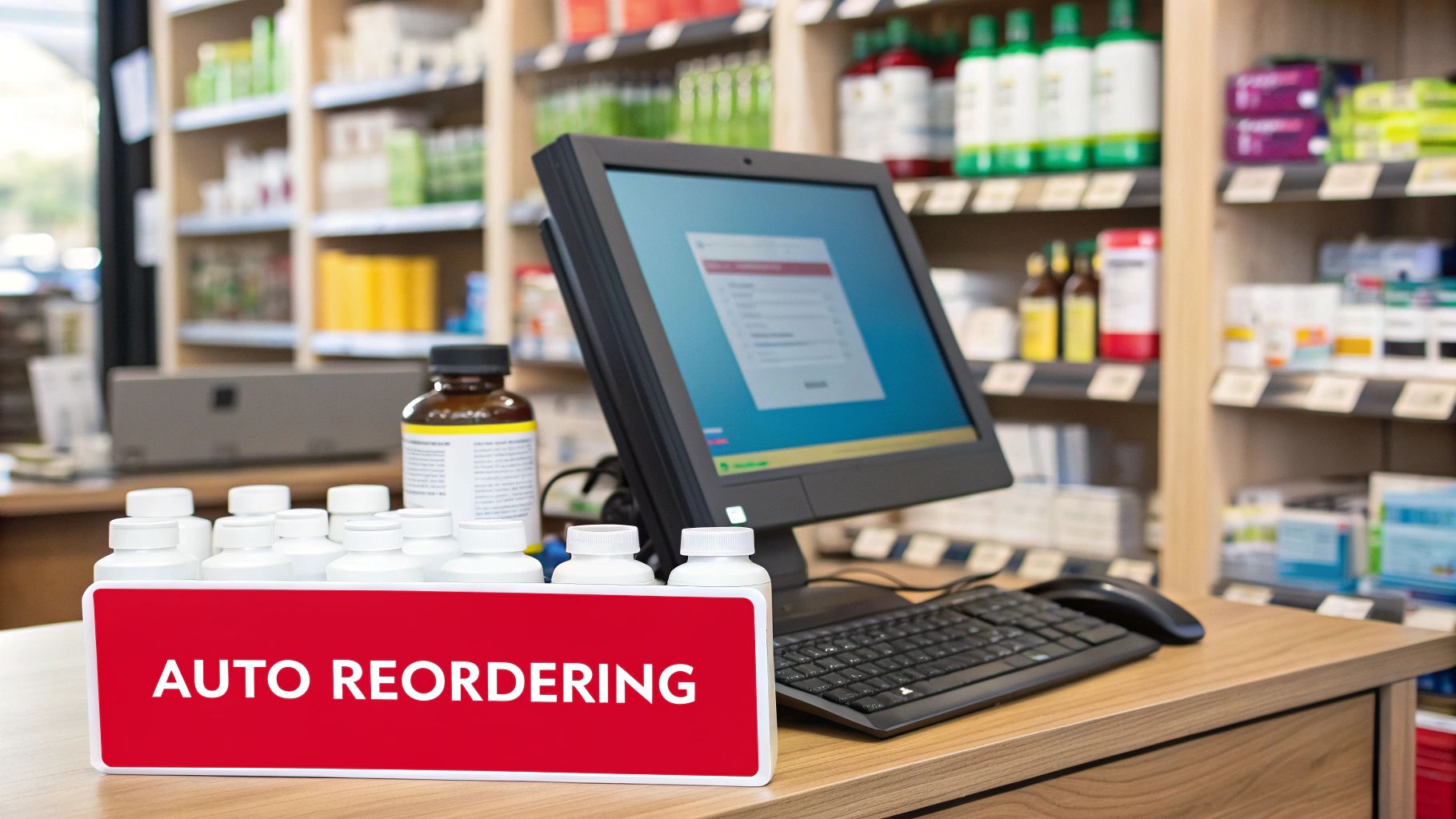
Let's be clear: not all inventory systems are built the same. A basic one might just count boxes, but a truly modern system is like having an expert co-pilot for your entire pharmacy. It anticipates your needs, guards against common risks, and smooths out the friction in your day-to-day operations.
Think of it like the difference between a simple calculator and a full-blown financial planning suite. Sure, both can crunch numbers. But only one gives you the deep insights and automated muscle to make smart, strategic decisions. The right features stop inventory from being a chore and turn it into a powerhouse for efficiency and patient safety.
Automated Reordering and Par Level Management
Doing inventory orders by hand is just asking for trouble. It relies on a busy pharmacist or tech remembering to check the shelves, which is how you end up with either too much cash tied up in overstock or—even worse—a stockout of a critical medication on a holiday weekend.
This is where automated reordering comes in. The system uses PAR levels (Periodic Automatic Replacement) you set for each medication. When your stock of a drug dips below that number, the system automatically drafts a purchase order. It’s a simple but brilliant way to ensure you're never caught off guard.
Expiry Date Tracking and Management
Expired medication isn't just a financial loss; it's a serious patient safety risk. One of the non-negotiable functions of any decent inventory system is its ability to track expiration dates from the moment a product walks in the door.
A good system will give you clear, early warnings about drugs approaching their expiration date. This gives your team a chance to dispense them first or send them back to the supplier for credit before they become worthless. It's not uncommon for hospitals to cut their expired medication waste by over 90% with a solid system, saving thousands every single month.
A robust expiry tracking feature is your last line of defense, ensuring that an expired drug never has the chance to reach a patient. It shifts your pharmacy from a reactive "find and remove" model to a proactive "prevent and manage" strategy.
Real-Time Stock Visibility and Tracking
Quick question: how many boxes of amoxicillin do you have on the shelf right now? If the answer isn't instantly available, you have a visibility problem. Real-time tracking gives you a live, accurate count of every single item, anytime.
This minute-by-minute accuracy usually comes from barcode scanning or RFID technology. More advanced shelf tracking systems can even show you exactly where an item is physically located in your stockroom, cutting out the frustrating search for misplaced drugs. If you want to see how this works, you can explore the benefits of modern shelf tracking systems and how they build a smarter pharmacy.
Controlled Substance Compliance and Reporting
Let's face it, managing narcotics is one of the most high-stakes jobs in a pharmacy. The regulations are incredibly strict, and paper logs are an open invitation for errors that can bring on heavy penalties.
A specialized inventory system takes the stress out of this entire process.
- Electronic Logs: It keeps a perfect, unchangeable digital trail of every single controlled substance transaction, from receiving to dispensing.
- Automated Reporting: The system can instantly generate the specific reports needed for agencies like the DEA, which saves a massive amount of time and ensures you’re always compliant.
- Discrepancy Alerts: If the physical count doesn't match the digital record, the system flags it immediately. This allows you to investigate potential theft or diversion right away, not weeks later.
The right system transforms your inventory management from a collection of siloed tasks into a well-oiled machine. Below is a quick breakdown of the essential features and the real-world benefits they bring to your pharmacy.
Essential Features of a Pharmacy Inventory Management System
| Core Feature | Primary Function | Key Benefit |
|---|---|---|
| Automated Reordering | Sets minimum stock levels (PAR levels) and auto-generates purchase orders when stock is low. | Prevents stockouts of critical meds and reduces overstocking of slow-moving items. |
| Expiry Date Tracking | Logs and monitors the expiration date of every item from the moment it is received. | Minimizes financial loss from expired stock and, most importantly, protects patient safety. |
| Real-Time Visibility | Uses barcodes or RFID to provide an accurate, live count of all inventory items. | Eliminates manual counting errors and saves staff time searching for medications. |
| Controlled Substance Mgmt | Maintains electronic logs and generates automated reports for regulatory compliance (e.g., DEA). | Ensures adherence to strict regulations and provides immediate alerts for discrepancies. |
| System Integration | Connects seamlessly with POS, EHR, and supplier systems for data sharing. | Creates a single source of truth, eliminates double-entry, and streamlines the entire workflow. |
These features aren't just "nice-to-haves"; they are fundamental tools for running a safe, profitable, and efficient modern pharmacy.
Seamless Supplier and System Integration
Your pharmacy isn't an island. Your inventory system needs to talk to all the other tools you rely on, from your wholesaler's ordering portal to your patient management software. This connectivity is what creates a truly seamless operation.
You should look for a system that can easily integrate with:
- Supplier Systems: The ability to fire off purchase orders directly to wholesalers and get electronic invoices back is a huge time-saver.
- EHR/PMS: Connecting to your Electronic Health Record or Pharmacy Management System means inventory is updated automatically the moment a script is filled.
- Point-of-Sale (POS): Linking to your POS ensures that over-the-counter sales are also tracked in real-time.
When all these systems are communicating, you kill the need for manual data entry and drastically cut the risk of human error. It creates a single, reliable source of truth that your entire team can trust.
The Real-World Benefits of an Optimized System

Let's move past the technical jargon. The real measure of a pharmacy inventory management system isn't in its code, but in the tangible results you see every single day. Think of it less as a software upgrade and more as a strategic investment that pays dividends in a healthier bottom line, safer patients, and a less stressed-out pharmacy team. The effects really do ripple through every part of your operation, turning daily headaches into genuine strengths.
A solid system helps you shift from a reactive state—constantly fighting fires like stockouts or pulling expired drugs—to a proactive one. It gives you the foresight to get ahead of problems, transforming your inventory from a source of stress into a well-oiled asset that actively fuels your pharmacy's success.
Direct Financial Impact
The first thing you’ll notice is the impact on your finances. A smart inventory system goes straight for the two biggest silent profit killers in any pharmacy: expired medication and carrying costs for stock that just sits there. When you're tracking things by hand, it's all too easy for expiration dates to get missed, turning perfectly good products into write-offs.
An automated system is like having a watchdog that never sleeps. For instance, some hospitals have slashed expired medication waste by an incredible 91%, saving them tens of thousands of dollars a month. The system simply flags items nearing their expiration date, giving staff plenty of time to use them first or return them for credit. At the same time, by keeping stock levels just right, you free up cash that would otherwise be locked up in slow-moving or overstocked products.
By cutting waste and fine-tuning your purchasing, an inventory system doesn’t just save money—it finds it. That recovered capital can be funneled back into patient care services, staff training, or other areas to grow the pharmacy.
Enhanced Patient Safety
Beyond the balance sheet, the improvement in patient safety is massive. Medication errors can have devastating consequences, and a surprising number of them trace back to sloppy inventory practices. An automated system builds in multiple safety nets that are just impossible to match with a clipboard and a spreadsheet.
Precise, real-time tracking means the right medication is always on the shelf, preventing dangerous delays for patients who can't afford to wait. Automated alerts for expiring drugs completely eliminate the risk of an old dose ever reaching a patient. On top of that, the system’s ability to flag look-alike, sound-alike drugs during the dispensing process adds another critical layer of protection, dramatically cutting the odds of human error.
Increased Staff Efficiency and Focus
Your pharmacists and technicians are highly skilled professionals. The last thing you want is for them to spend their days on tedious work like manual stock counts and placing routine orders. It’s not just a poor use of their expertise; it’s a fast track to burnout.
A pharmacy inventory management system takes these repetitive chores off their plate, freeing up your team to focus on what they do best: taking care of patients.
- Freed-Up Time: Automation gives pharmacists more breathing room for patient consultations, medication therapy management, and other clinical services that directly improve health outcomes.
- Reduced Manual Labor: Technicians can step away from counting pills and spend more time on complex tasks like compounding or helping patients at the counter.
- Improved Morale: Taking the drudgery out of the day-to-day work leads to a more engaged, satisfied, and effective team.
This shift is a cornerstone of operational excellence. If you're interested in going deeper on this, you can learn more about how to improve operational efficiency in our detailed guide.
Simplified Regulatory Compliance
Keeping up with the strict tracking and reporting rules for controlled substances is a high-stakes game. Manual logs are notoriously prone to errors and can turn an audit into a full-blown nightmare. A modern system streamlines this entire process, helping you stay compliant with far less effort.
The global market for these systems is booming for a reason—it's projected to nearly double to USD 139.5 billion by 2032. This growth is fueled by the demand for smarter features, like AI-powered automation that can handle complex workflows like prior authorizations. These systems create an unchangeable digital record of every transaction, generate required reports on demand, and instantly flag any discrepancies, making regulatory adherence a straightforward part of your day. You can find more insights on these growing market trends on coherentmarketinsights.com.
How AI Is Transforming Pharmacy Inventory

The next evolution in pharmacy management is no longer on the horizon—it's here, and it's powered by Artificial Intelligence. AI is flipping the script on inventory control, moving it from a reactive, manual chore to a proactive, intelligent strategy. It’s the difference between simply counting what's on the shelf and accurately predicting what you’ll need next week, next month, and even next season.
This shift is a massive force behind the growth of the pharmacy inventory management market. The global market, valued at USD 6.63 billion in 2024, is expected to balloon to USD 14.23 billion by 2034, growing at an annual rate of about 7.94%. A huge part of this expansion is thanks to AI's knack for slashing errors, boosting stock accuracy, and improving patient safety through smarter forecasting.
Predictive Analytics for Smarter Forecasting
Think of traditional inventory management like driving while only looking in the rearview mirror. It shows you where you've been and what you've used, but it's not much help for what's ahead. AI-powered predictive analytics, on the other hand, is like having a sophisticated GPS that constantly analyzes traffic, weather, and road conditions to map out the best route forward.
Instead of just glancing at past dispensing data, an AI system dives deeper, layering multiple streams of information:
- Historical Dispensing Trends: It quickly learns which medications are your consistent top-movers.
- Seasonal Patterns: The system anticipates the annual surge in flu shot orders long before the first chill of winter hits.
- Local Health Data: It can even tap into public health reports, like a local allergy outbreak, to forecast a sudden spike in demand for antihistamines.
By weaving all these data points together, the AI generates forecasts that are incredibly on-point. This means you can stock up on the right medications at the right time, fully prepared for what your patients need before they even walk through the door.
AI Driven Reordering and Optimization
Standard automated reordering is pretty basic: when stock hits a certain low point, you order more. It's a simple rule. But AI takes this a giant leap further, focusing on genuine optimization. It doesn't just want to prevent a stockout; it wants to fine-tune your entire inventory to free up cash flow and maximize efficiency.
The system is always learning—analyzing turnover rates, supplier lead times, and even price fluctuations to calculate the most cost-effective order. For instance, it might flag a temporary price drop on a high-demand generic and recommend a larger-than-usual order, locking in savings for you.
AI transforms reordering from a rigid, rule-based task into a dynamic, strategic decision. It helps you find the perfect balance, ensuring medication availability without tying up unnecessary capital in overstocked shelves.
This kind of intelligent automation is becoming more common across all types of businesses. To get a feel for the broader landscape, it’s worth exploring some of the best AI tools for small business growth. These tools show how AI is being put to work in different sectors to sharpen efficiency and get better results.
The core principles are the same whether you're in a pharmacy or a department store. For a closer look at how these concepts are applied beyond healthcare, check out our article on automation in the retail industry. By bringing these advanced tools into the pharmacy, you're not just improving patient outcomes—you're building a more resilient and financially sound operation for the future.
Choosing the Right System for Your Pharmacy
Picking a new pharmacy inventory management system can feel like a huge, intimidating project. But if you break it down into a few key steps, it becomes a lot less overwhelming and a lot more about taking control of your pharmacy's future. This isn't just about buying a piece of software—it's about finding a true partner for your pharmacy's long-term health.
The right system should feel like it was made for you, blending into your daily workflow instead of being a clunky roadblock your team has to constantly navigate. By focusing on a few critical areas, you can cut through the noise and find a platform that actually makes a difference.
Assess Your Pharmacy’s Unique Needs
Before you even think about watching a single product demo, the first step is to look inward. What are the real headaches you're trying to solve right now? Are you constantly running out of key medications? Throwing away expired drugs? Losing hours to manual compliance reports?
Get specific. Make a list of your absolute must-haves versus the nice-to-haves. A small independent pharmacy might put simplicity and a reasonable price tag at the top of the list. A large hospital pharmacy, on the other hand, is going to need heavy-duty features like tracking inventory across multiple locations and deep analytics to manage high-volume dispensing.
A classic mistake is getting wowed by a system loaded with fancy features you'll never actually use. Define your core needs first, and you'll avoid paying for complexity that doesn't solve your real-world problems.
Prioritize Scalability and Integration
The pharmacy you run today won't be the same one you're running in five years. Your system needs to be able to grow with you. A scalable platform can handle more prescriptions, more locations, and more complexity without forcing you to start over from scratch. Ask vendors directly: what does growth look like with their system? Is it a simple upgrade, or a painful, expensive migration?
Just as important is integration. Your inventory system can't live on an island; it has to talk to all the other technology you rely on every day.
- EHR and POS Systems: It absolutely has to sync up with your Electronic Health Record (EHR) and Point-of-Sale (POS) systems. When a medication is sold or dispensed, your inventory count should update instantly, without anyone lifting a finger.
- Supplier Portals: Direct connections to your main wholesalers make ordering a breeze. You should be able to send purchase orders and get electronic invoices without juggling multiple systems.
Without solid integrations, you're just signing your team up for more manual data entry, which is a recipe for mistakes and wasted time.
Evaluate User-Friendliness and Vendor Support
The most powerful, feature-rich system on the planet is completely worthless if your team can't stand using it. A clean, intuitive interface isn't a luxury; it's a necessity. When you're in a demo, pay close attention to the simple stuff. How many clicks does it take to check stock, receive an order, or pull a report? A system that’s easy to learn means your staff gets up to speed quickly with less training.
Look beyond the software and size up the vendor, too. What’s their customer support like? A responsive, knowledgeable support team is your lifeline, especially when you're first getting started or when things inevitably go wrong. Read reviews, talk to other pharmacists, and ask for references to see if they have a reputation for being there when you need them.
Understand the Total Cost of Ownership
Finally, you have to look past the sticker price and figure out the Total Cost of Ownership (TCO). That upfront cost is just the beginning of the story. To get the full financial picture, you need to ask about all the potential expenses.
These costs often include:
- Subscription Fees: Most modern systems run on a monthly or annual subscription.
- Implementation and Training: Are there one-time costs to get everything set up and your team trained?
- Hardware Requirements: Will you need to buy new barcode scanners, computers, or other equipment?
- Ongoing Maintenance: Are software updates and tech support included, or are those extra fees?
Understanding these numbers is key to budgeting accurately. For a better sense of how to evaluate long-term tech investments, our guide on the cost of electronic shelf tags offers a great framework. A clear view of the TCO ensures there are no nasty surprises, making your new system a smart, predictable investment for years to come.
Putting Your System to Work: Best Practices for Success
A top-of-the-line pharmacy inventory management system is a great start, but it's only half the battle. The real value comes from how you and your team use it every single day. Think of it less as a tool and more as a new way of operating.
The initial setup is obviously important, but the magic truly happens when you build solid, consistent habits around the technology. These practices are what turn your investment into a powerhouse for efficiency and financial health, keeping your data trustworthy, your team engaged, and your pharmacy ahead of the curve.
Keep Your Data Clean with Cycle Counts
Your system’s accuracy is everything. If the numbers on the screen don’t match what’s on your shelves, you're flying blind. While a full, wall-to-wall inventory count is a massive, disruptive headache, cycle counting is the smart alternative.
The idea is simple: you count small, manageable sections of your inventory on a rotating schedule. For instance, maybe you count high-turnover meds every Monday and all controlled substances every Friday. This approach is way less disruptive than a full audit and helps you catch small mistakes before they become big problems. Regular cycle counts ensure the data fueling your automatic reorders and reports is always spot-on.
An inventory system running on bad data is like a GPS with an outdated map—it’ll confidently lead you straight into a wall. Consistent cycle counting keeps your map current and your decisions sound.
Let Smart Alerts and Reports Do the Heavy Lifting
Modern systems are designed to be your eyes and ears, flagging important things before they turn into full-blown crises. It's crucial to take full advantage of the automated alerts for key inventory levels.
- Low Stock Alerts: Set these up so you get a heads-up the moment essential drugs dip below their PAR levels. This proactive warning gives you plenty of time to reorder before a patient is left waiting.
- Expiry Alerts: Configure your system to warn you weeks—or even months—before products expire. This gives your team a chance to either dispense those items first or return them for credit, which is a direct hit against waste. One hospital famously slashed its expired medication costs by a staggering 91.6% just by using this feature.
Beyond just the alerts, get into the habit of actually looking at the reports your system generates. Dig into your inventory turnover rates to see what’s flying off the shelves and what’s collecting dust. This is pure gold for making smarter purchasing decisions, fine-tuning your stock levels, and freeing up cash flow.
Don't Skimp on Staff Training
At the end of the day, a system is only as good as the people using it. Training can't be a one-and-done event you check off during implementation.
You need to schedule regular, ongoing training sessions. This ensures everyone—from the brand-new tech to the seasoned pharmacist—knows how to use the system’s most powerful features. When your staff feels confident and capable with the tool, they’ll use it to its full potential, and that's when you unlock the biggest gains in efficiency and patient safety.
Frequently Asked Questions
When you start digging into pharmacy inventory management systems, a lot of questions pop up. It doesn't matter if you're looking to get your very first system or thinking about an upgrade—getting clear answers is what counts. Here are some of the most common things we get asked, with straightforward answers to help you figure out your next move.
What Is the Difference Between Perpetual and Periodic Inventory Systems?
Think of it like this: a perpetual inventory system is a live scoreboard for your stock. Every time a delivery comes in or a prescription goes out, the count updates instantly. You always know exactly what you have on hand, right down to the last pill.
A periodic system, on the other hand, is more like taking a quick snapshot. You only get the full picture when you stop everything to do a manual count, whether that’s weekly, monthly, or just once a year. In a busy pharmacy where every decision matters, the perpetual system is hands-down the winner. It gives you the live data you need to make smart calls every single day.
The real magic of a perpetual system is visibility. It gets rid of the guesswork between physical counts, letting you manage your stock proactively instead of just reacting to information that’s already old news.
How Does This System Help with Regulatory Compliance?
Let's be honest, staying on top of regulations, especially for controlled substances, is a high-stakes game. A good pharmacy inventory management system makes this much less stressful by creating a rock-solid electronic audit trail for every controlled drug that moves through your pharmacy.
- Automated Record-Keeping: It automatically logs every single movement, from the moment a drug arrives to when it's dispensed. This beats error-prone manual logs every time.
- On-Demand Reporting: Need to generate a report for the DEA? The system can pull it together in the right format in just a few minutes, saving you hours of painful administrative work.
- Discrepancy Alerts: If the physical count doesn’t line up with the digital record, the system flags it immediately. That means you can jump on potential diversion or errors right away.
Can a Smaller Independent Pharmacy Benefit from This System?
Absolutely. You don't have to be a massive hospital to see the payoff. In fact, for a smaller independent pharmacy, the benefits can be even more critical. Tying up precious cash in overstocked inventory or taking a loss on expired drugs can really sting when you're running a tight ship.
A good system helps smaller pharmacies punch above their weight. It optimizes cash flow, slashes waste, and frees up your team to spend more time with patients instead of being stuck in the back counting boxes. A lot of the best systems today are cloud-based and sold as a subscription, which makes them way more affordable than they used to be. Finding the right-sized solution helps you boost your efficiency and profitability without needing a huge upfront investment.
Ready to see how much more efficient and accurate your pharmacy can be? At ESLtags, we focus on state-of-the-art electronic shelf labels that work hand-in-hand with your inventory system, creating a smarter pharmacy that responds in real-time. Learn how our solutions can work for you at ESLtags.


Leave a Reply
Your email is safe with us.