

Think of predictive analytics as a crystal ball for your retail business. It's the science of using your existing data, a bit of statistical magic, and machine learning to make incredibly smart guesses about what's coming next. It’s all about moving from reactive, "gut-feel" decisions to proactive strategies that see what customers and markets will do before they do it.
Moving Beyond Guesswork in Modern Retail
Imagine a store that somehow always has the right products on the shelves, seems to know what you want before you even do, and never, ever runs out of your favorite items. This isn't science fiction anymore—it's the real-world power of predictive analytics.
For years, retailers were stuck driving their business while looking in the rearview mirror. They’d pore over last month's sales reports to decide what to stock next month. This old-school approach was a recipe for costly mistakes, like warehouses overflowing with products nobody wanted or, even worse, empty shelves during a surprise rush.
Today, the smartest retailers are flipping the script. They're using predictive analytics to stop analyzing what happened and start forecasting what will happen. They’re getting a sneak peek at tomorrow's trends today, and it's giving them a massive competitive edge. This isn't just a fleeting trend; it’s a fundamental shift in how retail works.
Why Predictive Insights Matter Now
The pressure to get things right has never been more intense. Shoppers today expect you to know what they want and have it ready for them instantly. Predictive analytics is the tool that makes meeting these high expectations possible, turning mountains of data into actionable foresight.
This allows businesses to:
- Anticipate Customer Needs: Get a clear picture of which products are about to blow up next season—or even next week.
- Optimize Inventory Levels: End the painful cycle of stockouts and overstocks by forecasting demand with stunning accuracy.
- Personalize the Shopping Journey: Serve up the right promotions and product recommendations to the right person at the right time.
The financial impact is impossible to ignore. The global retail analytics market was valued at a whopping $7.56 billion in 2023 and is on track to skyrocket to $31.08 billion by 2032. This explosive growth tells you everything you need to know: these tools are becoming non-negotiable for navigating shifting consumer tastes and tangled supply chains. If you're curious, you can find out more about how retailers are finding their crystal ball with predictive analytics from recent industry reports.
In this guide, we'll pull back the curtain on this technology, showing you exactly how it’s being used to boost profits and build unbreakable customer loyalty. We’ll lay out a clear roadmap for how your business can start making smarter, forward-looking decisions.
How Predictive Analytics Turns Data Into Insight
Predictive analytics sounds like something out of a sci-fi movie, but it's actually pretty straightforward. Think of it like a weather forecast for your store. Meteorologists don't just guess; they look at historical weather patterns, air pressure, and temperature to predict whether you'll need a coat tomorrow.
In the same way, predictive analytics sifts through your business data to forecast what's coming next. It's the engine that transforms mountains of raw information into razor-sharp, actionable intelligence.
The process starts by looking back at historical data—past sales figures, customer click patterns, and even social media buzz. From there, sophisticated models find hidden connections in that data. They go beyond just knowing what happened to finally understanding why it happened.
For instance, a system might spot a pattern you’d never notice: every time it rains on a Tuesday, sales of a specific soup brand jump by 30%. Armed with that insight, you can make sure you’re stocked up and ready for the next rainy Tuesday.
The Journey From Data Points to Decisions
The real magic here isn't a one-and-done trick. Predictive analytics is a continuous cycle of learning and getting smarter with every new piece of information. It's this structured journey that turns simple data points into profitable decisions.
Here's how that journey usually unfolds:
- Data Collection: First, you gather information from all over the place—point-of-sale systems, website traffic, inventory levels, and customer loyalty programs. Getting a handle on how this works is key, and it all falls under the umbrella of big data for retail.
- Data Modeling: Next, data scientists and specialized software build a statistical model. Think of this model as a set of rules and algorithms designed to find all the interesting correlations and patterns hiding in your data.
- Prediction: The model is then fed current, real-time data to generate a forecast. This could be anything from predicting how many units of a new product you'll sell next month to flagging which customers are about to take their business elsewhere.
- Action and Monitoring: Finally, you use these predictions to make smart business moves, like adjusting inventory or launching a targeted marketing campaign. The results are tracked, and that new data is fed right back into the system, making the next round of predictions even more accurate.
Practical Applications of Predictive Forecasting
This process empowers you to make smarter, evidence-based choices across your entire operation. A great example is mastering inventory forecasting techniques, which is a core benefit of turning data into foresight.
By anticipating future sales with greater precision, retailers can dramatically reduce waste from overstocking and eliminate lost revenue from stockouts. This proactive stance ensures that the right products are in the right place at the right time, meeting customer expectations without tying up excess capital in unsold goods.
Ultimately, this is about shifting from a reactive mindset to a proactive strategy. It's what separates the retailers who are just keeping up from the ones who are shaping what comes next.
Core Applications of Predictive Analytics in Retail
This is where the rubber meets the road. Predictive analytics isn’t just a high-level concept; it’s a toolkit for solving some of the most persistent headaches on the shop floor—from messy stockrooms to confusing pricing.
Instead of just reacting to last week’s sales report, retailers can finally get ahead of the curve. It’s about turning hindsight into foresight, and it fundamentally changes the game across the three pillars of modern retail.
Predictive analytics tackles specific, high-impact challenges with data-driven solutions. Let's break down how it works in practice.
Core Predictive Analytics Applications in Retail
| Retail Area | Problem Solved | Predictive Analytics Solution | Business Outcome |
|---|---|---|---|
| Inventory & Supply Chain | Overstocking or stockouts, leading to lost sales and tied-up capital. | Analyzes historical sales, seasonality, and local trends to forecast product demand with high accuracy. | Optimized stock levels, reduced carrying costs, minimized waste, and fewer missed sales opportunities. |
| Pricing & Promotions | Guesswork in pricing, resulting in lost margins or uncompetitive prices. | Implements dynamic pricing by analyzing competitor data, demand elasticity, and inventory in real-time. | Maximized revenue and profit margins, improved price perception, and more effective promotional campaigns. |
| Customer Experience | Generic marketing and a one-size-fits-all approach that fails to build loyalty. | Predicts individual customer behavior, churn risk, and next-likely purchases to personalize offers. | Increased customer retention, higher lifetime value, improved conversion rates, and stronger brand loyalty. |
As you can see, the applications are practical and directly tied to boosting the bottom line. It's about making smarter, faster decisions in the areas that matter most.
Mastering Inventory and Demand Forecasting
Let’s be honest, balancing supply and demand is one of the oldest tug-of-war games in retail. Too much inventory ties up cash and leads to clearance sales. Too little, and you’re looking at empty shelves and frustrated customers who will gladly shop elsewhere.
Predictive analytics steps in to end this guesswork for good.
By crunching data on past sales, seasonal trends, local events, and even the weather, these systems can forecast with spooky accuracy exactly what you’ll need and when. This is a massive leap forward for any retailer serious about their inventory management, shifting operations from a "best guess" model to one built on data-driven confidence.
And the results aren't trivial. Retailers have seen sales jump by an average of 10% just from getting their demand forecasting right.
Optimizing Pricing and Promotions
Finding the perfect price for a product can feel like walking a tightrope. Go too high, and shoppers walk away. Go too low, and you’re bleeding profits. Predictive analytics swaps this gut-feel approach for a far more scientific method: dynamic pricing.
Sophisticated models look at what your competitors are doing, how sensitive customers are to price changes, and your current stock levels—all in real time. They then suggest the absolute best price for that exact moment. A hot-selling item might get a small price bump during peak hours, while a slow-mover gets a strategic discount to clear it out.
The same smarts apply to running promotions. You can finally figure out which deals will actually drive sales without just giving away your margins.
Instead of throwing blanket discounts at everyone, predictive models pinpoint the surgical offers that will deliver a real, measurable return on investment.
Personalizing the Customer Journey
In a market this crowded, personalization is no longer a "nice-to-have." It’s how you stand out and build a loyal following. Predictive analytics is the engine that powers truly personal shopping experiences, going way beyond just plugging a first name into an email.
By analyzing a customer’s browsing habits, past buys, and how they interact with your brand, predictive models can:
- Recommend products they’re almost certain to love.
- Flag at-risk customers who might be about to leave, so you can win them back.
- Send targeted offers that hit the mark at just the right time.
This isn't just about data; it’s about making your customers feel seen and understood. When you get this right, you build relationships that last. Getting a handle on predictive analytics for sales is a key strategy for turning all that customer information into stronger, more profitable connections.
Predictive Retail Success Stories

The theory is great, but the real magic happens when predictive analytics gets put to work on the shop floor. When businesses finally ditch the spreadsheets and gut feelings for data-driven foresight, they unlock a whole new level of efficiency and profit.
These success stories show just how powerful that shift can be. From high-fashion houses to the local grocery aisle, the impact is undeniable. The retailers embracing these tools aren't just getting by—they're setting the pace for the entire industry.
Let's dive into a couple of real-world examples that perfectly illustrate what predictive insights can do.
How a Fashion Retailer Mastered Trend Forecasting
A major fashion retailer was stuck with a classic, high-stakes problem: how to know which styles will fly off the racks and which will flop. Guessing wrong meant ordering too much of an unpopular item and being forced into steep markdowns. Underestimating a hot trend, on the other hand, led to empty shelves and disappointed shoppers. It was a constant gamble.
By bringing in predictive analytics, they completely flipped the script. Their new models started crunching a massive range of data:
- Social Media Sentiment: What were influencers and customers actually buzzing about online?
- Historical Sales Data: Which patterns emerged from previous seasons and collections?
- Web Browsing Behavior: Which items were getting the most clicks, views, and attention on their website?
The results were stunning. The retailer could suddenly spot emerging trends with incredible accuracy, making sure their inventory lined up with what customers were actually going to buy. This led to a markdown reduction of over 20%, directly boosting their profit margins and cutting down on waste.
By turning raw data into a crystal ball for fashion, the company went from reacting to trends to proactively building collections around future demand. That gave them a serious leg up on the competition.
Slashing Spoilage in the Grocery Sector
For a large grocery chain, the biggest headache was managing perishable goods. Every single day, fresh produce, dairy, and meat got one day closer to their expiration dates. If they misjudged demand, all that spoiled food went straight into the bin—a direct hit to their bottom line.
To fix this, the grocer used predictive analytics to build a smarter demand forecasting system. The model looked at everything from local weather forecasts and upcoming holidays to community events to predict daily store traffic and buying habits with pinpoint accuracy.
This new foresight allowed them to fine-tune ordering and stocking for every single store. The impact was immediate. They saw a huge drop in food spoilage, which saved them millions of dollars each year. But beyond the cash, this data-first approach meant shelves were consistently stocked with the freshest products, making for a much better shopping experience. This kind of smart optimization is key to building strong retail customer engagement because you’re always meeting, and even exceeding, what your shoppers expect.
Putting Predictive Insights into Frontline Hands
Predictive analytics used to be something you'd only find tucked away in a data science department, a tool for the quants in the back office. Not anymore. The biggest change happening in retail right now is seeing those powerful insights move directly to the frontline employees—the people making decisions on the shop floor every single day.
It's all about making complex data accessible and, more importantly, actionable for everyone.
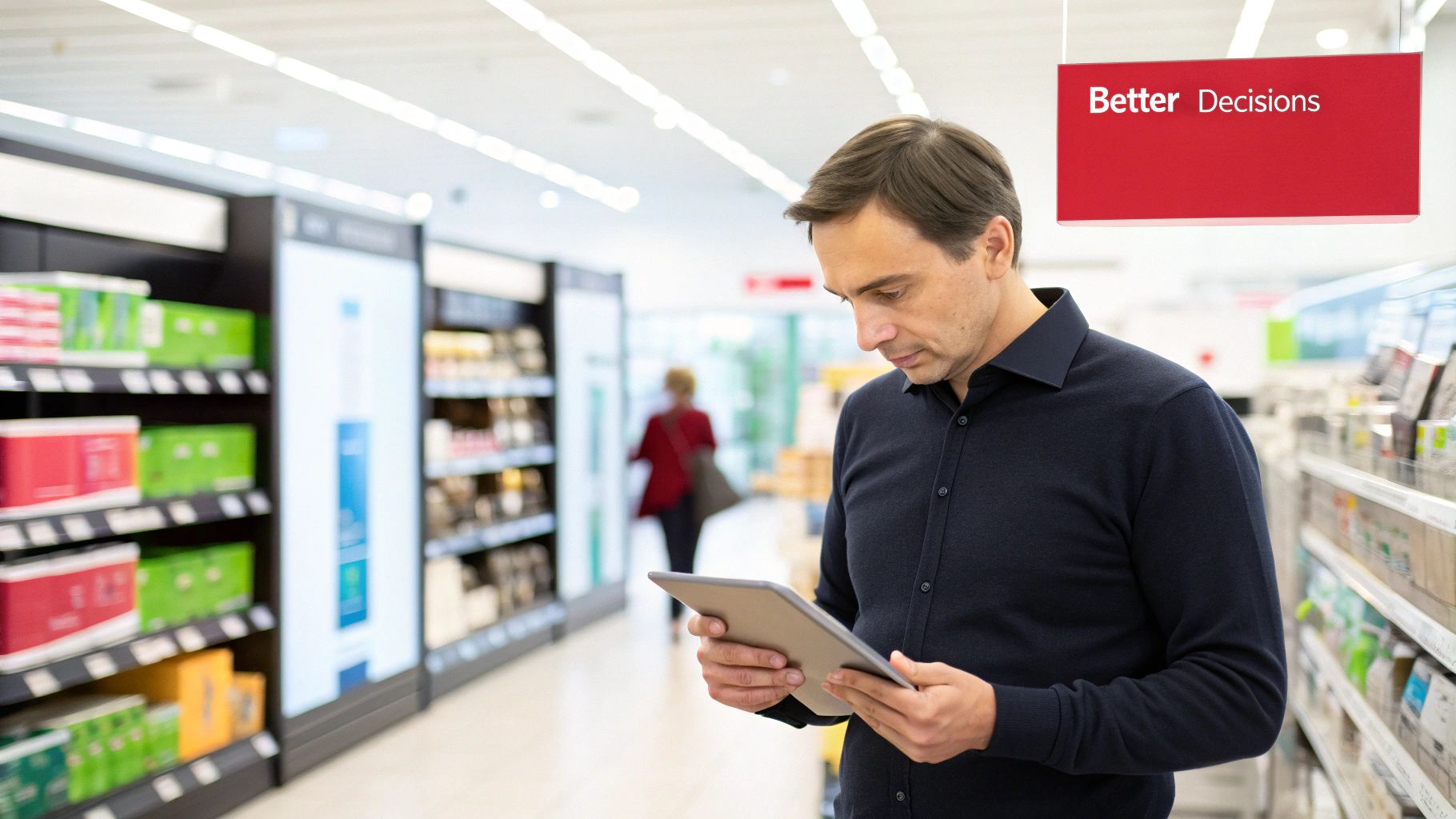
Imagine a store manager who doesn't have to wait for a weekly report to figure out what’s going on. With a simple dashboard on their tablet, they can see demand forecasts in real time. This means they can adjust a local promotion on the fly or call in extra staff to handle an afternoon rush they now know is coming.
This is how you build a data-driven culture from the ground up, turning abstract numbers into smart, immediate action right where it matters most.
Empowering Teams with Actionable Data
The goal here is to tear down the technical walls that once stood between data and decision-makers. A marketing team, for example, can now build laser-focused campaigns without needing a programmer to pull some complicated query from a database. They can use predictive tools to find the exact customer segments most likely to jump on an offer and get that campaign live in minutes, not weeks.
This isn't just a hypothetical shift; retail leaders are already all in. A recent survey found that a staggering 54% ranked faster decision-making as the top benefit they expect from AI—placing it even higher than cost savings. With 15% of retailers already using AI analytics in at least one department, the move toward self-service tools for frontline staff is clearly gaining steam. You can get more details on this trend and AI-powered analytics at Strategy+Business.
This new model is about giving your team the ability to not just see the data, but to understand the story it tells and act on it immediately.
From Manual Updates to Automated Intelligence
So, you have these great predictive insights. Now what? Connecting them to your frontline operations is the critical next step, and that's where technology like Electronic Shelf Labels (ESLs) comes in. Forget about relying on slow, error-prone manual price changes. ESLs create a direct, instantaneous link between your predictive models and the actual shelf edge.
Here’s a quick look at how that connection works:
- A predictive pricing engine spots a perfect opportunity to adjust a price based on real-time demand.
- The new price is instantly pushed directly to the digital tags on the shelf. No printing, no walking the aisles.
- Store associates are freed up from the tedious grind of changing paper labels, letting them focus on what they do best: helping customers.
This seamless flow transforms a standard retail store into a responsive, intelligent ecosystem. It's a perfect example of the growing wave of automation in the retail industry, where predictive analytics and smart hardware work hand-in-hand to execute strategy flawlessly. This is how you genuinely put predictive power into the hands of your team.
So, What's Next on Your Predictive Retail Journey?
We’ve seen that predictive analytics in retail isn't some far-off concept—it’s a powerful tool that successful retailers are using right now. The benefits are impossible to ignore: smarter inventory management, dynamic pricing that actually works, and personalized shopping experiences that keep customers coming back.
The most important thing to remember is that this isn't an all-or-nothing leap. You don't have to tear down your current operations and start from scratch. The path to a predictive strategy is built one small, smart step at a time.
The best way forward is to start small, prove the value, and then scale up. Diving headfirst into a massive, company-wide system is a recipe for complexity and burnout. A focused pilot project, on the other hand, delivers quick wins and makes a solid case for bigger investments down the road.
Take That First Actionable Step
Don't get overwhelmed by the big picture. Instead, zero in on one area of your business where a little more foresight could make a huge difference. For most retailers, this is the perfect place to start:
- Take Stock of Your Data: First, get a clear picture of what you already have. Do you have clean, organized sales and inventory data for at least one product category?
- Pick a Pilot Project: Choose one specific area for a test run. A great, low-risk starting point is forecasting demand for a single, high-traffic product category.
- Explore the Right Tools: Look into user-friendly analytics platforms or partners who can help you make sense of that initial data set and generate your first predictive insights.
By focusing your efforts like this, you can start to see real results quickly. These small improvements add up, and if you're curious about the bigger impact, you can learn more about how to improve operational efficiency in our detailed guide. Taking this first step is the most important one you'll make on your way to a smarter, more predictive future in retail.
Got Questions About Predictive Retail? We’ve Got Answers.
Even after seeing all the benefits, I get that diving into predictive analytics can feel a little intimidating. It’s natural to have a few practical questions. Let's walk through some of the most common ones I hear from retailers just like you.
What Kind of Data Do I Actually Need to Start?
You probably think you need a mountain of complex data, but you really don't. The best predictive models are built on the information you’re already collecting every single day.
Most retailers get started with three core ingredients:
- Historical Sales Data: This is your bread and butter—what sold, when, where, and for how much. It’s the absolute foundation for forecasting what customers will want next.
- Customer Data: Got a loyalty program? Perfect. Purchase history and basic demographic info are gold mines for creating personalized offers that actually resonate.
- Product Information: Simple details like brand, category, and size help the system see the hidden relationships between different items in your inventory.
That's your starting point. Down the road, you can layer in more sophisticated inputs like local weather forecasts, what your competitors are charging, or even social media chatter to get even sharper predictions. The trick is to start clean and simple with your transaction data and build from there.
Is This Stuff Only for the Big-Box Giants?
Not anymore. It’s true that massive chains were the first to jump on this, but the game has completely changed. Thanks to cloud computing and a whole new world of accessible software, these powerful tools are no longer out of reach for small and medium-sized businesses.
A lot of the best solutions today are built to scale. That means a smaller shop can get started with an affordable plan, tapping into powerful forecasting and personalization without needing a huge upfront investment or an in-house team of data scientists.
How Does This Actually Make My Customers Happier?
Predictive analytics improves the customer experience in two huge ways. First, it’s all about personalization. By understanding a shopper’s past behavior, the system can make uncannily accurate predictions about what they'll want to buy next. This lets you serve up relevant recommendations and promotions that feel genuinely helpful, not like spam.
Second, it keeps your shelves stocked. There's almost nothing more frustrating for a customer than finding an empty space where their favorite product should be. By getting way better at forecasting demand, you can kill those out-of-stock moments, making for a much more reliable and satisfying shopping trip.
Ready to connect your predictive insights directly to your shelves? ESLtags provides the digital labeling platform that turns your data into instant, automated action. Explore our solutions today.


Leave a Reply
Your email is safe with us.