

When it comes to pricing your products on the shelf, you’re really looking at two very different roads: the old-school paper route or the modern digital highway. Paper is undeniably cheap to start with, but Electronic Shelf Labels (ESLs) give you dynamic, real-time control over every price in your store, cutting out manual work and costly mistakes. This one decision will echo through your store's efficiency, costs, and customer experience for years.
Choosing the Right Price Tag for Your Shelves
Picking a labeling system is one of those foundational choices you make for your retail business. This isn't just about sticking a number on a shelf; it’s about defining your day-to-day operations, managing your costs, and keeping up with the competition. The two main players here, traditional paper tags and Electronic Shelf Labels (ESLs), represent completely different ways of thinking about pricing and in-store information.
Think of paper tags like a manual ledger. Every single time a price changes—whether for a sale or a supplier update—an employee has to print a new label, walk the floor to find the right product, and physically swap out the old tag. Now, multiply that by every item across your entire store. It’s a massive time-sink and a process just begging for errors.
ESLs, on the other hand, work more like a cloud-synced database. They are small, battery-powered e-ink screens that display whatever information you send from a central computer. Need to update a price? You just change it in your system. Moments later, every single tag on the sales floor updates automatically and perfectly.
For a side-by-side breakdown, let's look at how these two options stack up.
Paper Price Tags vs Digital ESLs at a Glance
This table offers a quick summary of how traditional paper tags and modern Electronic Shelf Labels compare across the metrics that matter most to retailers.
| Feature | Paper Price Tags | Electronic Shelf Labels (ESLs) |
|---|---|---|
| Initial Cost | Very low (paper, ink, printer) | High (tags, infrastructure) |
| Recurring Costs | High (labor, paper, ink, waste) | Very low (minimal maintenance) |
| Update Speed | Very slow (manual, hours to days) | Instantaneous (seconds to minutes) |
| Pricing Accuracy | Prone to human error | 100% accurate and consistent |
| Labor Requirement | High and continuous | Minimal, only for setup |
| Dynamic Pricing | Impractical / Impossible | Fully supported |
| Customer Experience | Inconsistent, risk of price mismatches | Trustworthy and reliable |
| Sustainability | High paper and ink consumption | Low power, minimal waste |
As you can see, the choice is less about the initial sticker price and more about the long-term operational vision for your store.
The Core Philosophies: Paper vs Digital
This isn't just a tech debate; it’s a strategic one. A paper-based system is all about minimizing the upfront hardware cost, but it comes with a constant drip of hidden expenses in labor, materials, and inevitable mistakes. It’s a system that runs on manual tasks and human effort.
A digital ESL system, however, asks for a bigger investment at the start but pays you back over and over through automation and sheer efficiency. It slashes those recurring costs and, more importantly, frees up your staff to focus on things that actually help customers instead of being stuck on tedious administrative work. It really boils down to deciding whether you want to keep investing in man-hours or start investing in smart technology.
The real choice is between managing your pricing one tag at a time or managing your entire store's pricing strategy with a single click. This distinction is crucial for scaling operations and adapting to market changes swiftly.
The ripple effects of this decision go far beyond the shelf edge. Accurate, dynamic pricing builds trust with your customers. Automated updates let you react instantly to a competitor's price drop or launch a flash sale without the logistical nightmare of relabeling hundreds of items by hand. For a deeper look into the various types of shelf labels and their specific applications, you can learn more about the complete shelf price label ecosystem. Ultimately, this decision is less about the tag itself and more about the kind of operational engine you want to build for your business's future.
The Hidden Costs of Paper Price Tags
At first glance, a paper price tag looks like the cheapest option. It’s just a slip of paper, right? But that initial low cost is deceptive. The real expense piles up in the quiet, operational drains that slowly bleed a retailer's bottom line. Sticking with traditional paper labels creates a surprisingly labor-intensive and error-prone cycle that repeats every single time you adjust a price, run a sale, or launch a promotion.
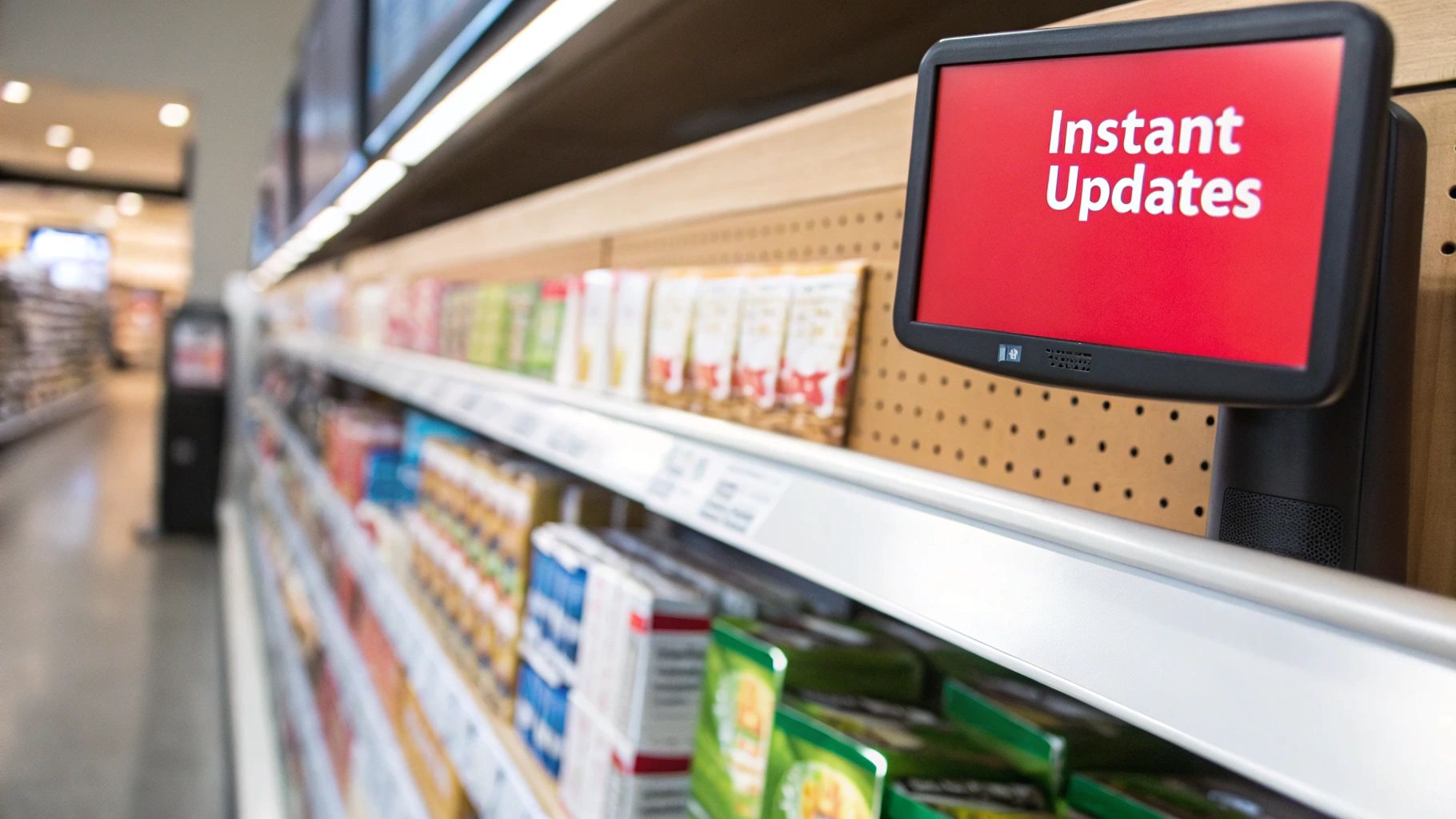
Think about a typical weekly sale. Someone has to print hundreds—sometimes thousands—of new tags. Then they have to cut them, sort them by aisle, and walk the entire store to physically swap out every single one. This whole workflow is like reprinting and hand-delivering thousands of individual memos for a tiny update. An Electronic Shelf Label (ESL) system, on the other hand, is like sending one instant email to everyone at once.
The True Cost of Manual Labor
The biggest hidden cost by far is labor. All those hours spent printing, sorting, and changing out tags are hours your team could be using for much more valuable tasks, like helping customers find what they need, keeping shelves stocked, or making sure the store is clean and welcoming. Every minute an employee spends on a ladder changing a tag on a high shelf is a minute they aren't improving the customer's experience.
It's crucial to look past the obvious and understand the real cost beyond the visible price tag in any part of a business. For retailers, this often points straight to the payroll hours eaten up by manual pricing. This constant operational drag is a huge reason so many businesses are looking for smarter, automated solutions.
In a typical grocery store with 20,000 items, even a small percentage of weekly price changes can translate into dozens of hours of manual labor every single week. This recurring cost quickly outpaces the initial savings of using paper.
This total reliance on manual work also swings the door wide open for human error, which brings its own set of expensive problems.
The Domino Effect of Human Error
No matter how careful your team is, mistakes are bound to happen in a manual system. A misplaced decimal point, an old sale price accidentally left on the shelf, or a tag put on the wrong product can all lead to frustrating and costly situations.
These little mistakes create a big negative ripple effect:
- Customer Dissatisfaction: Nothing erodes trust faster than when a customer sees one price on the shelf but gets charged another at the register. It can lead to awkward confrontations and leaves a bad impression.
- Lost Revenue: If a price is accidentally marked too low, your store loses margin on every single unit sold until someone finally catches the mistake and fixes it.
- Legal Compliance Risks: In many places, pricing discrepancies can lead to hefty fines for not complying with consumer protection laws.
Getting pricing right is only becoming more critical as retail spaces get bigger. The global market for shelving units is projected to grow at a compound annual rate of 5.90% from 2023 to 2030, driven by urbanization and new construction. As stores add more shelves to meet demand, the number of price tags to manage explodes, compounding the risk of error with every new item.
Each of these issues—the labor drain, the pricing errors, and the poor customer experiences—shines a spotlight on the weaknesses of sticking with paper. Ultimately, these hidden costs build a powerful case for exploring a more modern, automated approach to shelf pricing. For those looking to tackle these expenses head-on, check out our guide on how to reduce labor costs with smart retail tech.
How Electronic Shelf Label Technology Works
Ever wonder how those slick digital price tags actually work? It can seem pretty high-tech, but the core idea is surprisingly simple. Think of it like a smart home system, but built from the ground up for a retail store. Just like you can change your thermostat from an app on your phone, an ESL system lets you control every single price tag for shelves from one central computer.
This whole setup is really a team of three components working together seamlessly. You've got the digital tags themselves, the wireless gateways that act as messengers, and the management software that runs the entire show. Once you see how these three pieces talk to each other, you'll get why this technology is such a big deal.
And it is a big deal. The global market for ESLs was valued at a cool USD 1.95 billion in 2024 and is expected to rocket to USD 5.91 billion by 2034. Retailers are catching on fast, realizing the massive gains in efficiency and customer experience that digital tags bring to the table. Polaris Market Research has some great insights if you want to dig deeper into those numbers.
The Three Pillars of an ESL System
To really get it, let's pull back the curtain on each component. Each part has a specific, crucial job to do. It’s a beautifully simple loop: command, transmit, and display.
The Central Management Software: This is mission control. It’s a program—often plugged right into your existing Point of Sale (POS) or inventory system—where you manage every bit of pricing data. When a price needs to change, you update it here, not by running out to the sales floor.
The Wireless Gateways: Picture these as specialized Wi-Fi routers built just for your price tags. They’re installed strategically throughout the store, blanketing the area in a reliable communication signal. When the software pushes out a price update, it sends the order straight to these gateways.
The Electronic Shelf Labels (Tags): These are the small e-ink displays clipped to your shelves. Every tag has its own unique ID and is tuned into the gateway's signal. When a gateway broadcasts a price change for a specific tag, that tag picks up the signal and instantly refreshes its screen.
This slick process means a price change you make in the back office shows up on the shelf edge in seconds, with zero chance of human error.
A Closer Look at E-Ink Display Technology
The real secret sauce behind the modern digital price tag for shelves is the screen itself. Most ESLs use e-ink technology, the very same display you’d find in an Amazon Kindle. This isn't an accident—it was chosen for two huge advantages it gives retailers.
First off, e-ink gives you a crisp, paper-like look that’s super easy to read from any angle, even in bright store lighting. There's none of the glare or backlight you get from a typical LCD screen, which keeps your shelves looking clean and professional.
This image shows a typical e-ink ESL doing its thing—displaying not just the price, but product info and even a QR code.
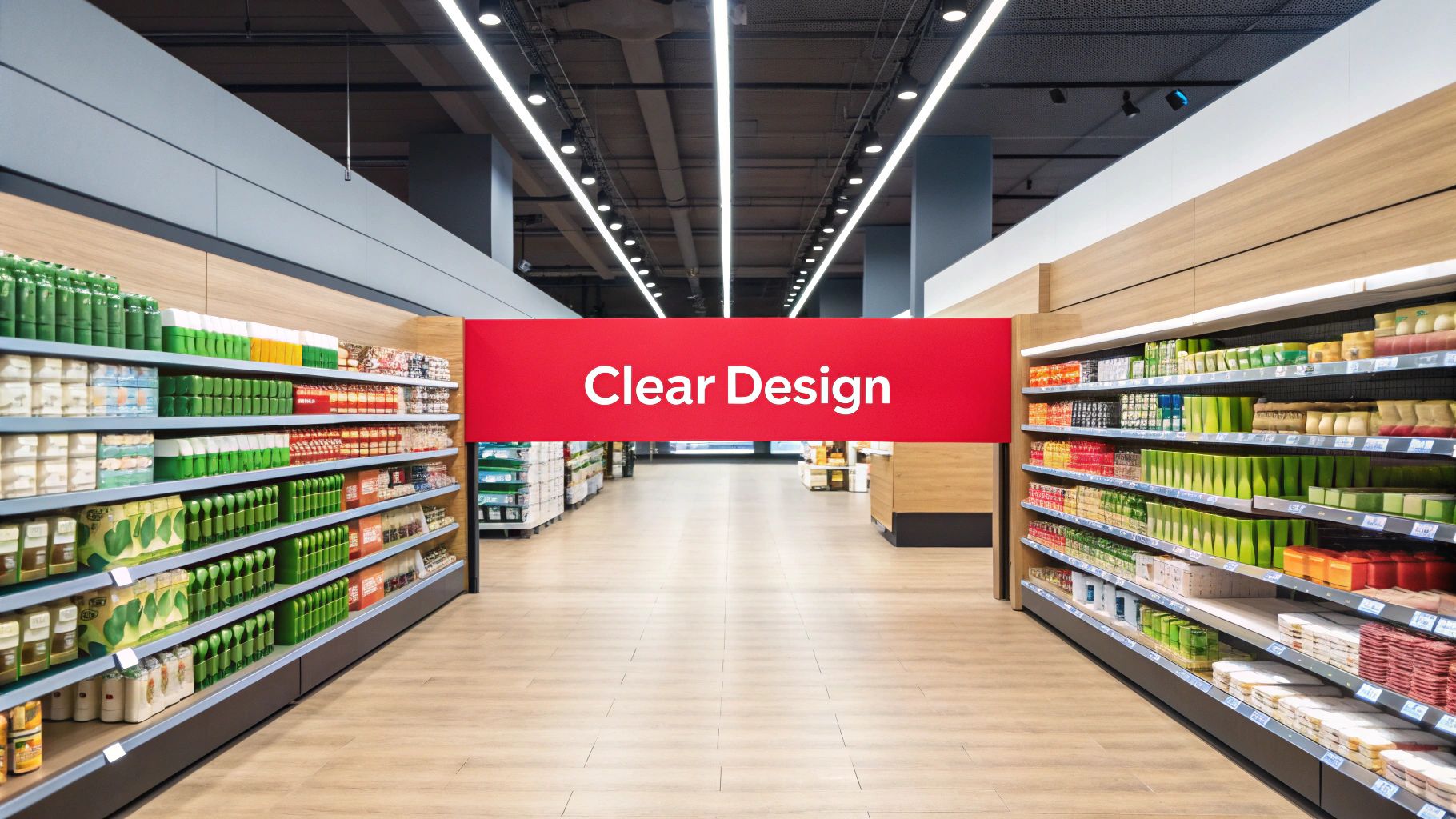
It’s a perfect example of how much more information you can share when you move beyond a simple price sticker.
The second benefit is even bigger: incredible power efficiency. An e-ink display only uses battery power when the image is actually changing. Once the price is set, the screen holds that image perfectly without drawing any power at all.
This mind-blowing efficiency is why the tiny batteries inside these tags can last for 5 to 10 years before needing a swap. It makes the entire system practically maintenance-free after installation. This combination of visual clarity and extreme longevity is what makes e-ink the gold standard in the industry. For a deeper dive, our comprehensive guide to electronic shelf labelling covers more of the technical specs and benefits. It’s this synergy of smart software, wireless tech, and advanced displays that truly makes ESLs a game-changer.
Calculating Your Return on Investment
When you’re looking at a price tag for shelves, the number you see upfront is just a tiny part of the story. The real financial picture is painted over the long haul, through day-to-day operational costs and the benefits you reap. A proper cost-benefit analysis shows how an investment in Electronic Shelf Labels (ESLs) can pay for itself many times over, turning what used to be recurring expenses into lasting profitability. This isn't just about comparing the price of a paper label to a digital one; it's about calculating the Total Cost of Ownership (TCO).
Think of it like choosing a company vehicle. You could grab a cheap, old pickup that seems like a bargain. But then the monthly fuel and repair bills start piling up, nickel-and-diming you to death. Or, you could invest in a modern electric truck. The sticker price is higher, for sure, but you start saving a fortune on gas and maintenance from day one.
Paper tags are that old pickup—cheap to start, but a constant drain. ESLs are the modern, efficient upgrade.
Total Cost of Ownership Breakdown Paper vs ESL
The TCO looks past the initial purchase price to account for every single expense tied to a system over its entire life. With paper tags, these costs are sneaky and never-ending. With ESLs, the costs are almost entirely front-loaded, followed by years of smooth sailing with minimal upkeep.
To make this crystal clear, let's break down the direct and indirect expenses for both systems. We'll use a typical five-year window for a mid-sized store as our example.
| Cost Factor | Paper Tag System | ESL System |
|---|---|---|
| Initial Investment | Low (Printer, software license) | High (Tags, gateways, software) |
| Recurring Materials | Continuous (Paper, ink/toner) | None |
| Labor Costs | Extremely High (Printing, sorting, replacing tags) | Very Low (Initial setup only) |
| Error Correction Costs | Moderate (Lost revenue, customer appeasement) | None (100% accuracy) |
| Opportunity Cost | High (Staff busy with tags, not customers) | Low (Staff freed for high-value tasks) |
As you can see, the financial narrative flips completely once you look at the full picture. Those initial "savings" from paper tags get eaten away by a constant stream of operational costs.
Driving ROI with Operational Efficiency
The return on your ESL investment is powered by three key financial levers that directly boost your bottom line. These aren't just vague concepts; they are real, measurable gains that add up quickly.
- Massive Labor Reduction: This is the big one. Think about the hours your team spends every single week printing, cutting, sorting, and swapping out paper tags. With ESLs, that labor cost vanishes. That time is instantly freed up for tasks that actually make you money, like helping shoppers on the floor or building better displays.
- Elimination of Printing Supplies: The ongoing expense of paper, ink, toner, and printer maintenance might not seem like much on any given day. But over a year in a busy store, it adds up to thousands of dollars. An ESL system wipes those costs right off your budget.
- Revenue Saved Through 100% Accuracy: Let's be honest, manual tagging leads to mistakes, and those pricing errors almost always end up favoring the customer. Even a 1% error rate can chew through your margins. ESLs guarantee 100% price integrity from the shelf to the checkout, protecting your profits on every single transaction.
By automating price updates, retailers can redirect staff focus from monotonous tasks to engaging with customers, directly improving service and sales. This shift alone often justifies the entire investment in a digital system.
When you start to calculate the ROI, the whole conversation about ESLs changes. It stops being about an expense and starts being about a strategic investment in a more efficient, profitable future. For a detailed breakdown of what goes into this calculation, you can explore a deeper analysis of electronic shelf tags cost and its long-term value. Getting clear on these numbers is the key to making the right call for your store.
Ready to make the switch? Here’s your guide to a seamless ESL rollout.
Bringing digital price tags to your shelves can feel like a huge undertaking, but it’s actually a series of clear, manageable steps. A successful Electronic Shelf Label (ESL) implementation isn't some massive, disruptive tech overhaul. It's all about a well-planned rollout.
Think of it like assembling flat-pack furniture. If you follow the instructions and take a methodical approach, you'll build a solid system that completely changes how your store runs.
The real work starts long before the first tag is ever clipped onto a shelf. It all begins with smart planning and getting to know the unique layout and infrastructure of your store. Rushing this first part is like building a house on a shaky foundation—you're just creating problems for yourself later on.
Phase 1: Initial Planning and Site Survey
The very first move is a full site survey. This means mapping out your entire retail space to figure out the best spots for the wireless gateways. These little hubs are the heart of your ESL system's communication network.
The goal here is simple: achieve perfect, consistent signal coverage across every single aisle, cooler, and endcap. No dead zones allowed.
While you're at it, you’ll need to take a hard look at your current setup. Key things to check include:
- Network Capacity: Can your store’s network actually handle the data traffic from the new ESL software?
- Power Access: Where are the power outlets? Gateways need juice, and you want them in ideal signal locations, not just where there's a plug.
- Physical Obstructions: Take note of any big metal fixtures, support pillars, or thick walls. Anything that could block or weaken a wireless signal needs to be accounted for.
This survey becomes the blueprint for your entire installation. Getting it right ensures every digital price tag on your shelves can talk to the central system without a hitch. A solid survey is your best defense against connectivity headaches and guarantees a smooth deployment from day one.
Phase 2: Software Integration and Data Mapping
Once the physical layout is mapped, it’s time to move into the digital side of things. This phase is all about integrating the ESL management software with your store's existing Point of Sale (POS) or Enterprise Resource Planning (ERP) system. This link is the magic that lets price changes in your master database automatically appear at the shelf edge.
After the systems are talking to each other, you get to the critical task of data mapping. This is where you connect each product in your database (usually identified by its SKU or barcode) to a unique ID for a specific ESL tag. It’s basically like assigning a unique phone number to every person in your contact list.
A clean, organized product database is the secret weapon for a painless ESL rollout. Before you even think about mapping, take the time to audit your data. Hunt down and fix any inaccuracies, duplicates, or missing info. This prep work will save you from a world of frustration.
This digital groundwork is what makes it all work. It ensures that when you update the price for "Organic Apple Juice," the software knows exactly which tag on which shelf to change. This is the brain behind the whole operation, making store-wide updates happen with just a single click.
Phase 3: Physical Installation and Team Training
Finally, we get to the hands-on part: the physical installation. This involves mounting the gateways exactly where your site survey plan says they should go, and then deploying the ESLs. Your team will go aisle by aisle, clipping the tags onto the shelves and using a handheld scanner to pair each tag with its assigned product. This is where the digital plan becomes a physical reality.
But the hardware is only half the story. Team training is absolutely essential for long-term success. Your staff needs to be comfortable with how the new system works, from managing price updates in the software to knowing what to do when a tag loses connection.
Good training should always cover:
- How to use the management software for price changes and promotions.
- The process for adding new products and pairing them with new tags.
- Basic troubleshooting for common hiccups, like replacing a battery or re-pairing a tag that's gone offline.
By breaking the project down into these three phases—planning, integration, and installation—you can tackle this important upgrade without derailing your daily operations. You’ll minimize the disruption and get the most out of your new digital pricing system from the get-go.
The Future Is Now: Smart Shelf Technology in Retail
Let's be clear: Electronic Shelf Labels (ESLs) are so much more than just a fancy price tag for shelves. Think of them as the foundation for a truly intelligent store. This is the technology that finally connects your physical aisles to your digital operations, creating a retail environment that's more responsive, agile, and packed with data. It’s a huge leap beyond just automating price changes; it's about building a proactive, future-ready store.
Imagine tags that do more than just display a number. They can show real-time stock levels right there on the shelf, giving your team a heads-up on low inventory before a customer is met with an empty space. This kind of immediate visibility turns every single shelf into a dynamic inventory management tool.
More Than Just a Price: Dynamic Information Hubs
The real power of ESLs kicks in when you start thinking about the customer experience. Modern tags can feature QR codes that shoppers can scan with their phones, instantly bridging the gap between your physical and online worlds.
A simple scan can connect them to:
- Deeper Product Info: Think detailed specifications, ingredient lists, or even the story behind a product's origin.
- Customer Reviews and Ratings: Nothing beats social proof. Bring those five-star ratings directly to the point of decision.
- Video Tutorials and How-To Guides: Show the product in action. Help customers see exactly how it could fit into their lives.
Suddenly, the shelf edge isn't just a static display. It's an interactive hub that empowers shoppers and drives real engagement.
Sharpening Operations with Smart Data
Beyond what the customer sees, this technology is a game-changer for your back-of-house operations. For services like click-and-collect, ESLs with flashing LED lights can guide staff directly to the right item on the shelf. This simple feature dramatically slashes order fulfillment times and boosts accuracy. It's a perfect example of how in-store processes get a massive lift from the broader trend of automation in the retail industry.
This technology is the gateway to truly smart shelves—fixtures equipped with sensors and RFID that actively monitor inventory and customer interactions. These systems provide a constant stream of data that will redefine retail operations.
And the evolution doesn't stop there. The global smart shelves market—which integrates sensors directly into the shelving—is on track to hit USD 3.3 billion by 2025. This explosive growth shows just how serious the industry is about building systems that monitor inventory in real-time and trigger restocking automatically. You can dive deeper into the rise of the smart shelves market to see where things are headed.
By embracing this forward-thinking tech, retailers aren't just solving today's pricing headaches. They're laying the groundwork for a more efficient, data-driven, and customer-focused future.
Frequently Asked Questions About Shelf Pricing
Making the jump to a new pricing system is a big decision, and it’s natural to have questions. When store owners start looking at a digital price tag for shelves, a few practical concerns always come up: durability, compatibility, and what this all really means for day-to-day work.
Let’s tackle some of the most common questions head-on to clear things up.
One of the first things people ask is about toughness. Are these digital tags built to survive the daily grind of a busy store? You bet. Electronic Shelf Labels (ESLs) are designed specifically for commercial environments. Their casings are tough enough to handle accidental bumps from shopping carts, stocking equipment, and general store traffic.
Many are also built to handle big temperature swings, which makes them perfect for refrigerator and freezer aisles. While they do cost more upfront than a stack of paper labels, they are engineered to last for years, protecting your investment.
How Do They Connect with My Current Software?
This is a big one. Retailers often worry they’ll have to rip out their entire IT setup to make ESLs work, but that’s almost never the case. Modern ESL management software is built to play nicely with the most common Point of Sale (POS) and Enterprise Resource Planning (ERP) systems already running your store.
That connection is where the magic happens. The ESL software simply pulls product and pricing information straight from your main database, creating a perfect sync. When you change a price in your POS, that update is automatically beamed to the right tag on the shelf. No more manual entry, no more mistakes.
The whole point of ESLs is to make your life easier, not more complicated. A good system works with the tools you already have, acting as an extension of your current operation instead of a total replacement.
This seamless link guarantees your shelf prices always match what scans at the checkout. That’s how you build customer trust and stop losing money to pricing errors.
What Are the Benefits Beyond Price Updates?
Instant price changes get all the attention, but the real advantages go much deeper. Think of a digital price tag for shelves as a mini information hub, not just a number display.
With ESLs, you can easily showcase:
- Promotional Highlights: Flash a clear "Sale" or "New Item" alert right at the shelf.
- Stock Levels: Display real-time inventory counts to help your staff (and shoppers).
- QR Codes: Give customers a direct link to online reviews, how-to videos, or detailed product specs.
These features turn a boring, static shelf edge into a genuinely interactive tool. They also free up your team from the soul-crushing task of swapping out paper tags, letting them focus on what matters: helping customers and making the store look great. Ultimately, ESLs aren't just about pricing—they’re about running a smarter, more accurate, and more engaging store.
Ready to modernize your store and protect your bottom line? At ESLtags, we provide robust and reliable Electronic Shelf Labels that integrate seamlessly with your existing systems. Learn how our digital solutions can transform your retail operations today.


Leave a Reply
Your email is safe with us.