

Retail store shelf labels are those little tags you see on the edge of a store shelf, showing you the price and a bit about the product. For years, these were just simple paper slips. Today, though, they’re often dynamic digital displays that can be updated instantly from a central computer.
We call them Electronic Shelf Labels, or ESLs for short.
What Exactly Are Retail Store Shelf Labels Today
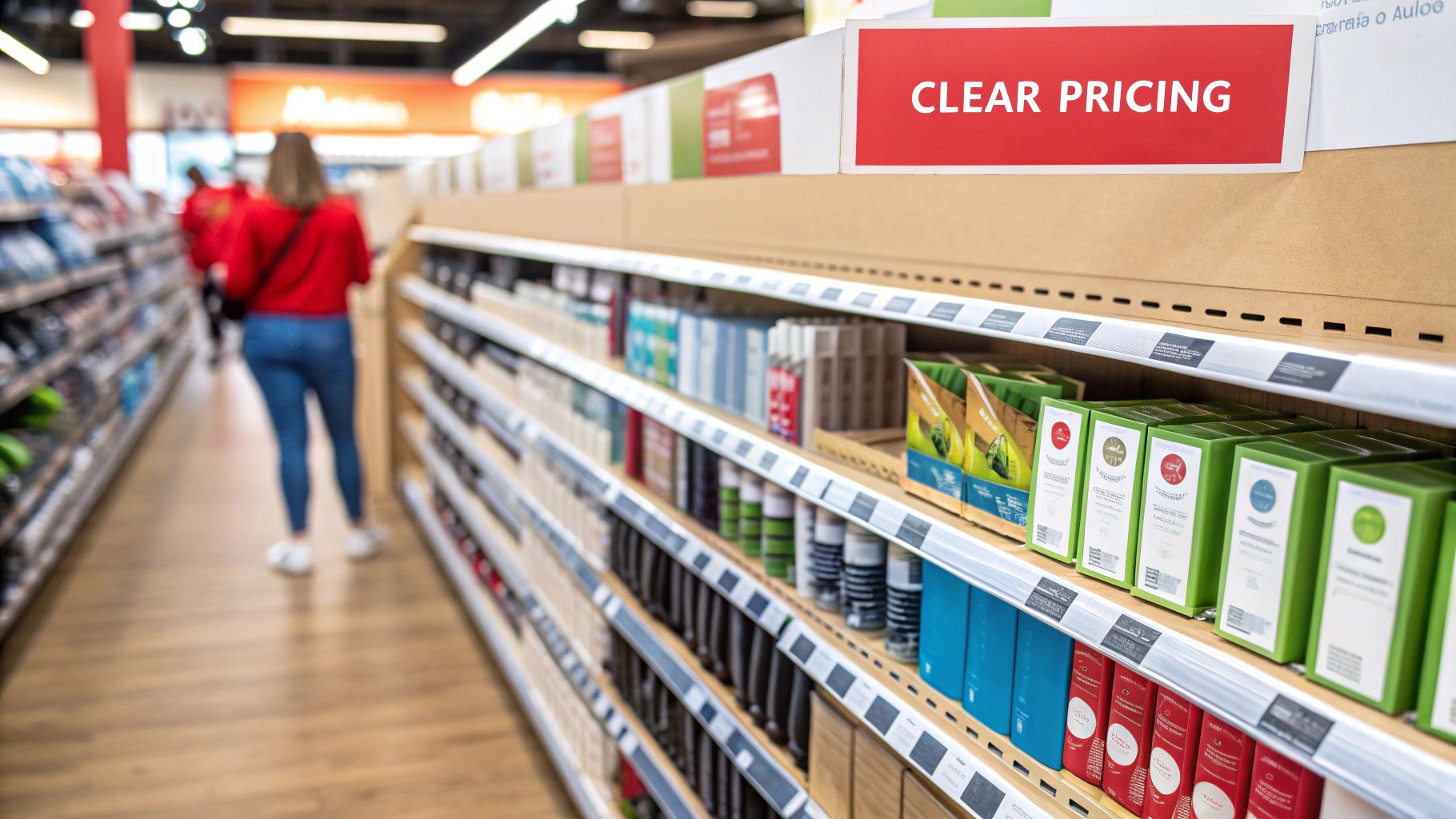
Think of the old-school paper price tags like a landline phone. They get the job done, but they’re static and basic. Modern electronic shelf labels, on the other hand, are like a smartphone—they’re connected, dynamic, and can do so much more than just show a price.
These modern labels are the critical bridge between a retailer's back-end inventory system and the physical product sitting on the shelf. They've moved way beyond simple slips of paper, turning into miniature digital screens that put real-time data right where customers and staff need it most.
The Evolution from Static Paper to Dynamic Displays
For decades, changing prices was a grueling, manual task. An employee would print out hundreds of tiny paper tags, then trudge up and down the aisles, physically swapping every single one. It was slow, riddled with errors, and ate up a ton of staff time and materials. A simple weekly promotion could tie up an employee for an entire shift.
That world is quickly disappearing. Electronic Shelf Labels (ESLs) are a massive leap forward. They are small, battery-powered screens that receive information wirelessly from a central hub.
What does this mean in practice? A price change that once took an employee hours to roll out can now be pushed to thousands of labels across an entire store in just a few minutes. It's a total shift from static information to real-time communication.
This isn't just about making life easier; it's about creating a smarter, more agile retail space. You can get into the nitty-gritty of electronic shelf labelling in our more detailed guide.
Why This Technology Matters Now
Keeping up with this technology is key for any retailer who wants to stay competitive. Modern shelf labels aren't just passive price markers anymore; they are active tools that help run the store. Here’s how:
- Ensuring Pricing Accuracy: ESLs get rid of that frustrating moment when the price on the shelf doesn't match the price at the checkout. That kind of consistency builds customer trust.
- Improving Operational Efficiency: Automating price updates frees your team from a tedious, low-value job. One grocery store owner mentioned they saved up to 50 labor hours per week, letting their staff focus on helping customers instead of changing tags.
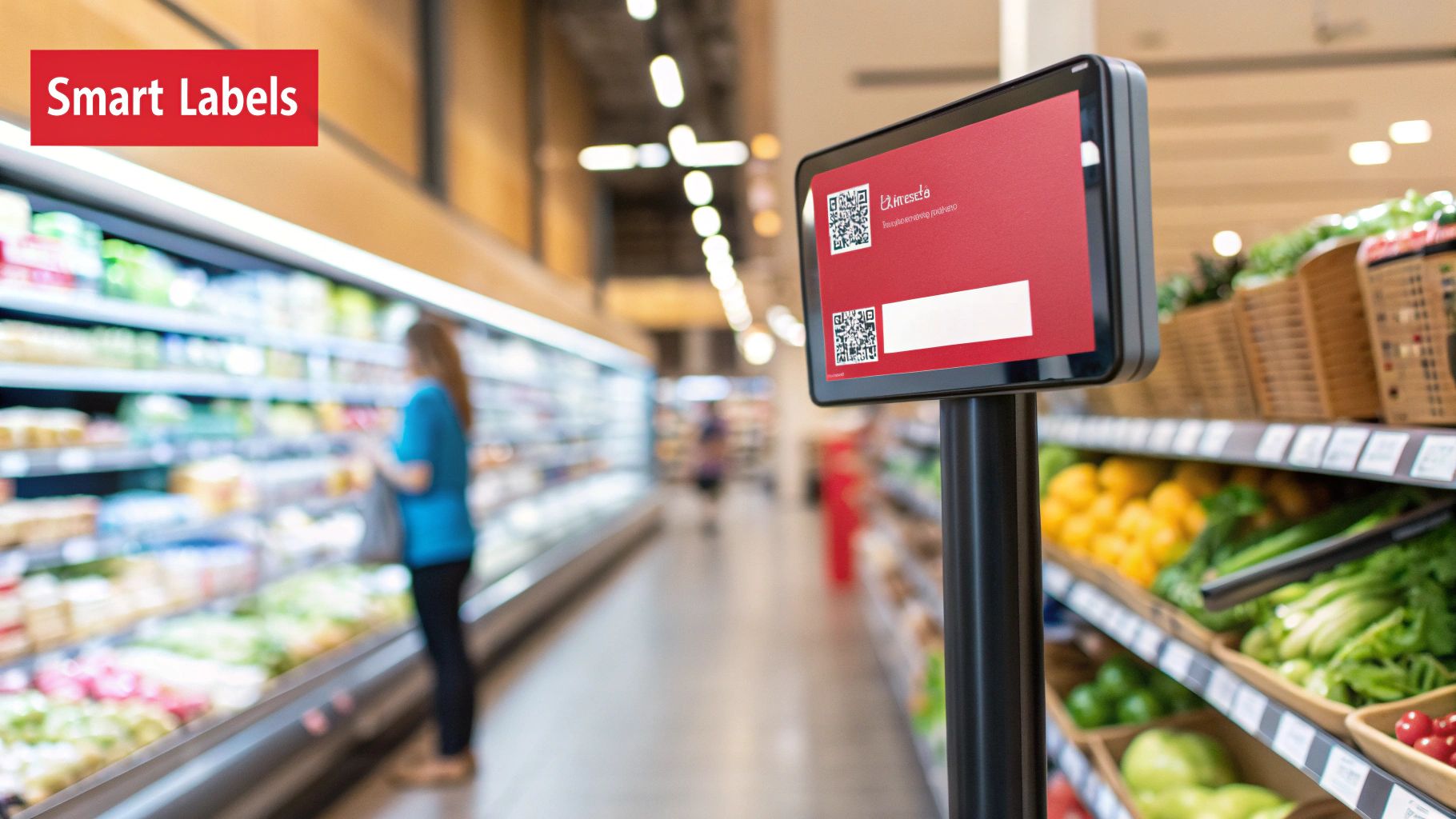
- Creating a Better Shopping Experience: These labels can show much more than just a price. Think promotional details, stock levels, QR codes for product videos, or even allergen information—all right at the shelf, helping customers make better decisions on the spot.
For as long as anyone can remember, the simple paper label has been a fixture on retail shelves. It was a straightforward tool for a less complicated time. But in today's retail world, sticking with paper is like trying to compete in a car race on a scooter—you’re slow, inefficient, and bound to run into problems.
Every store manager knows the drill. Print out hundreds, sometimes thousands, of new price tags. Then, send an employee on a long, tedious walk through the aisles, pulling old labels and popping in new ones. This isn't just boring work; it's a massive drain on your most precious resource: your team's time.
The Real Cost of Sticking With Paper
Beyond just paying people to change tags, paper labels create a constant drag on a store's bottom line and can seriously damage customer trust. These are the headaches that many retailers have just accepted as part of doing business.
The most common issues are almost universal:
- Human Error: When you’re manually swapping out thousands of tags, mistakes are going to happen. A misplaced decimal point or a missed promotional tag leads to pricing nightmares at the checkout. That means frustrated customers and, in some cases, legal trouble.
- High Material Waste: The bill for paper, ink, and printer upkeep never stops growing. Every single promotion, price adjustment, or product update means firing up the printer again, creating a relentless cycle of spending and waste.
- A Snail's Pace: Trying to react to a competitor’s flash sale or adjust prices based on real-time demand is a logistical mess with paper. That delay between making a pricing decision and seeing it live on the shelf is a black hole for lost sales.
Moving past these manual hurdles is a key part of any modern retail digital transformation strategy.
How Electronic Shelf Labels Change The Game
This is where Electronic Shelf Labels (ESLs) come in. They directly tackle every single one of the problems that come with paper. These small digital screens are all connected to one central system, letting you update prices and information across the entire store with a few clicks. It's not just a small tweak; it’s a total overhaul of how a store operates.
The global electronic shelf label market was pegged at USD 1.95 billion in 2024, and it's set to explode as more retailers get on board. ESLs use low-power radio signals to get instant updates from a main server, turning static paper into dynamic digital info right where customers see it.
This shift is a strategic move toward automation and running a smarter, data-driven store. For instance, technologies like E Ink signage provide crisp, easy-to-read displays that look just like paper but use almost no power, making them both sustainable and effective.
The real magic is this: ESLs bridge the gap between your digital data and your physical store. A price update that once took an employee all day to complete can now be done in less than three minutes, with 100% accuracy.
To really see the difference, let’s put the two head-to-head.
Paper Labels vs Electronic Shelf Labels A Direct Comparison
It's one thing to talk about the benefits, but seeing a direct comparison really drives home just how much of an operational leap ESLs represent.
| Feature | Paper Labels | Electronic Shelf Labels (ESLs) |
|---|---|---|
| Price Updates | Manual, slow, and labor-intensive process requiring physical replacement. | Instant, centralized updates pushed to thousands of labels simultaneously. |
| Accuracy | Prone to human error, leading to price mismatches and customer complaints. | Guarantees 100% accuracy, ensuring shelf price always matches the POS system. |
| Labor Costs | Requires significant staff hours for printing, sorting, and changing tags. | Frees up staff from manual tasks to focus on customer service and sales. |
| Agility | Very slow to react to market changes, competitor pricing, or promotions. | Enables dynamic pricing strategies and immediate promotional rollouts. |
| Information Display | Limited to basic price and product name due to small physical space. | Can display rich data like stock levels, QR codes, promotions, and more. |
Looking at the table, the choice becomes pretty clear. While paper labels served their purpose, ESLs are built for the speed and precision required to win in modern retail.
Understanding Different Types of Electronic Shelf Labels
When you start looking into electronic shelf labels, you'll quickly realize they aren't all the same. It’s like buying a car—a rugged truck and a sleek sports car both get you from A to B, but they’re built for totally different jobs. The same logic applies here. Picking the right ESL means understanding what each type brings to the table for your store, your staff, and your customers.
Let's break down the main players so you can figure out which technology makes the most sense for your aisles.
The Workhorse: E-Ink Displays
Most of the ESLs you see out in the wild use E-Ink technology. If that sounds familiar, it's because it's the exact same tech inside a Kindle e-reader. And there’s a good reason it’s so popular: it looks just like ink on paper, which makes it incredibly easy to read from any angle, even under the harsh glare of store lighting.
The real magic of E-Ink is its ridiculously low power consumption. These labels only sip a tiny bit of battery when the price or product info actually changes. Once the update is done, the screen holds that image perfectly clear without using any power at all.
This means the batteries tucked inside these little guys can last for 5-7 years—sometimes even longer. That’s a massive win for reducing maintenance headaches and keeping long-term costs down. For the day-to-day grind of showing prices, product names, and barcodes, E-Ink is the undisputed champion of efficiency and clarity.
The Showstopper: Full-Color LCD Displays
If E-Ink labels are the reliable and efficient workhorse, then full-color Liquid Crystal Display (LCD) labels are the flashy showstoppers. Think of these as tiny, high-definition TV screens for your shelves. They can display rich colors, smooth animations, and even short video clips right at the point of purchase.
These are your go-to tools for high-impact promotions. Imagine launching a new energy drink with a vibrant, looping animation that catches a shopper's eye from halfway down the aisle. That's the kind of stopping power a static paper tag just can't compete with.
But all that visual sizzle has a trade-off. LCDs are much thirstier for power, so their batteries need to be changed or recharged far more often. That's why retailers typically use them strategically—for high-margin items, end caps, or special promotional areas where you really need to command attention, rather than on every single shelf.
Your choice between E-Ink and LCD really boils down to your main goal. Need rock-solid operational efficiency and crystal-clear pricing across the board? E-Ink is your answer. Want to create an exciting, promotion-driven experience that stops shoppers in their tracks? LCDs give you the power to do just that.
The Connector: Interactive Features like NFC and QR Codes
Today's best ESLs do more than just display information; they create a conversation with the customer. This is where interactive tech like Near Field Communication (NFC) and scannable QR codes completely change the game, turning a simple price tag into a gateway for engagement.
With these features baked in, a passive label becomes an active one. A customer can just tap their phone on the shelf edge or scan a code to unlock a whole layer of useful digital content. It's about bridging the gap between your physical shelf and the endless information available online.
Here’s a taste of what that makes possible:
- Deeper Product Details: Give shoppers instant access to things that won't fit on a tiny label, like full ingredient lists, sourcing stories, or allergy information.
- Live Customer Reviews: Link straight to product ratings and reviews. Nothing builds confidence faster than seeing what other people thought.
- Instant Deals & Coupons: Let a customer grab a digital coupon for that exact product, right then and there. It's a powerful way to nudge them toward a purchase.
- Inspiring Content: Selling a new kitchen gadget? The QR code could pull up a quick recipe video showing it in action.
By adding these interactive elements, you’re putting the power back into the customer's hands. You give them the info they’re looking for, exactly when they need it, creating a smarter, smoother, and far more satisfying trip to your store.
The Real-World Business Case for Digital Shelf Labels
Beyond the slick technology, what does switching to digital retail store shelf labels actually do for your business? It’s not just about swapping paper for screens. We’re talking about a fundamental shift that impacts your bottom line, your daily operations, and how your customers feel when they walk through your doors.
The business case for ESLs really boils down to three game-changing advantages: huge gains in operational efficiency, newfound pricing power, and a seriously upgraded in-store experience.
And this isn't some niche trend for early adopters. The global electronic shelf label market was already valued at around USD 1.85 billion in 2024 and is expected to explode to USD 9.81 billion by 2035. That kind of growth only happens when something delivers undeniable, clear-cut value.
Unlocking Supreme Operational Efficiency
Let's start with the most immediate win: you get to stop changing prices by hand. For most retailers, this single task is a massive time sink, eating up thousands of labor hours every year.
Think about a typical grocery store that might juggle 2,000 price changes a week. One store owner told us that process took a mind-boggling 50 hours per week with old-school paper tags. With ESLs? The same update is done in three minutes.
This isn't a small tweak—it's a complete reallocation of your most valuable resource: your team's time. Instead of fiddling with paper and printers, they can focus on high-value tasks like helping customers, keeping shelves stocked, and making the store look great.
Here’s where you’ll see the gains:
- Reduced Labor Costs: You'll drastically cut the hours spent on price updates, which shows up directly on your payroll.
- No More Material Waste: Say goodbye to the recurring costs of paper, ink, and printer maintenance.
- Faster Rollouts: Push store-wide promotions live in minutes, not days. No more delayed campaigns because someone couldn't get all the tags changed in time.
Gaining Pricing Accuracy and Agility
With paper labels, mismatches between the shelf price and the price at checkout are almost a given. These little errors might seem minor, but they slowly chip away at customer trust and can even land you in hot water with compliance regulations. Electronic shelf labels give you 100% pricing accuracy, period. The price on the shelf is always the price at the scanner.
This perfect sync-up is more than a convenience; it's a promise to your customers. It tells them your store is reliable and transparent. That's a bedrock of real customer loyalty.
But it goes beyond just being correct. ESLs give you an incredible level of agility. You can finally start using dynamic pricing strategies that were just a fantasy before. Imagine automatically marking down fresh bakery items an hour before closing to cut down on waste. Or instantly matching a competitor’s surprise sale across the street. This transforms pricing from a static chore into a powerful, real-time strategic tool.
You can dive deeper into all the advantages in our complete guide on the benefits of electronic shelf labels.
Creating an Enhanced Customer Experience
Today’s shoppers want information, and they want it now. ESLs put it right at their fingertips at the exact moment they’re making a decision. These little screens can display so much more than a price, turning the shelf edge into a helpful, interactive part of the shopping journey.
For example, a customer could see:
- Live Stock Levels: A simple "Only 3 left!" can create a sense of urgency and manage expectations.
- Promo Details: Clearly spell out "Buy One, Get One Free" or show the final price for loyalty members.
- Key Product Info: Display allergen warnings, organic certifications, or where a product came from.
This kind of transparency empowers customers to make confident decisions without having to flag down a busy employee. By giving them the right information, right where they need it, you create a smoother, more satisfying visit that keeps them coming back.
A Practical Guide to Implementing ESLs in Your Store
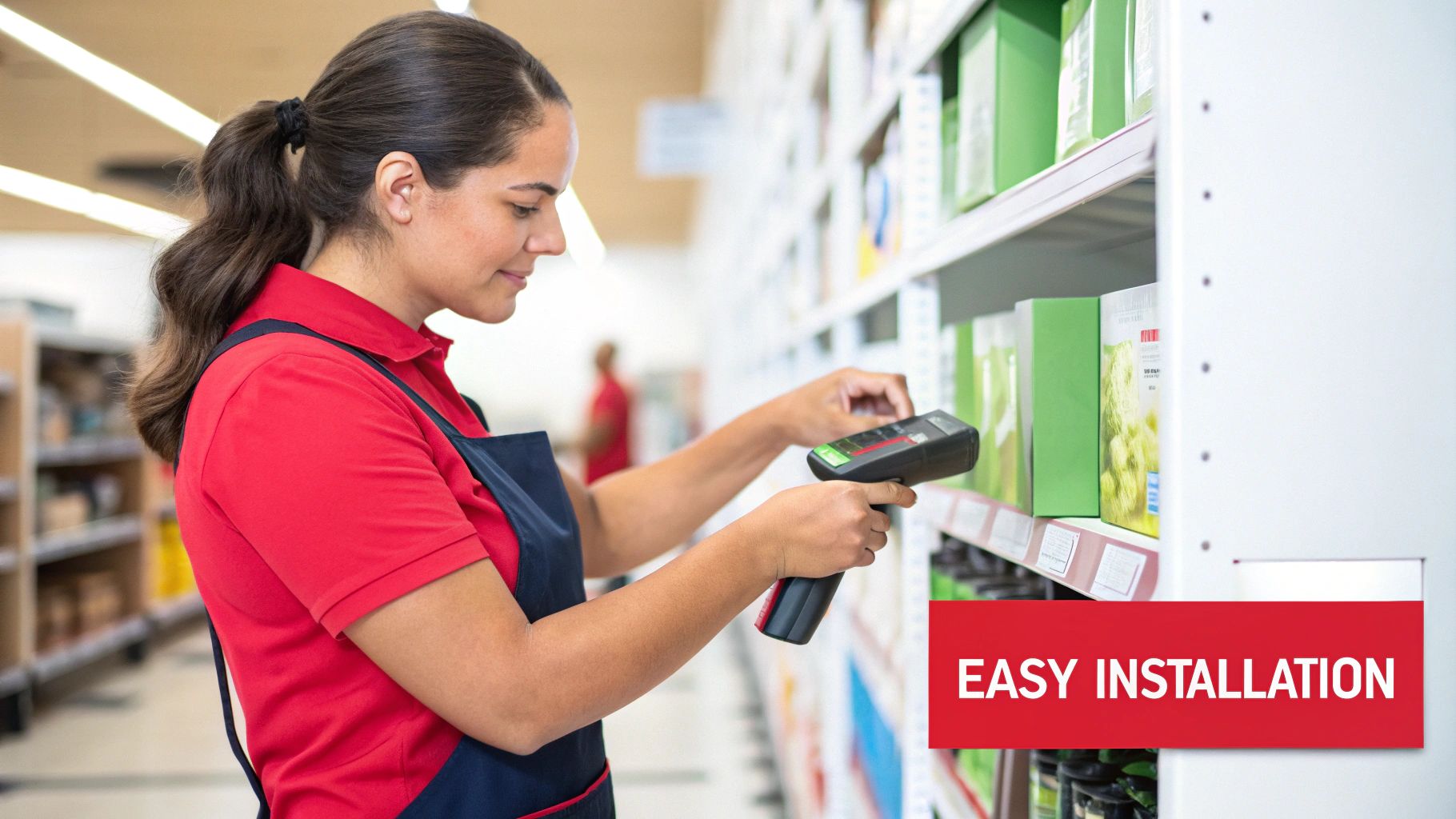
Making the jump to electronic shelf labels feels like a huge undertaking, but it’s completely manageable if you break it down into a clear roadmap. Don't think of it as a scary tech overhaul. Instead, see it as a strategic upgrade to your store’s central nervous system. A thoughtful, step-by-step approach is all you need for a smooth transition from paper to pixels.
The whole thing starts with a frank assessment of what you actually need. Are you a small boutique that just wants to lock down pricing accuracy? Or a massive supermarket trying to juggle complex, store-wide promotions? The size of your operation, your product count, and your biggest headaches will shape every decision you make from here on out.
This is also the time to start vetting technology partners. You need to find a provider whose system not only fits the budget but, just as importantly, plays nice with the software you already use every single day.
Setting Up Your In-Store Infrastructure
Before you can get those slick new digital tags on the shelves, you have to lay the groundwork. ESLs communicate wirelessly, so the first real step is installing the hardware that makes it all possible. This usually means placing wireless base stations—think of them as transmitters—at strategic points all over your store.
These little boxes act a lot like Wi-Fi routers, but they're built specifically to talk to thousands of low-power labels at once. Getting the placement right is critical. You have to make sure every single tag, from the top shelf in aisle one to that bottom bin in the far back corner, gets a strong, reliable signal for instant updates.
A well-planned network is the backbone of a successful ESL system. Ensuring complete coverage from the start prevents frustrating dead zones and guarantees that every price change reaches every label without fail.
This kind of infrastructure is becoming more and more common. The U.S. electronic shelf label market hit USD 255 million in 2024 and is on track to explode to USD 1,175 million by 2033, all because retailers are chasing these exact operational wins.
Integrating with Your Existing Systems
Okay, this is the make-or-break step. Your ESL system can't just exist in a silo; it has to be deeply connected to your current retail management software. The whole point is to create one single source of truth for all your product and pricing data.
A successful setup absolutely depends on direct integration with your core platforms:
- Point of Sale (POS) System: This connection guarantees the price on the shelf is always the same as the price that rings up at the register. No more awkward discrepancies for your cashiers to handle.
- Inventory Management Software: By linking ESLs to your inventory system, you can display real-time stock levels right on the shelf, which is a massive help for both customers and staff.
- Enterprise Resource Planning (ERP) System: For larger chains, integrating with an ERP centralizes data management across the entire business, from the warehouse to the shelf edge.
When you get this integration right, the whole process becomes automatic. A price change in your main system gets pushed to the correct shelf tag in minutes, no questions asked. This connection is fundamental when you're choosing the right retail inventory management software that can handle these kinds of advanced features.
Adopting a Phased Rollout Strategy
Finally, whatever you do, resist the urge to flip the switch for the entire store at once. A much smarter play is to roll it out in phases, starting with a small pilot program in a single aisle or department.
This gives you a controlled environment to iron out any kinks, properly train your team, and get some feedback without causing chaos across the whole store. Once you’ve nailed the process in your pilot area, you can expand the system to the rest of the store, section by section, with total confidence.
For a deeper dive into what this kind of investment looks like, take a look at our guide on the cost of electronic shelf tags.
Calculating the ROI of an ESL Investment
Making the jump to electronic shelf labels is a big decision. Justifying the upfront cost isn't just about looking at the price tag of the hardware; it’s about understanding the full picture. The real return on investment (ROI) here is a powerful mix of direct cost savings and entirely new ways to grow revenue.
Think of it less as an expense and more as an engine for long-term profitability. When you frame it that way, the value becomes crystal clear. On one side, you have the hard, tangible cost reductions that hit your budget almost immediately. On the other, you unlock strategic revenue gains that were simply impossible with static paper labels.
Quantifying the Cost Reductions
Your most immediate wins will come from cutting out all the hidden costs tied to manual price changes. This is where you’ll feel a direct impact on your store's bottom line, often much faster than you’d think. One independent grocer we know of saved up to 50 labor hours per week just on price updates, putting them on track for a full ROI in under two years.
So where do these savings come from?
- Labor Savings: All those hours your team spent printing, cutting, and running around the store swapping tiny pieces of paper? Gone. They can be completely reallocated to things that actually make you money, like helping customers or improving store displays.
- Material Elimination: You can officially say goodbye to the endless cycle of buying paper, ink, and toner. Those small expenses bleed your budget dry over a year, and ESLs stop that drain for good.
- Error Prevention: Pricing mistakes at the register are a killer. They frustrate customers, slow down checkout lines, and can even lead to compliance fines. ESLs deliver 100% accuracy between the shelf and the scanner, protecting your margins from those preventable losses.
Capturing New Revenue Growth
But it's not just about saving money. This is where ESLs go from being an efficiency tool to a serious sales-driving asset. You suddenly have the agility to react to market changes, competitor moves, or even the time of day—something you could never dream of with paper tags.
For example, you can automatically mark down items nearing their expiration date throughout the day, turning potential waste into real revenue. This new flexibility also sharpens your inventory management. Better pricing agility directly influences your sales velocity, which is why understanding your inventory turnover ratio calculation becomes even more crucial once ESLs are in play.
With the push of a button, you can roll out store-wide promotions or match a competitor's price drop. You never have to miss a sales opportunity again. Your shelf edge stops being a static price holder and becomes a responsive, strategic tool for growth.
Common Questions About Electronic Shelf Labels
Even after seeing all the benefits, it's completely normal to have a few practical questions. Moving to electronic shelf labels is a big upgrade, after all. So, let's get into the nitty-gritty.
We've pulled together the most common questions we hear from retailers once they start seriously thinking about making the switch. The goal here is to clear up any doubts so you can feel confident about your decision.
How Long Do The Batteries In Electronic Labels Last?
This is usually the first thing everyone asks, and it’s a great question. Nobody wants to trade the hassle of paper labels for the hassle of changing thousands of batteries.
The good news is that most ESLs using E-Ink technology are incredibly efficient. They only use a tiny sip of power when the price or information actually changes. For the rest of the time, they're essentially dormant.
Thanks to this low-power magic, the batteries in these retail store shelf labels typically last for 5 to 7 years. Some newer models even push that timeline out further. You can pretty much set them up and forget about them for a very long time, which keeps maintenance headaches to an absolute minimum.
How Secure Is The Wireless System?
With pricing data on the line, security is obviously a huge deal. ESL systems don't run on your store’s standard Wi-Fi. Instead, they use their own proprietary, low-frequency radio signals to talk between the main hub and the labels themselves.
This creates a closed-off, private network that's much harder for anyone to mess with.
On top of that, every piece of data sent to the labels is encrypted.
This means only your central system can send authorized price updates. It’s a rock-solid defense that keeps your pricing accurate and secure from any unauthorized changes.
Can ESLs Integrate With My Existing POS System?
Yes, and honestly, they'd be pretty useless if they couldn't. A key feature of any good ESL solution is its ability to seamlessly connect with the systems you already use—your Point of Sale (POS), inventory software, and even your ERP.
The ESL provider will work with you to make sure their software talks directly to your platforms. This creates a single, reliable source for all your pricing. When you change a price in your main system, it zips over to the correct shelf label instantly and accurately. No more price mismatches between the shelf and the checkout scanner. Ever.
At ESLtags, we provide advanced electronic shelf label solutions designed to streamline your operations and boost your bottom line. Discover how our technology can transform your store by visiting us at https://www.electronicshelftags.com.


Leave a Reply
Your email is safe with us.