

Walk down any retail aisle, and you'll see them: the small tags on the edge of the shelf telling you how much something costs. These are shelf price labels. For decades, they were just simple slips of paper. But now, digital versions like Electronic Shelf Labels (ESLs) are turning these static markers into dynamic, instantly updatable screens—and that changes everything.
Why Shelf Price Labels Are Critical for Retail Success
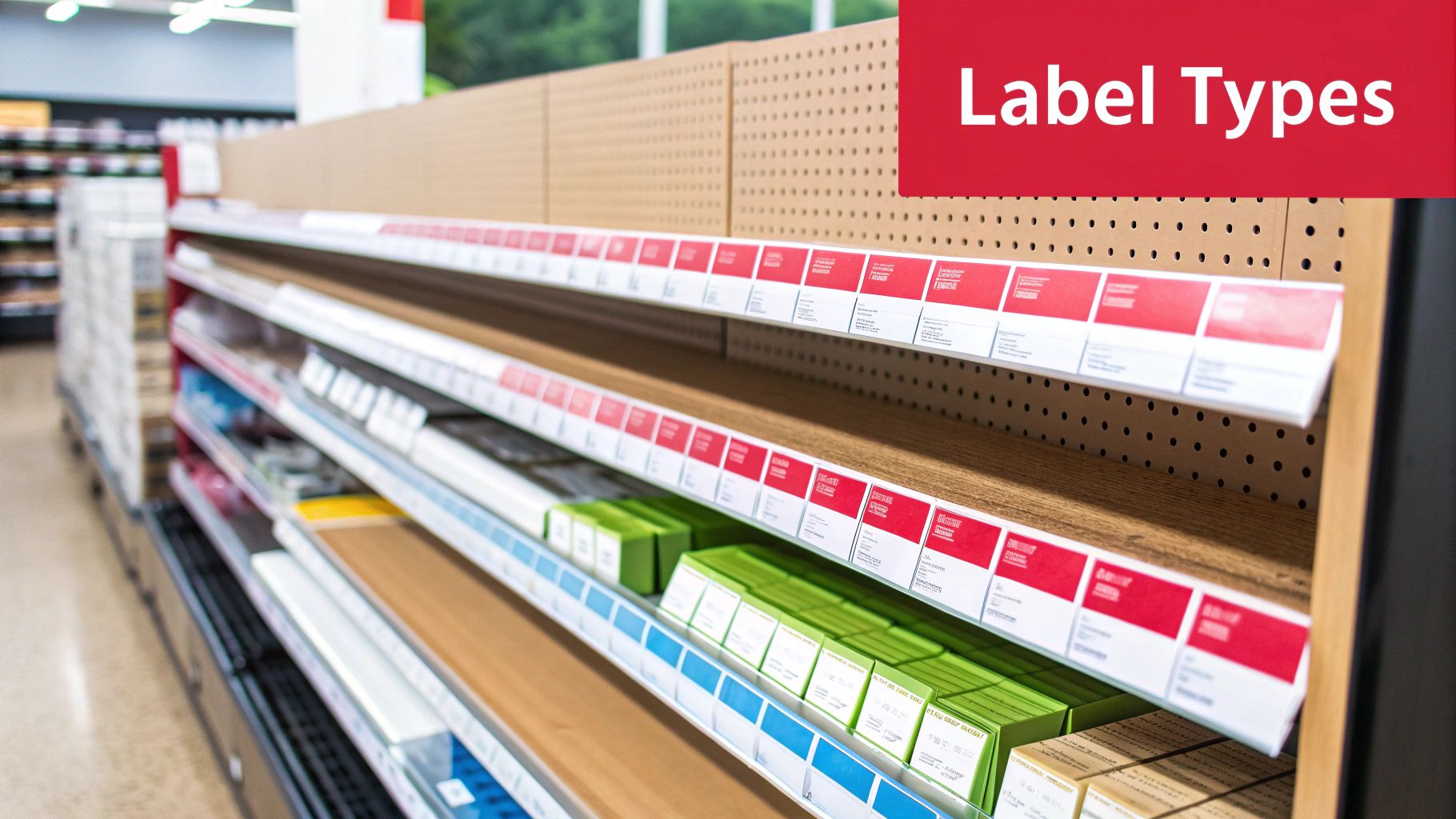
Think of shelf price labels as the central nervous system of your store. They are the frontline communicators, constantly relaying critical information between your back-end systems, your staff on the floor, and—most importantly—your customers.
At the most basic level, they build trust. Nothing frustrates a shopper more than seeing one price on the shelf and a different, higher one at the checkout. That single mismatch can instantly erode confidence and kill a sale.
Beyond customer trust, these labels are a cornerstone of operational efficiency. With old-school paper labels, a single price change kicks off a slow, manual process. Staff have to print new tags, find the right product, and swap them out, one by one. It’s a huge time sink and a process ripe for human error.
The Shift to Dynamic Information Hubs
This is where modern labels, especially ESLs, are a total game-changer. They transform the shelf edge from a passive price display into an active, powerful information hub. This isn't just a minor upgrade; it’s a fundamental shift in how physical retail operates.
- Operational Agility: Need to launch a store-wide flash sale? Done in minutes. Want to react to a competitor's price drop? Instantly. You can adjust pricing based on demand or inventory levels without any manual labor.
- Enhanced Customer Trust: You can guarantee that the price on the shelf is always the price at the register. It’s a simple promise that meets a core customer expectation.
- Legal Compliance: Accurate, clear pricing at the point of sale isn't just good practice—it's often a legal requirement. ESLs make compliance effortless.
By transforming the shelf edge into a data-rich touchpoint, retailers can significantly improve both store operations and the customer journey, making every inch of the aisle work harder.
The rapid adoption of this technology tells its own story. The global Electronic Shelf Label market was valued at around USD 1.95 billion and is projected to skyrocket to nearly USD 5.91 billion over the next decade. That kind of growth signals a massive shift in how retailers are using technology to get smarter and more competitive.
This trend is part of a larger movement to integrate smart tech into every corner of the store. Understanding how mobile POS systems are changing the retail landscape gives you a fuller picture. When you pair those systems with advanced shelf price labels, you create a seamless, efficient ecosystem. To learn more about elevating your in-store communication, check out our guide on effective signage for retail.
The Journey from Paper Tags to Smart Displays
For generations, the humble paper tag was king of the retail shelf. It was simple, everyone understood it, and it did its one job: show a price. But behind that simple piece of paper was a story of endless manual work and frustrating mistakes that eventually pushed the entire industry to look for a better way.
Think about a big grocery store with thousands of products lining the aisles. If just one supplier changes a price, it could kick off a mountain of work. An employee would have to spend hours—sometimes days—printing, cutting, and physically swapping out hundreds of tiny paper slips. Not only was this process a massive time-sink, but it was also a breeding ground for errors.
One misplaced decimal point, a single forgotten tag, or a delay in updating a special offer could lead straight to an unhappy customer and lost sales. In some stores, employees were spending up to 50 hours a week just managing price changes. That's valuable time that could have been spent helping shoppers or keeping shelves stocked.
The Rise of Intelligent Labels
The overwhelming need for a smarter system sparked a quiet revolution on the shelf edge. Early attempts at digital tags were often clunky and unreliable, but the real game-changer was e-ink technology—the same stuff you see in e-readers. This innovation delivered a crisp, paper-like display that was easy on the eyes and barely sipped power.
This breakthrough paved the way for modern Electronic Shelf Labels (ESLs), which are so much more than just digital price tags. They’re a complete technology platform. To really get why they're so powerful, you have to understand the core parts of these price labels for shelves.
A modern ESL system really stands on three key pillars:
- The Smart Labels: These are the e-ink displays you see on the shelf. They run on batteries that can last 5 to 10 years and can show prices, promotions, stock levels, QR codes, and more.
- The Communication Network: A series of low-power base stations create a wireless network across the store, usually using radio frequency. This network is what sends data from the central hub out to every single label.
- The Central Management Software: This is the brain of the whole operation. It hooks into the store’s existing Point of Sale (POS) and inventory systems, letting a manager update thousands of labels instantly from a single computer or even a phone.
This shift transforms the shelf edge from a static, high-maintenance piece of paper into a dynamic, low-effort digital endpoint. It’s the difference between sending a letter and sending an email—one is slow and manual, the other is instant and automated.
This journey from paper to pixels isn't just about making life easier for retailers. It's about making retail operations smarter, more accurate, and ready to respond to the fast-paced demands of modern business.
Real-World Benefits of Upgrading Your Labels
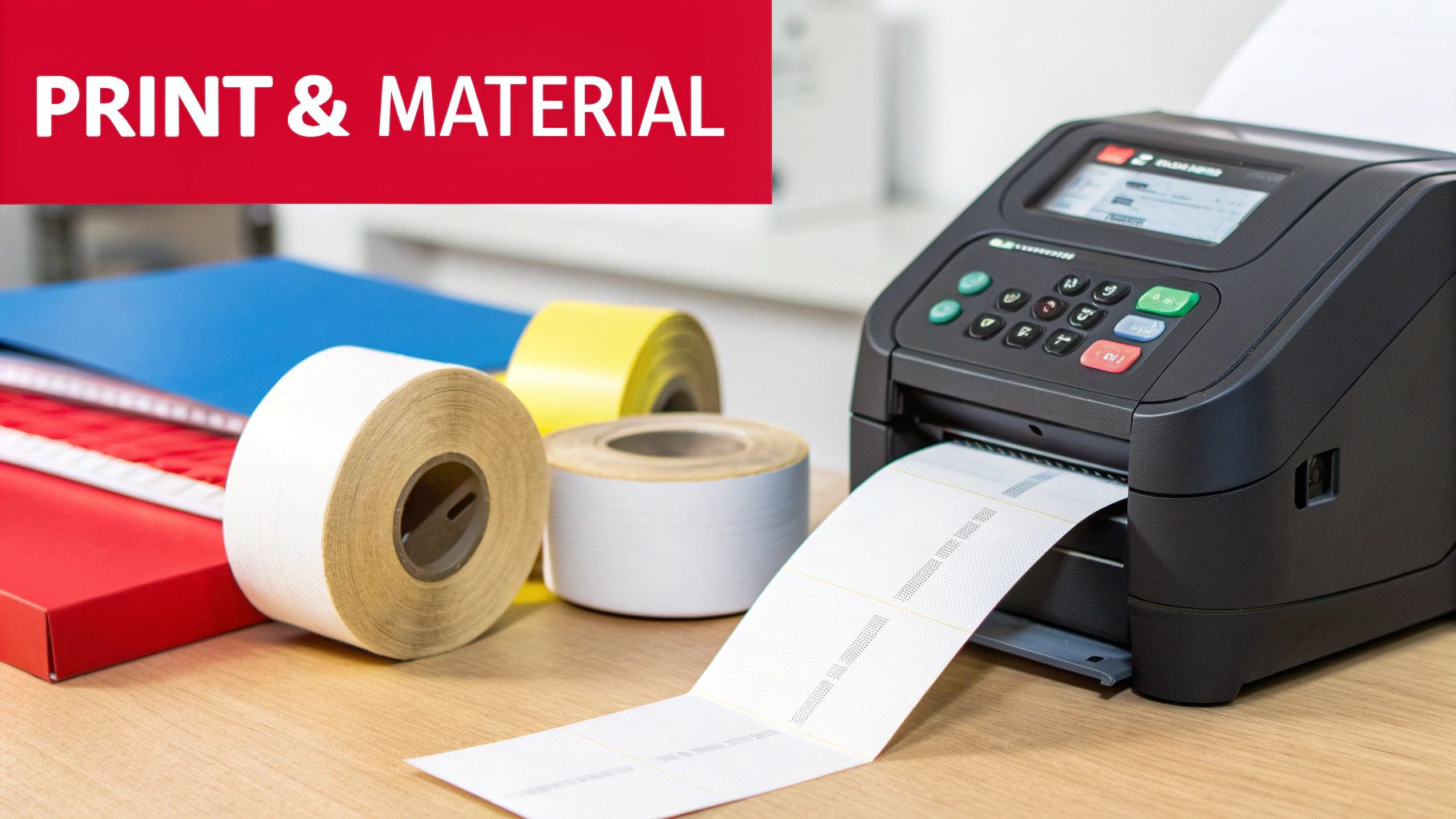
Alright, let's move past the tech specs. The real magic of modern shelf price labels happens when you see them in action on the store floor. For any retailer, this isn't just a cosmetic upgrade—it's about fundamentally changing how your business runs day-to-day, starting with something every customer notices: price accuracy.
With Electronic Shelf Labels (ESLs), the price on the shelf is a perfect mirror of the price at the checkout. Always. This simple guarantee eliminates one of the most common—and frustrating—customer complaints, building a powerful foundation of trust. It also means no more mind-numbing price audits or worrying about costly mistakes.
Beyond accuracy, the biggest win is often reclaiming countless staff hours. Just imagine a large grocery store that once burned 50 hours every single week just swapping out paper tags. With an ESL system, thousands of price changes can be pushed out from a single computer in under three minutes. That frees up your team to focus on what actually matters: helping customers.
Unleashing Dynamic Pricing and Promotions
One of the most powerful tools unlocked by ESLs is dynamic pricing. This strategy gives retailers incredible agility, letting them adjust prices on the fly in response to what’s happening in the market right now.
- Competitor Matching: A rival drops their price? You can react instantly without waiting for the next manual update cycle.
- Time-Sensitive Sales: Launch a "happy hour" discount on bakery items near closing to move inventory, reduce waste, and capture last-minute sales.
- Demand-Based Adjustments: Subtly tweak prices based on peak shopping hours, local events, or inventory levels to maximize your revenue.
Promotions become just as flexible. Instead of cluttering aisles with extra signs, you can flash a "2 for 1" deal directly on the tag or use a blinking LED light to draw a shopper's eye to a special offer. Suddenly, every shelf is a targeted marketing tool.
The shelf edge evolves from a static price holder into an intelligent, interactive hub. It becomes a central point for operational data, promotional activity, and customer communication, working for you 24/7.
To put it into perspective, here's a direct comparison of the old way versus the new way.
Paper Labels vs Electronic Shelf Labels Comparison
| Feature | Paper Labels | Electronic Shelf Labels (ESLs) |
|---|---|---|
| Updating Speed | Slow; manual process (hours/days) | Instant; centralized & automated (minutes) |
| Labor Cost | High; requires significant staff hours | Low; frees up staff for customer service |
| Accuracy | Prone to human error and discrepancies | 100% accurate sync with POS system |
| Dynamic Pricing | Impossible or highly impractical | Fully supported; instant adjustments |
| Promotions | Requires extra signage and clutter | Integrated; can display offers on the tag |
| Operational Info | None | Displays stock levels, planograms, etc. |
| Customer Interaction | None | Can display QR codes, NFC, reviews |
| Environmental Impact | High paper and ink waste | Low energy, reusable, reduces waste |
The difference is night and day. ESLs aren't just a replacement for paper; they're a complete operational upgrade.
Enhancing Operations Beyond Price
The benefits don't stop with pricing. Modern shelf price labels act like mini information screens that make life easier for both your staff and your shoppers. These retail store shelf labels can display crucial data that streamlines the whole operation.
For instance, an employee can see right on the tag that a product's stock is low, getting a heads-up to restock before the shelf goes empty. When picking online orders, a "pick-to-light" feature can make the LED on the correct label flash, drastically speeding up fulfillment and improving accuracy for click-and-collect services.
For customers, a simple QR code on the label can be a gateway to product reviews, how-to videos, or allergy information, right when they need it most.
The market is exploding because retailers are catching on to these intelligent solutions. Projections show massive growth, supercharged by AI-driven pricing engines and the rollout of faster 5G technologies. If you want to dive deeper into the numbers, you can learn about the ESL market's future on marketsandmarkets.com and see just how big this is getting.
How to Choose the Right Shelf Label Technology
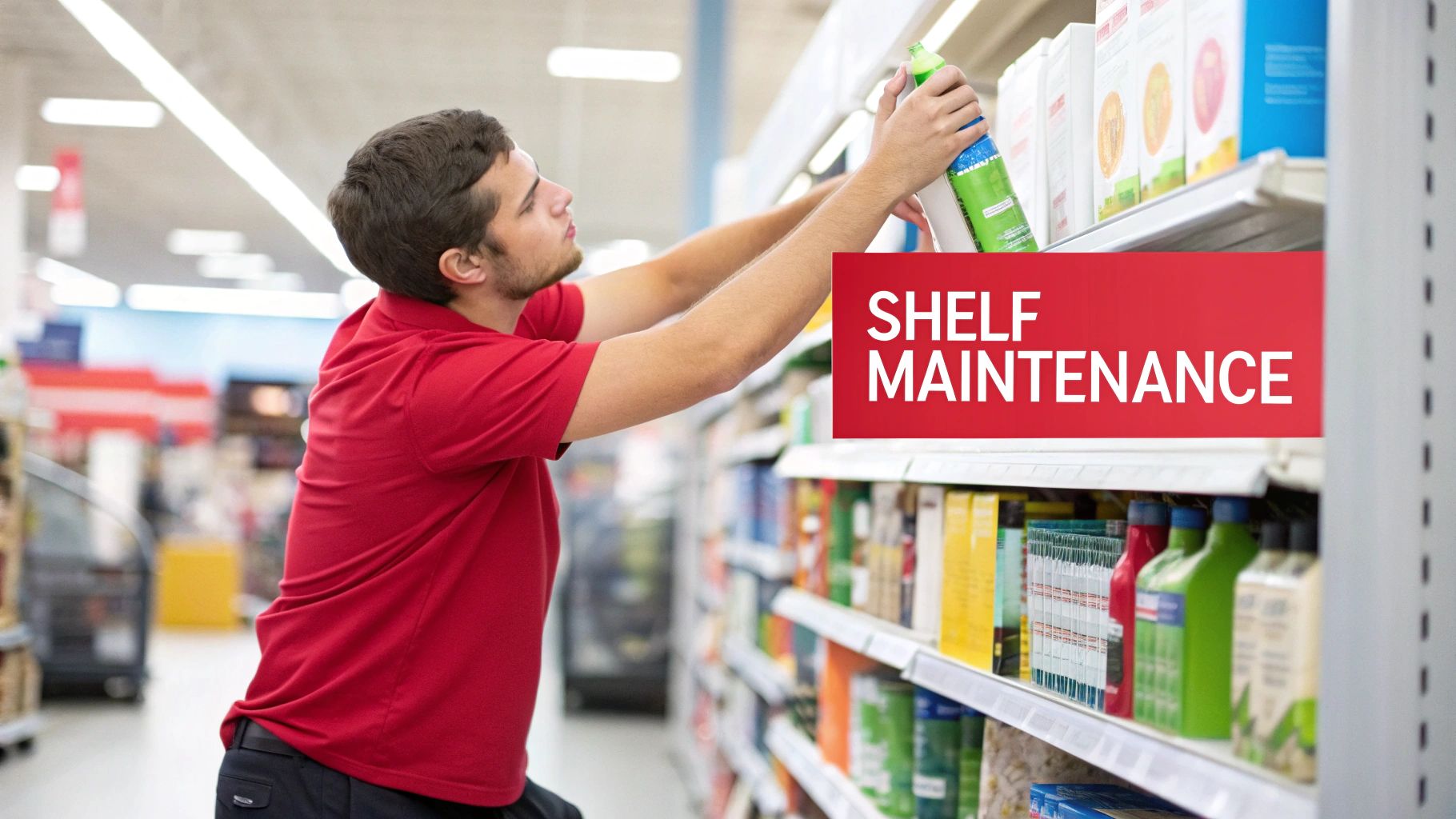
Picking the right shelf label technology isn't just a tech decision—it's a strategic move that affects your store's efficiency, your bottom line, and the experience you give your customers.
Think of it like choosing a vehicle. You wouldn't buy a semi-truck for a quick grocery run, and you wouldn't use a compact car to haul heavy equipment. The best system for your store depends entirely on what you need it to do.
To get it right, you need to look at three key pieces of the puzzle: the display itself, the network that connects it all, and the software that brings it to life. Nail these three, and you'll have a system that not only works today but grows with you tomorrow.
Comparing Display Technologies
The most obvious part of any electronic shelf label system is the screen. The display tech you choose has a huge impact on readability, battery life, and what you can actually show your customers. Each option has its own trade-offs.
- E-Paper (E-Ink): This is the industry standard, and for good reason. E-paper looks just like ink on paper, making it incredibly easy to read from any angle, even under harsh store lighting. Its biggest superpower is its ridiculously low power usage. It only draws energy when the image changes, so batteries can last an incredible 5-10 years.
- LCD (Liquid Crystal Display): Think of classic digital watches and you've got the idea. LCDs are a budget-friendly choice, but they can suffer from glare and have a narrower viewing angle. This can sometimes make them a little harder for shoppers to read clearly.
- LED (Light Emitting Diode): You won't typically see a full LED screen on a shelf tag, but these bright lights are often built into e-paper labels. They're perfect for "pick-to-light" systems that guide staff to the right item for an online order, or they can be set to flash to draw a customer's eye to a special promotion.
For most retailers, e-paper hits the sweet spot between performance and long-term value. To really dig into this technology, you can explore the benefits of e-ink signage and how it creates such clear, power-sipping displays.
Understanding Connectivity Options
Next up, how does your central system "talk" to the thousands of labels scattered across your store? This communication backbone is invisible to your customers but is absolutely critical for making sure updates happen instantly and reliably. The two main players here are Radio Frequency and Infrared.
Choosing your connectivity is like choosing between Wi-Fi and a TV remote. One sends signals broadly through walls, while the other needs a clear line of sight.
Radio Frequency (RF) is by far the more common and flexible option. It works a lot like a Wi-Fi network, using a series of base stations to blanket the store in a signal. RF can easily cover huge areas and isn't bothered by shelves or shoppers walking by, making it the go-to for most retail setups.
Infrared (IR), on the other hand, needs a direct, unobstructed path between the transmitter and the label to work. This can be a deal-breaker in a busy store where people or stock carts can easily block the signal. While it can be cheaper upfront, its limitations make it a less popular choice for modern, large-scale stores.
Evaluating Software and Integration
Finally, even the best hardware is just a paperweight without smart software to run it. The management platform is the brain of your entire operation. It's absolutely crucial that it integrates smoothly with your existing Point of Sale (POS) and inventory (ERP) systems.
This integration is non-negotiable. It's what ensures a price change in your main system automatically and perfectly reflects on the shelf, killing manual data entry and costly mistakes. A solid platform will give you a simple dashboard to manage prices, schedule promotions, and keep an eye on the health of every single label—right down to its battery level.
A Strategic Guide to Implementation
Rolling out a new system of shelf price labels is about so much more than just sticking new tags on the shelves. This is a strategic project. It demands careful planning, smart execution, and a clear vision for how the technology will actually improve your business.
Think of it less like a simple installation and more like laying the groundwork for a more efficient, agile retail future.
A successful deployment all comes down to a well-thought-out plan. Before you even unbox the first label, you need to map out your entire store. This means creating a detailed floor plan that shows where every single product lives. This "store mapping" is crucial for connecting the right label to the right product in your central system, making sure updates go exactly where they're supposed to.
At the same time, you have to take a hard look at your store's infrastructure. Is your current network ready to support the communication gateways? More importantly, is your product data clean in your POS and ERP systems? Any inconsistencies or missing information in your product database will cause massive headaches down the line. Getting this right is non-negotiable.
Laying the Foundation for Success
Once the planning is done, the physical installation can start. This involves setting up the communication network and then pairing and placing each individual label. It might sound tedious, but it's the foundational step that ensures the whole system works flawlessly from day one.
But the most critical part of the rollout isn't the hardware—it's your team. Solid staff training is what turns a new piece of technology into a powerful operational tool. Your employees need to understand not just how the system works, but why it's better for them.
A well-trained team that gets the benefits—like no more mind-numbing manual price changes—will be your biggest advocate. They’ll drive adoption and make sure you get the full value from your investment.
To really make the most of your new system, you have to avoid a few common pitfalls:
- Poor Data Synchronization: The number one mistake is failing to ensure your product database is clean and perfectly synced with the labels. Garbage in, garbage out.
- Underusing Advanced Features: Don't just use them as digital price tags. Dig into dynamic promotions, QR codes, and inventory alerts to unlock their real potential.
- Forgetting Staff Buy-In: If your team sees this as just another complicated task, they won't use it effectively. You have to frame it as a tool that makes their jobs easier.
Adopting a Modern Retail Mindset
Embracing this technology is part of a much larger trend in retail automation. North America is currently leading the charge, accounting for over 38% of the global electronic shelf label market. This dominance is fueled by high digital adoption rates and major investments in making stores smarter. If you're interested in the wider context, you can find more retail automation insights on cognitivemarketresearch.com.
Ultimately, a successful implementation means weaving the labels into your core retail strategies. Develop clear rules for dynamic pricing, use QR codes to link customers to online reviews, and take advantage of "pick-to-light" features to streamline your click-and-collect workflows.
Many of these advanced functions are managed through powerful software. Learning more about the role of an ESL cloud platform can show you how to manage a whole fleet of labels from anywhere. By planning carefully and focusing on strategic use, your new shelf price labels will become a true cornerstone of your modern retail operation.
Answering Your Questions About Shelf Price Labels
When retailers start looking at upgrading their stores, a few practical questions always pop up. It makes sense. Investing in tech like modern shelf price labels is a big move, and you need clear, straightforward answers before you commit.
This isn't just about getting a handle on the technology itself. It’s about building the confidence to move forward with a solution that actually fits your store's reality, both operationally and financially. Let's tackle some of the most common queries we hear.
How Much Do Electronic Labels Cost?
There's no single price tag for an Electronic Shelf Label (ESL) system—it really depends on the scale and complexity of what you need. Individual labels themselves can run anywhere from a few dollars to over fifteen bucks a pop. The final price is shaped by things like screen size, whether they're full color, and extra features like NFC.
But the labels are just one piece of the puzzle. You also have to factor in the infrastructure that makes it all work. That means communication gateways to send the data, software to run the show, and the professional services to get it all talking to your existing POS system.
A small pilot project might only set you back a few thousand dollars, but a full-scale rollout for a large supermarket is a serious investment. The trick is to look past the upfront cost and think about the long-term ROI. When you add up the savings on labor, the elimination of pricing errors, and the potential for increased sales, the numbers start to look very different. For a deeper dive, our guide breaks down the full spectrum of electronic shelf tags cost.
How Are ESLs Powered and How Long Do They Last?
One of the most impressive things about modern ESLs is just how little power they use. Most run on small, long-life lithium coin-cell batteries, the same kind you'd find in a wristwatch.
The magic is in the e-paper display technology. It only draws power when the image on the screen is actively changing. Once the price is set, it takes zero energy to keep it displayed.
Thanks to this incredible efficiency, the batteries in today's shelf price labels typically last anywhere from 5 to 10 years, all depending on how often you're pushing updates. That kind of longevity takes a massive maintenance headache off your store staff.
On top of that, the management software almost always keeps an eye on battery levels for you. It tracks the power in every single tag across the store and will automatically flag any that are getting low. This lets your team swap them out proactively, so you never have a blank tag on the shelf.
Can Shelf Labels Display More Than Just a Price?
Absolutely. Thinking of ESLs as just digital price tags is like thinking of a smartphone as just a phone. The ability to show all kinds of information is one of their biggest strengths compared to old-school paper.
Modern shelf price labels can display a ton of useful data for both your shoppers and your staff:
- For Customers: You can flash promotional details ("Buy One, Get One Free!"), show unit pricing, highlight product origin, or even add a QR code that links shoppers straight to online reviews or how-to videos.
- For Staff: The labels can show crucial logistics info right at the shelf, like stock levels ("Low Stock"), planogram locations to make sure products are in the right spot, or even upcoming restock dates.
This transforms the shelf edge from a static, boring strip into a dynamic hub for communication. It makes the shopping experience richer for customers and daily operations much smoother for your team.
Ready to transform your retail operations with intelligent pricing and operational efficiency? At ESLtags, we provide cutting-edge electronic shelf label solutions designed for modern retailers. Discover how our technology can save you time, eliminate errors, and boost your bottom line by visiting us at https://www.electronicshelftags.com.


Leave a Reply
Your email is safe with us.