

Updating prices for 120,000 unique products used to require up to two days of intensive manual labor; today, that same task is completed in mere minutes. As Walmart scales its transition to VusionGroup electronic shelf labels across all U.S. locations by the end of 2026, the retail industry is witnessing a fundamental shift in how physical space is managed. You’re likely already aware of the mounting pressure to reduce labor overhead while maintaining perfect pricing accuracy across thousands of SKUs. Managing these complexities manually isn’t just inefficient; it’s a liability to your operational precision and customer trust.
This executive guide details the technical specifications, operational advantages, and strategic implementation of Walmart digital shelf tags within a modern enterprise environment. You’ll discover how this hardware ecosystem moves beyond simple price displays to become a critical tool for real-time inventory management and rapid order fulfillment. We’ll analyze the transition from traditional paper methods to high-precision digital innovation, providing the roadmap you need to achieve absolute pricing accuracy and a modernized, reliable store aesthetic.
Key Takeaways
- Learn the core technical specifications of enterprise ESL hardware, including e-paper display technology and batteries designed for a five to ten year lifespan.
- Examine the strategic drivers behind the Walmart digital shelf tags initiative, focusing on the elimination of pricing inaccuracies and the recovery of lost labor hours.
- Secure your hardware investment by implementing standardized shelf-edge rails and durable digital label mounts designed for the high-traffic retail environment.
- Identify how sourcing from specialized domestic distributors allows for precise customization of tag sizes to fit every department’s unique display needs.
Understanding the Walmart Digital Shelf Tag Initiative
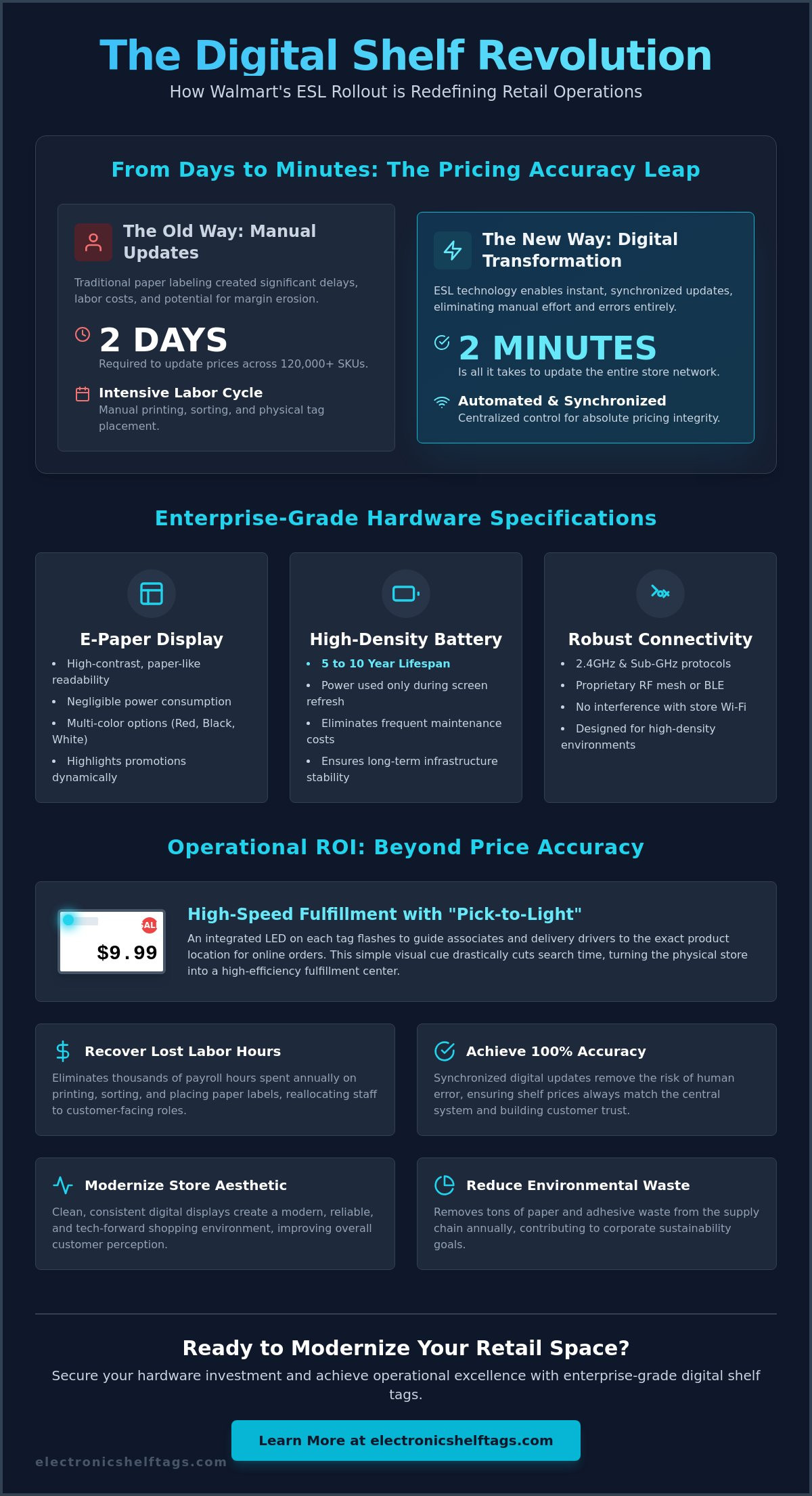
Walmart isn’t just testing a new gadget; they’re standardizing a global retail infrastructure. The massive-scale rollout of Walmart digital shelf tags represents the largest single deployment of Electronic Shelf Label (ESL) technology in the history of U.S. commerce. By the end of 2026, the retailer will have converted all its domestic locations to this digital-first model. This transition addresses a critical operational bottleneck: the time it takes to update pricing for over 120,000 products. What once required a two-day manual labor cycle now happens through a synchronized two-minute digital update. This speed is essential for maintaining parity with online marketplaces that fluctuate prices in real-time.
The hardware utilizes advanced E-ink technology. These displays mimic the high-contrast readability of paper while consuming negligible power. Unlike traditional LCD screens, E-ink only draws energy when the image changes, allowing internal batteries to last for years. While early industry documentation often focused on basic history, the 2026 standard has moved toward sophisticated 2.4GHz and Sub-GHz connectivity. This ensures that thousands of tags can update simultaneously without interfering with store Wi-Fi or customer mobile signals. It’s a robust, closed-loop system designed for the high-interference environment of a modern supercenter.
The Shift from Paper to Digital Labels
Traditional paper labeling is no longer a viable strategy in a high-inflation economy. When supply chain costs fluctuate weekly, waiting until “tag day” to adjust shelf prices leads to immediate margin erosion. The labor cost of “hanging tags” every Tuesday is a massive, hidden expense that most retailers can no longer justify. By eliminating the manual printing, sorting, and physical placement of millions of paper labels annually, stores recover thousands of payroll hours. This shift also delivers a significant environmental win, removing tons of paper and adhesive waste from the supply chain every year.
Operational Standards for 2026 Retail
Modern retail requires more than just price accuracy; it demands speed in fulfillment. Walmart digital shelf tags are integrated into the store’s IoT ecosystem, enabling features like “Pick-to-Light.” When an associate or Spark delivery driver needs to find an item for an online order, the tag’s internal LED flashes. This simple visual cue slashes the time spent searching for obscure SKUs on crowded shelves. It’s a practical application of technology that turns the physical store into a high-speed fulfillment center. Real-time pricing and inventory synchronization aren’t just perks anymore; they’re the baseline for staying competitive against e-commerce giants.
Technical Specifications of Enterprise-Grade Digital Tags
Enterprise-grade hardware is defined by its ability to perform with absolute reliability over long durations. The Walmart digital shelf tags utilize a sophisticated architecture comprising three primary elements: a high-contrast E-paper display, a high-density internal battery, and a low-power wireless transceiver. These aren’t consumer-grade gadgets; they’re industrial tools engineered to withstand the physical rigors of a high-traffic retail environment while maintaining 100% data integrity.
Battery longevity is the most critical metric for calculating enterprise ROI. While consumer electronics require frequent charging, these specialized tags maintain a lifespan of five to ten years. This incredible efficiency is possible because the E-paper technology only draws power during the “flip” or refresh cycle. Once the price or product information is set, it remains visible indefinitely without consuming any energy. For a retailer managing millions of units, this eliminates the logistical burden and labor cost of frequent battery maintenance. If you’re evaluating hardware for your own facility, prioritizing these long-cycle digital tags ensures your infrastructure remains stable for a decade or more.
Modern display capabilities have also evolved beyond simple black and white. Current enterprise standards include Red, Black, and White multicolor options. This allows store managers to highlight promotional pricing or clearance items dynamically without the need for additional physical signage. Connectivity is typically handled through Bluetooth Low Energy (BLE) or proprietary RF mesh networks. BLE is often preferred for its broad compatibility with existing mobile devices, while RF mesh networks offer superior penetration and stability in stores with high shelving and dense physical obstructions.
E-Ink vs. LCD: Why Walmart Chose E-Paper
LCD screens are impractical for shelf-edge applications because of their high power consumption and poor visibility under high-intensity retail LED lighting. E-paper, by contrast, mimics the appearance of physical ink on paper. It provides wide viewing angles, ensuring that a customer can accurately read the price from a distance or an awkward position. This readability is essential for maintaining customer trust and meeting legal pricing transparency requirements.
Integration with Store Management Software
Hardware is only as effective as the software driving it. These tags sync directly with a centralized Price Management System (PMS) through secure APIs. This connection allows for real-time inventory updates and instant pricing adjustments across the entire store footprint. For a deeper look at how software and hardware work in tandem, consult The Strategic Guide to Digital Price Tags in 2026 Retail. Establishing these API requirements early in the implementation phase is vital for ensuring that your digital labels can communicate effectively with your existing backend database.
Operational ROI: Why Retailers are Replacing Paper Labels
The financial justification for transitioning to an Electronic Shelf Label (ESL) system centers on the massive recovery of misallocated labor hours. In a high-volume environment, a single store may manage over 120,000 unique products. Manually auditing and replacing paper tags for this volume of inventory typically consumes up to two days of intensive staff labor every week. By implementing Walmart digital shelf tags, that same update cycle is compressed into mere minutes. This isn’t just a minor improvement; it’s a structural shift that allows management to reallocate hundreds of monthly payroll hours toward high-value activities like customer engagement and complex order fulfillment.
Beyond labor, the agility of “Dynamic Pricing” offers a competitive edge that paper cannot match. Retailers can now adjust prices instantly based on demand spikes, inventory levels, or approaching expiration dates for perishable goods. This level of responsiveness is vital for competing with e-commerce giants that update prices multiple times per day. While budget-tier digital labels often struggle with ghosting or limited data fields, the E-ink technology found in enterprise-grade Walmart digital shelf tags supports full graphical customization. This means you can display QR codes for product details or specific promotional branding without compromising the five to ten year battery lifespan.
Improving Pricing Accuracy in High-Volume Retail
One of the most significant risks in traditional retail is the “Shelf-to-Scanner” discrepancy. When a customer sees one price on the shelf but is charged another at the register, it erodes trust and creates legal compliance risks. Digital tags eliminate this friction by ensuring the shelf price and the point-of-sale database are always synchronized. Maintaining this level of precision is fundamental to long-term customer retention. For a deeper dive into these protocols, see How to Improve Pricing Accuracy in Retail: The Definitive Guide for 2026.
Labor Optimization and Cost Recovery
The payback period for an enterprise ESL installation is often shorter than stakeholders anticipate. By removing the tedious, repetitive task of hanging paper tags, stores see an immediate boost in employee morale and a reduction in turnover. Staff members are freed to focus on “Pick-to-Light” fulfillment, which significantly speeds up the processing of online orders. To calculate the specific savings for your facility, review How to Reduce Price Tag Labor Costs: The Definitive Retail Guide for 2026. Investing in high-quality hardware ensures that these labor savings aren’t offset by the maintenance costs associated with inferior, budget-grade labels.
Implementation Strategy: Mounting and Hardware Requirements
Successful deployment of Walmart digital shelf tags depends entirely on the physical infrastructure supporting them. Without professional-grade mounting solutions, even the most advanced ESL hardware is vulnerable to physical damage, theft, or poor visibility. Protecting your hardware investment starts with standardizing shelf-edge rails. These rails provide a secure, continuous track that keeps tags aligned and protected from the frequent impacts of shopping carts and restocking activities. When you transition to a digital shelf, the mounting system is just as critical as the transceiver inside the tag.
Durability requirements vary significantly by department. In high-traffic zones, anti-theft locking mechanisms are a necessity to prevent unauthorized removal. For grocery and freezer sections, tags must feature waterproof seals and impact-resistant plastics to survive moisture and sub-zero temperatures. Ensuring that your hardware can withstand these environmental stressors is vital for maintaining the five to ten year battery lifespan discussed earlier in this guide. If your mounts fail, your digital labels are at risk. You can secure your store’s infrastructure by sourcing high-quality digital label mounts designed specifically for enterprise-scale retail environments.
Selecting the Right Digital Label Mounts
Different shelving types require specific mounting strategies to ensure maximum visibility. Rail-based systems are the standard for flat metal shelving, providing a clean and uniform look. However, you’ll also need specialized hardware for peg hooks and wire baskets. Angled mounts are particularly important for bottom-shelf placement. These tilt the tag upward, ensuring that customers can easily read the display from a standing position. Choosing between clip-on, adhesive, or rail-based systems depends on your existing shelving audit and the long-term flexibility your store requires.
Installation Best Practices
A methodical installation process prevents costly rework and signal interference. Follow these three foundational steps for a successful rollout:
- Step 1: Audit Existing Shelving: Verify that your current rails are compatible with universal digital label mounts or determine if a full rail replacement is necessary for a standardized look.
- Step 2: Network Gateway Layout: Design your wireless access point locations to ensure 100% signal coverage. This prevents “dead zones” where tags fail to update during a price sync.
- Step 3: Mass-Pairing: Use handheld scanners to link each tag’s unique ID to the product SKU. This process ensures that the Price Management System (PMS) sends the correct data to the correct shelf location.
Modernizing your store’s aesthetic isn’t just about the tags; it’s about the precision of the installation. A well-executed mounting strategy ensures that your digital tags remain secure, visible, and operational for years to come.
Sourcing Walmart-Compatible Digital Tags and Infrastructure
While the scale of the national rollout is impressive, the technology behind Walmart digital shelf tags is accessible to retailers of all sizes. The challenge for most executives lies in navigating the supply chain to secure hardware that meets these rigorous enterprise standards. Sourcing through a specialized domestic distributor like ESLtags, Corp. ensures that your infrastructure is backed by local technical expertise and a reliable inventory of components. This partnership model eliminates the risks associated with unverified international shipping and provides a clear path for businesses to adopt the same precision-engineered hardware found in the world’s largest retail environments.
Customization is a vital component of a successful ESL strategy. A one-size-fits-all approach rarely works when managing diverse departments like electronics, pharmacy, and bulk grocery. By utilizing a range of tag sizes, from compact 1.5 inch displays for small cosmetics to large 7.5 inch screens for high-ticket appliance specifications, you can tailor the information density to the specific needs of each product category. This flexibility ensures that your digital labels provide maximum value to the customer while maintaining a cohesive, professional aesthetic across the entire floor plan.
Long-term operational excellence requires more than just an initial purchase. It demands a lifecycle management plan that includes regular firmware updates and structured battery replacement programs. As established in previous sections, maintaining the five to ten year battery lifespan is essential for protecting your ROI. A dedicated sourcing partner provides the ongoing support necessary to keep your wireless transceivers secure and your E-paper displays crisp. Whether you are managing a single boutique or a regional chain, these scale considerations determine the ultimate stability of your digital transition.
Scalable Solutions for Every Retailer
Smaller retailers often assume that enterprise-grade automation is out of reach, but the “Walmart standard” is increasingly modular. You don’t need a corporate headquarters to benefit from 100% pricing accuracy and significant labor recovery. By focusing on the same hardware ecosystem, independent businesses can achieve the same modernized store aesthetic without the massive corporate overhead. For a detailed roadmap on starting this journey, consult Digital Price Tags for Small Business: The 2026 Guide to Retail Automation. Expert consultation can help you select the specific display technologies that offer the fastest payback period for your specific volume.
Partnering with ESLtags, Corp. for Modernization
Our team provides the specialized hardware and technical precision required to execute a flawless digital transition. We maintain a comprehensive inventory of digital label tags, specialized mounts, and integrated systems designed to solve complex retail challenges. We are committed to helping you achieve operational excellence through the practical application of advanced IoT technology. If you’re ready to upgrade your infrastructure with the same reliability as the industry leaders, explore our full range of Walmart-compatible digital tags today to begin your modernization process.
Standardizing Your Digital Retail Infrastructure
The transition toward Walmart digital shelf tags is more than a modernization trend; it’s a fundamental change in retail operations that prioritizes precision and agility. By moving from manual price updates to a synchronized digital ecosystem, you can recover thousands of labor hours while eliminating the legal risks associated with pricing discrepancies. Success in this transition requires a commitment to high-performance hardware, from durable E-ink displays to the specialized mounting rails that protect your long-term investment.
As a specialized US-based distributor, we offer the expert technical support and comprehensive inventory of mounting hardware necessary for national rollouts. Our team is ready to help you navigate the complexities of enterprise-scale implementation. Request a Quote for Enterprise Digital Shelf Tags to begin your store’s modernization journey. Embracing this technology today ensures your facility remains competitive and reliable in the evolving 2026 retail landscape.
Frequently Asked Questions
How do Walmart digital shelf tags actually work?
These tags operate through an integrated hardware ecosystem that connects high-contrast E-ink displays to a centralized Price Management System (PMS). When a price change is initiated in the software, a wireless transceiver within the tag receives the update via a secure RF mesh or Bluetooth Low Energy (BLE) gateway. This allows for a synchronized refresh of the screen in under two minutes, ensuring the shelf price always matches the point-of-sale database.
What is the battery life of a typical Walmart digital tag?
A typical enterprise-grade tag features a battery life ranging from five to ten years. This longevity is achieved because the E-paper technology only consumes power during the image refresh process. Once the display is set, it requires zero energy to maintain the image. This efficiency makes Walmart digital shelf tags a sustainable long-term investment for high-volume retailers who want to minimize hardware maintenance cycles.
Can these tags be used in freezer or refrigerated sections?
Yes, specialized versions of these tags are engineered specifically for low-temperature environments. These units feature impact-resistant plastics and waterproof seals that protect the internal circuitry from condensation and sub-zero temperatures. Using these specialized tags in grocery or freezer sections ensures that your digital infrastructure remains operational and visible even in the most demanding climate conditions within the store.
Are Walmart digital tags compatible with standard retail shelving?
These tags are highly compatible with most standard retail shelving systems when paired with the correct mounting hardware. While most metal shelving requires a standardized rail system, other fixtures like peg hooks or wire baskets use specialized clip-on or adhesive mounts. Standardizing your shelf-edge rails is a critical step in the implementation process to ensure the tags remain secure and properly aligned for customer visibility.
How much labor can a store save by switching to digital tags?
Stores can recover hundreds of labor hours every month by automating the pricing process. Instead of staff spending up to two days manually replacing paper labels for 120,000 items, the task is completed digitally in minutes. This shift allows management to reallocate employees to customer-facing roles or high-speed order fulfillment, significantly reducing the overhead associated with traditional inventory management and price audits.
Do digital tags require a constant Wi-Fi connection?
No, these tags don’t require a constant Wi-Fi connection to function. They communicate with the central system through dedicated low-power gateways using RF mesh or BLE protocols. This prevents the tags from taxing the store’s customer Wi-Fi bandwidth while ensuring a stable, secure channel for data updates. The tags only wake up to receive new information, which further preserves the internal battery life.
What happens if a customer moves a digital tag to a different shelf?
Enterprise mounting systems include anti-theft locking mechanisms designed to prevent unauthorized removal or relocation of the tags. If a tag is moved, it remains linked to its original product SKU in the database until it is manually unpaired and re-paired by an authorized staff member using a handheld scanner. This security ensures that the pricing information remains accurate and tied to the correct physical location on the shelf.
Are Walmart-style digital tags affordable for small businesses?
Modular ESL systems have made this technology increasingly accessible for small businesses and boutiques. While a national rollout involves massive infrastructure, smaller retailers can implement Walmart digital shelf tags or similar hardware on a localized scale. The initial investment is often offset by the rapid reduction in labor costs and the elimination of pricing errors, providing a clear path to ROI for independent store owners.


Leave a Reply
Your email is safe with us.